Filler is an autonomous media platform & zine distro, not an organization. Click HERE to submit news, analysis, communiqués, misc. intel, your demo tape… all that good yinzurgent shit.
“For the next 30 days, every day, we will be profiling/exposing a member or supporter of Keystone United (KU) and Keystone State Skinheads (KSS). We will be largely concentrating on Pennsylvania fascists, with a few exceptions.”
Philly Antifa not only followed through, but they even threw in a few bonus boneheads. Local jags include Josh Martin, Terrence Raymond Stockey, and Shane Michael Dilling. Click HERE for the complete list of fascists, read on to check out Philly’s closing thoughts, which we’ve republished here for its insights and because spread that shit.
We hope that the info we’ve collected is helpful to comrades around Pennsylvania and elsewhere. We will be copying all the Keystone United Exposed articles to a stand-alone blog so, as time passes and new content is published here, that info remains easy to find.
Keystone United Exposed effectively identified the major players within KSS, as well as many of its foot soldiers and supporters. It provided a start in mapping out the distribution of KU/KSS around the state and region, so we can know where they are really strong and when they are swelling numbers with out-of-town support.
From l to r: Unknown, Joe Phy, Scott Costa, Jason Cunningham, Ian McCorts, Unknown, Bob Gaus, Bryan Vanagaitis, AJ Olsen and Nunzio Pellegrino of Keystone State Skinheads. All except unknowns were profiled as part of KU Exposed.
Keystone United members. From l to r: Steve Smith, Unknown, Bob Gaus, Joe Garvey, Bryan Vanagaitis, Cody Haulman, Ryan Wojtowicz, Scott Costa, Ian McCorts, Travis Cornell (rip lol), Chris Croumbley, Josh Martin and Shane Dilling. All but the one unknown were exposed during our series.
Having identified this many members and associates of KU/KSS will also lead to us identifying future associates more easily. We exposed many bones at their jobs and to people who live in their communities. However, one drawback of a project like this is such a flood of information can make it inevitable that people will begin to slip through the cracks. It’s possible that by focusing on a smaller number and really campaigning around, for example, getting Steve Smith fired from Gertrude Hawk’s Chocolates warehouse in Dunmore, we could have had a larger impact. The good news is there’s no reason why we can’t still do that.
While preparing these articles, we learned several things that had to be considered and reconciled with our subjects’ associations with a violent white supremacist gang; filled with men who glorify Hitler and Colonialism, who promise “Freedom Through Nationalism” but practice racial terror. Including the frequency that Keystone United members and associates had successfully either totally hidden or sanitized the group’s image for many people in their lives. This sort of “low-intensity,” year round outreach work (aka being fake friendly) is insidiously effective in minimizing the eventual impact once they are eventually exposed. “Oh no! Not Bob… He’s never said anything offensive to me! Well, a few jokes…” is what some will say. Nazis collect these “friends” as an insurance policy against future exposure.
KSS rallying along with their friends in the PA State Militia for anti-refugee “Overpasses Across America” protests From l to r: AJ Olsen, Joe Phy, Ryan Wojtowicz, Steve Smith, and Pat Rogers. All were profiled in KU exposed.
Keystone United has largely maintained their course during the Trump era. Unlike Heimbach and the TWP or the NSM, KU/KSS did not overreach early or open up the gates to any potential murderer they could slap a white polo on. Keystone United abandoned publicly using language about “Racial Holy War” (RaHoWa) or overthrowing the “Zionist Occupied Government” of the U.S. long before Trump. What has changed, though, is that now KU/KSS has a new PR tactic at their disposal, the label of “Trump Supporter.” KU/KSS uses that aforementioned outreach work to reinforce the notions being pushed by right wing media that a) anti-fascists are indiscriminately describing as nazis and attacking all trump supporters or anyone who disagrees with far left politics and b) all actions against trump supporters are being done by Antifa crews or organizations. Both of these claims are patently false. But now, with many major media outlets pushing similar narratives, they have a more receptive audience.
We know that we convey to everyone as to the level of threat KU/KSS represents. This is disheartening, both as Anti-Fascists and as people who, largely, have experienced direct violence from this group or groups allied to them. And ultimately, the conclusion is that white conservatives generally, (and some POC conservatives) don’t really dislike Nazis very much at all. It would seem, that for many of them, the biggest concern is being lumped in with them, and a frustration with nazis not being able to keep their racist rhetoric in the coded language that is popular among “white america.” That said, we hope that this series has made it clear that KSS has not gone away, and their influence and support network extends far beyond their membership.
Keystone United rallying in Harrisburg. A: Scot Costa B: Travis Cornell (rip lol) C: Shane Dilling D: Ian McCorts G: Ryan Wojtowicz H: Steve Smith I: Bob Gaus J: Bryan Vanagaitis K: Chris Croumbley L: Cody Haulman. All were profiled in KU exposed.
When members of the Golden State Skinheads (a crew allied with KSS), wearing TWP shirts,attacked and stabbed anti-fascists in Sacramento in 2016 before being driven off the streets, TWP spokesman Matt Parott attempted to frame it to the media as a fight between “pro and anti-trump groups.” Because of the spiteful mentality of Trump supporters in the face of ever-increasing evidence of his incompetence, narcissism, and corruption, they will defend anyone willing to still publicly identify as a pro Trump. Anti-Fascists need to be aware of this dynamic and begin formulating new strategies to wedge groups like KSS and Blood and Honour from the GOP base. The evidence of what happens if we fail is in the increasingly Fascist rhetoric and tactics being used by pro-trump sectors of government and law enforcement, not to mention all the recent dog whistles to nazism coming out of those sectors.
Pat Rogers of KU/KSS repping support for Golden State Skinheads after word of possible charges for their members stabbing several Anti-Fascists in Sacramento in 2016.
Exposing a nazi is crucial. It can largely neutralize their crossover political organizing, add a tremendous social cost, and makes them think twice about attacking someone, knowing that they will be identified immediately by Anti-Fascists. For KU/KSS, public exposure also undermines the generous amount of effort they put in to distancing their group from its more openly neo-nazi past. However, it is the follow-up that gets the goods. The people who contacted workplaces, passed out flyers around the homes of KSS members, pushed for their expulsion from social clubs and sports teams, and took other actions have done just as much as us to make this a success.
One area we did not touch on during this series as much as we’d like is KU/KSS’ involvement in the “Anti-Antifa movement.” Anti-Antifa Pennsylvania shirts are printed and sold by KSS members, and they are involved in running an Anti-Antifa blog and website that publishes information on Anti-Racists and Anti-Fascists. KU nazis are very encouraging of the Anti-Antifa label as a stand in for more openly nazi imagery and as a unifying point between white nationalists and other far right nationalists who conflict with antifa because of our left and anarchist politics. Pushing Anti-Antifa as a brand within the larger pro-trump right is likely to be a strategy for KU/KSS over the next few years, and the groundwork has already been laid by media outlets, Trump, and 4chan.
Several members of KU/KSS can be seen wearing Anti-Antifa t-shirts in this pic from LED 2017.
We have successfully identified almost all of the attendees of last year’s Leif Erikson Day event in Philly. Only those who hid their faces or stayed away from Fairmount Park have escaped detection so far. So while ultimately our goal is to stop KU from holding Leif Erikson Day at all, the information we gather from it’s continuation is a nice consolation prize. Thanks to last year’s LED, we were able to identify Joe Garvey, Chris Croumbley, Anthony Marcink, and Travis Cornell (rip lol), all previously unknown to us, as Keystone United associates. We were also able to confirm the continued involvement of several individuals who had not been sighted at public KU events for several years, including Shane Dilling andLiam Schaff.
Some of those KSS nazis wore masks because they have something to lose from being exposed by us. Help us identify the “unknowns.” If anyone has information about the any of the unidentified nazis picture in this series, please send it our way.
It is common to end on a note acknowledging that white supremacy and racism are much larger than neo-nazi bonehead crews or their more media-friendly iterations. While this is true, attempts to compartmentalize groups like Keystone United from the larger “mainstream” right seem rooted more in wishful thinking and denial than reality. KU has synthesized American libertarian conservatism with national socialist “race science” to make both more palatable to the other. TwoKeystone United leaders are Luzerne County GOP officials. In the process of this article, we exposed KU members/associates as working for city governments,in large unions, and for international software firms. Keystone United associates are/were active in biker clubs, veterans groups, roller derby leagues, music scenes and local government. Tired tropes and finger pointing about “living in mom’s basement” on both sides of this conflict are generally inaccurate, Daniel “Jack Corbin” McMahon excepted. Anti-Fascists in this state should not discount how embedded Keystone United are in their communities.
Steve Smith and Ryan Wojtowicz of Keystone United. Both are Luzerne County GOP committeemen.
When Bob Gaus and several other KU members attended Trump’s rally in Harrisburg, they did not sit in some special section. When they (likely) went out to get a drink afterwards, they did not go to a nazis-only bar. When they talk politics at the bar with people belonging to “the mainstream right,” those people are most likely left with the impression that they have more in common than difference with the KU members. If we learn nothing else from Trump’s ascension, it should be that the distance between a “non racist” republican (or democrat/independent for that matter) and a neo-nazi is much smaller than we like to believe, and the unifying of those forces is a very real threat.
Nazis have embedded themselves in groups like The Proud Boys and Patriot Prayer or started multi-racial pan-right groups like Vinlanders Social Club founder Brien James’ American Guard.
Republicans have utilized dog whistle and crypto-fascist talking points to retain supporters among the racist right, while not alienating POC and non-racist conservatives. Anti-Fascists have relied too heavily on accusations of racism as a panacea solution to the far right, and the far right has adapted. They have dozens of strategies in place to undermine those accusations before they are even made. We have to take the more difficult path of dissecting the full contents of the ideologies of the far right and conveying why they should be opposed on a plethora of grounds, including cis hetero-sexist positions, militarism and colonialism, and supporting capitalist exploitation of the working class, in addition to white supremacy and racism. Otherwise we will continue to hand groups like Proud Boys, Patriot Prayer and American Guard an easy way to insulate themselves from association with orthodox fascist groups, and an easy way to portray us as hysterical or dishonest.
We would like to thank all those who took action this month based on the articles we’ve released. As we mentioned, actions have already begun and are likely to continue for some time. As this is being written, it is unclear when or if Keystone United will hold their Leif Erikson Day event in Philly. It is possible they’ve even held it already in secret. Should they do so, we have the tools to hold them accountable long after they scurry out of Fairmount, back to their homes in Philly or elsewhere in the state. It is a point of pride for us to put a stop to this demonstration, but not only have we effectively neutralized it as a source of recruitment or propaganda for KU, we have purposed it as an intelligence trove for ourselves. So stay home or come on out, boys. Either way, we’ll use it to our advantage and to further our ultimate goal of destroying Keystone United for good.
Finally, predictably, there has been some blow back from KU/KSS/BNH regarding this series. Threats and harassment has been sent from KU members and supporters in all directions, including to non-involved persons and former members. Sometimes for something as simple as sharing an article. We send our respect and solidarity to the folks facing any sort of harassment as a result of the series. Threats against ourselves have also been levied, both of legal action and assault. For our part, we refuse to be intimidated by a group of coward liars. Two-faced scumbags who have the nerve to call others “degenerates.” Who attack brutally in swarms and talk tough behind police but who cower in our city, coming unannounced and bitterly unwelcome, staying briefly and leaving quickly. Every flash demo and rally, every threat and assault, every rape and murder, creates more of us. It reinforces our resolve. This is the city of gritty, fuckers, and we’re just getting started.
Thelatest guidelinesfor unpermitted street protests issued by the Pittsburgh cops have generated a lot of outrage, but not much in the way of tactical or strategic analysis. We gave the document a quick glance to see what it might reveal about the cops’ plans and thoughts. In no particular order:
It’s tempting to laugh at the list of intersections and colored coded zones for revealing exactly where protesters should set up blockades for maximum disruption, but let’s face it, that wasn’t exactly classified information anyway. More interesting are the locations that were left out. Butler Street in Lawrenceville? Allegheny Center in Northside? Both are perfectly acceptable protest spots under the new rules, and both are virtual parking lots during rush hour even under ideal conditions. Pittsburgh’s, um, idiosyncratic street layout offers many more such choke points. Maybe it’s time to branch out geographically, if only for the hilarity of watching a police liaison wave a copy of the guidelines under the nose of a frustrated cop, screaming “We’re nowhere NEAR the red zone, what are you even complaining about???”
They do give themselves some wiggle room toward the end with “Officers may use their discretion to make other roadways or intersections off limits to protests if judged necessary to ensure public safety”, but still…
This sentence is highly interesting: “Whenever possible, warnings should be given with a bullhorn, a squad car PA system or LRAD.” For those unfamiliar with the term, “LRAD” stands for Long Range Acoustic Device, a crowd dispersal weapon that emits a piercing noise loud enough to cause pain and hearing damage. It can also be used as a loudspeaker. The LRAD made its US debut right here in Pittsburgh during the 2009 G20 protests, where it permanently damaged the hearing of a woman who wasn’t even protesting. She sued the city, won a $72,000 settlement, and Pittsburgh’s LRAD has been in mothballs ever since. The guidelines only mention the LRAD’s loudspeaker function, but the fact that the cops are bringing it up at all is intriguing. However, given their past experience with the thing, and their general hands-off approach to the protests for Antwon Rose II, they’re probably bluffing. Even if they bring it out, chances are they won’t use the crowd dispersal function. Protesters are advised to pack earplugs just in case though.
The guidelines say absolutely nothing about requiring permits. This should be a standing rebuke to all the liberal nonprofit organizations in Pittsburgh that refuse to set foot in the street without getting permission from the people they’re protesting against.
Zooming out a little, the guidelines as a whole make it obvious that the cops are gaining confidence and worrying less about Pittsburgh going up like Ferguson. At the most recent march for Antwon they shadowed the march with the usual phalanx of city cops, but they didn’t feel it necessary to call in the state police, and no more than one undercover was spotted in the crowd. Even after marchers got right up in the face of Chief Schubert and Public Safety Director Wendell Hissrich, no further reinforcements were called in. If the cops feel like they’re getting away with the current set of restrictions, more will surely follow.
Received on July 12, 2018. Originally published by Torchlight PGH— Anarchist News from Pittsburgh
As everyone now knows, on June 19th East Pittsburgh police officer Michael Rosfeld murdered Antwon Rose Jr. by shooting him in the back three times as he ran from a traffic stop. When a video of the shooting went viral on social media, Pittsburgh exploded in protest. Explosions are relative of course, and the riots, looting, and torched convenience stores that characterized analogous uprisings in Ferguson and Baltimore have here translated to peaceful marches to block traffic. Nonetheless the current situation is a major departure from the usual activist routine that anarchists in Pittsburgh suffer through. We offer the following points for consideration.
1. The cops are taking this very seriously.
Pittsburgh police chief Scott Schubert has showed up in person at at least two of the protests, and all of the actions inside Pittsburgh city limits have featured a gaggle of commanders and assistant chiefs, none of whom ordinarily work nights. Pittsburgh has also called in the PA state police on short notice for several protests. The cops call that “mutual aid”, but that doesn’t stop them from charging for it. Pittsburgh will be getting a bill from the state. The Pittsburgh cops have even switched to 12 hour shifts for the duration of the crisis, in order to monitor the protests and still carry out day-to-day oppression. This policy is reminiscent of the All Hands on Deck weekends in DC that the police union there fought against so bitterly, except it’s not just a weekend, it could last for weeks.
Yet despite the massive amounts of cops and money being thrown at the protests, arrests have been sparse. As of this writing there have been only five that we’ve heard of, not counting hecklers. This is not for lack of opportunity. The cops are obviously bending over backwards to avoid provoking an already furious community further and sparking a Ferguson style riot. One recent action provides a telling example.
On the evening of June 27th, a smallish crew held anoise demo at Rosfeld’s house near Penn Hills. The action was pre-planned, unannounced, short, and came off without a hitch except for one thing. Somehow word got out, and a bunch of latecomers rushed to Penn Hills, assuming reinforcements were needed. They got there after the first crew had gone home and taken most of the legal support with them. The “reinforcements” therefore arrived to a hornets nest of pissed off cops protecting one of their own, most of them from random boroughs in eastern Allegheny County that never see protests. It was the kind of situation guaranteed to send cold shivers up the spine of any experienced street demonstrator, but the bloodbath never happened. No arrests, no injuries. Even in Penn Frickin Hills the cops have now been inoculated against antagonizing protesters.
[Filler would like to add a side note here: the second home demonstration was materially supported in a variety of ways by several of the previous demo’s crews, and the action contributed to many great new relationships. This should not be overlooked.]
Anyone who thinks this forbearance indicates any good will on the part of the police should keep in mind the second prong of their strategy – shadowing every demonstration for Antwon with ridiculously obvious undercover cops (three at the morning march on the 27th had the flashers on in their unmarked cop car). Torchlight sources have spotted them at every march they have attended. People who have confronted them report that they seem very uncomfortable about being outed, so the obviousness is probably not an intimidation tactic, they’re just incompetent. They’ve still been taking tons of pictures however, presumably with the aim of identifying all the new protesters who have emerged since Antwon’s killing. This too is unprecedented here.
2. Stephen Zappala’s job is probably safe.
“THREE SHOTS IN THE BACK, HOW DO YOU JUSTIFY THAT!?” Allegheny County District Attorney Stephen Zappala worked harder than anyone else to come up with an answer to that question. After a week of valiant effort however, he finally threw in the towel and admitted that no, he couldn’t justify that. That hasn’t stopped self-appointed organizers from first announcing an electoral campaign to unseat Zappala, and then scrambling to recruit a Black former public defender named Turahn Jenkins to take him on in the Democratic primary next year. In their haste they skimped on their research, and missed Jenkins’blatant homophobia. Presumably they’re going to give it another shot however. We have said this before, but the electoral approach makes a lot more sense as a strategy to remove protesters from the streets than a serious attempt to replace Zappala. Just for fun though, let’s take it at face value for a minute.
As calculated and political as Zappala’s decision to charge Rosfeld with criminal homicide was, it’ll probably be enough to mollify white liberal voters who just need to be reassured the system still works. By next year’s Democratic primaries only the angriest of liberals will still hold it against him. Right wing voters on the other hand, are going to be pissed. Pittsburgh’s Fraternal Order of Police are unlikely to be any more enthusiastic about those 12 hour shifts than their DC counterparts, and all cops will be angry with Zappala for what they consider his spineless pandering to protesters. Reactionary douchebags and closet racists, who make a sizable voting bloc, will surely feel similarly. This leaves Zappala more vulnerable from the right than the left. If he has to run to his left to fend off a progressive candidate he will leave himself even more open to a Republican opponent in the general election.
There are other scenarios, most of them also unfavorable. A centrist law and order Democrat could win the primary if Zappala splits the liberal vote with a progressive challenger. A charismatic progressive-sounding candidate could beat Zappala and then turn out to be no less malicious a prosecutor. Or of course Zappala could capitalize on the donor network and connections he has built up over two decades in office to cruise to victory.
The liberals are taking reformist Philadelphia DALarry Krasner as a model for Allegheny County. APABof course, but Krasner’s reforms are lifting some of the weight of the prison industrial complex from the necks of Philadelphia’s impoverished communities. Liberals still need to ask themselves which is more likely, that a newly elected DA would actually carry out a facsimile of Krasner’s program upon taking office, or instead mend fences with the police, mollify the hardliners in his office, and reassure conservative voters that he’s not crazy after all by continuing business as usual with a thicker layer of progressive rhetoric.
The one ray of hope is that therejust might be a progressive rebellion emerging in the Democratic Party. It’s not impossible that after another year of Trump Allegheny County voters will be fed up enough to throw the bums out, Zappala included. Turnout is lower in odd year elections, so it wouldn’t take that many voters to elect a Krasner 2.0 if one could be found. Nonetheless an election-based strategy would mean putting an awful lot of eggs in one basket with no guarantee of success and no consolation prize.
But of course that’s the point. Pittsburgh’s liberal establishment would like nothing better than to see militant resistance burn itself out in a failed election campaign and sink back into jaded exhaustion. A successful election campaign would suit that purpose nearly as well.
3. Brandi Fisher is really good at coopting militant struggles.
A t-shirt popular during the Penguins’ back-to-back Stanley Cup runs read simply “SIDNEY CROSBY IS REALLY GOOD AT HOCKEY”. By that measure Brandi Fisher of the Alliance for Police Accountability absolutely deserves a t-shirt of her own. Her performance since Antwon’s murder has been at least as scintillating as was Crosby’s, and she doesn’t even have Matt Murray backing her up. Put another way, Brandi is near-singlehandedly replicating the work of Al Sharpton and the army of Black clergy that descended on Ferguson to pacify the uprising over Michael Brown’s murder. Pittsburgh isn’t St. Louis of course, but that’s still some impressive shit.
Brandi’s sheer versatility is amazing. Whether taking potential rivals under her wing, canceling their demonstrations unilaterally, or segueing seamlessly from one to the other, she doesn’t miss a beat. Freezing [primarily] white anarchist groups out of protest organizing, corralling angry street marches by strategic use of a bullhorn, coordinating with her friends among the police, lining white liberal groups up behind the APA banner – all part of Brandi’s extensive repertoire. It’s not just the highlight reel moves either. Brandi also displays the attention to detail that is the hallmark of the true superstar. Take the name of her group. By calling it an “alliance” she conveys the impression of being a part of a diverse group of organizations, all focused on the same goal. APA is nothing of the sort of course, it’s just Brandi and a few of her cronies. She gets away with this trick because she was clever enough not to call it a coalition.
Between the three of them, Brandi, Zappala, and the cops have had an effect. The huge pre-announced highway-blocking marches that characterized the first week of the uprising have given way to smaller and more sporadic actions organized mostly in secret. These types of actions aren’t as disruptive, but they’re harder to control. Brandi’s influence is weaker in the suburbs than within Pittsburgh, and a hard core of pissed off Black women is emerging who don’t take her every word as gospel. Medics and legal observers have been a small but consistent presence at nearly every action so far, as have white anarchists, despite Brandi’s attempts to exclude all three. It’s a little early to tell, but there are signs of something exciting coalescing that could last well beyond the current upheaval.
Better late than never. It shouldn’t have required a tragedy for Pittsburgh anarchists to start making connections with those at the sharp end of police oppression, but now that we have an opening we should take it. It’s not going to last forever. We have a natural affinity with the ones who refuse to be intimidated by riot cops, pacified by liberals, or lulled by reforms. The time to start talking to them is now.
***
Related counter-information:
*the image below should read: East Pittsburgh police officer…
The following reports cover several of the latest autonomous actions taken during the ongoing mobilization demanding justice for Antwon Rose Jr, including two demonstrations held outside the homes of killer cop michael rosfeld and judge/collaborator jeffrey manning.
All reports were submitted anonymously to Filler PGH or It’s Going Down.
Rally & Vigil Held Outside East Pittsburgh Officer michael rosfeld’s Home
June 27
Pittsburgh residents and organizers held a vigil and rally to remember Antwon Rose Jr. at the home of killer cop michael rosfeld.
Rosfeld had been released on a $250,000 unsecured bond (on a criminal homicide charge…) just a few hours prior, and so some folks coordinating as part of the steel city autonomous movement (SCAM) thought we’d welcome him home; the charging of michael rosfeld is a small victory, but justice demands that we take direct action towards the abolition of white supremacy.
We are outraged, saddened, yet unsurprised by the actions of the police. State-sponsored violence is how those in power uphold white supremacist capitalism. With this in mind, we also called attention to the history of local police brutality, commemoratingMark Daniels and Bruce Kelley Jr. among others recently murdered by the state. Successfully convicting rosfeld of homicide does not prove he is only ‘one bad apple’; there is a larger culture of police and city authorities who are complicit in state violence, and that must be accounted for.
It’s important that the community of Verona — the officer’s current neighborhood of residence — be made aware that they are living in close proximity to someone who did not hesitate to kill an unarmed black teen by shooting him three times: in the back, arm, and face.
During the demonstration, some neighbors shouted in support, while others made sure demonstrators did not go on their private property. There is a community divide, but there is necessity in confronting that divide. The demonstration served as a way to show where neighbors stand, and to elicit responses from residents. Police are public officials, and rosfeld’s address was publicly available. Rallying outside the jagoff’s residence is the necessary social consequence to murders committed by police.
After the action, dozens of folks decided to go back with more numbers and held their ground until around 11pm / midnight.
As an excerpt from a flyer that was distributed to neighbors reads,
[…] systemic racism is woven deeply into the greater Pittsburgh area. Because one of the most deeply segregated urban regions in the country is patrolled by cops that belong to a powerful right-wing union—the FOP. Because in this reality, the police are only harbingers of violence to communities of color; killing or incarcerating, creating trauma, breaking apart families. It was only 4 months ago that the Pittsburgh Police shot and killed Mark Daniels here, an unarmed 39-year-old grandfather, another black man killed by another white cop. This is the same policing system that, in 2010, jumped 18 year old Jordan Miles, beating him beyond recognition while he was walking to his grandmother’s house, drinking a soda the cops claimed was a gun.
To close, here is a quote from areport-backthat was released after another autonomous home demonstration in Pittsburgh—this one from last October, taking place outside the home of the brutally violent officer andrew jacobs.
Cops aren’t afraid of their fellow cops, of their bosses, of courts or prosecutors or legislatures. But they’re afraid of us. A little research and some word of mouth is all it takes for us to bring the fight from our neighborhoods to theirs.
Organizing against police violence challenges the separation of people from political power, the social logic of the badge made material by the physical force of the baton. Power insulates individuals from the consequences of their actions. This power must be seized through collective action and abolished, disorienting the powerful by rejecting the justification for their every misdeed.
We have a message for every cop, every ICE agent, every judge, every politician—for all the agents of white supremacy who continue to separate families through “legal” violence:
You have names and numbers, just like us. Just like us, you have homes that can be surveilled, neighbors that can be turned against you, communities that will reject you if the alternative becomes too costly. Just like us, your actions have consequences.
Activists accept targeted retaliation as a basic fact of their work. It’s time the police reckon with something similar.
“I’m very comfortable with what I did. If either side doesn’t like it they know what to do.” – Judge Jeffrey Manning.
The judge got one thing right: we know what to do.
(This quote is often erroneously attributed to rosfeld when in fact it was another white supremacist collaborator, the judge).
Pittsburgh House Demo & Suburban Intersection Shut Down for Antwon
July 4th
Demonstrations continue in Pittsburgh following the murder of seventeen year old Antwon Rose Jr., and as patriots in Judge Jeffrey Manning’s quiet suburban neighborhood were celebrating another year on stolen land, the peace was disturbed as rows of angry people chanted enroute to the judge’s house. Judge Jeffrey Manning of 535 Kingsberry Circle Mt. Lebanon PA, gave killer cop Michael Rosfeld a $250,000 unsecured bond on a criminal homicide charge. Never before in the state of PA has anyone charged with homicide been released on these terms, and released he was on the dime of the FOP the fucking day of his arrest.
This while seventeen year old Zaijuan Hester, who was charged with criminal attempted homicide, and was allegedly running from the traffic stop with Antwon, sits in jail without bond. We know the judges are not and will never be our allies, so of course shit is going down this way, but a little public shaming and intimidation to highlight just how much of a piece of shit Manning is is both empowering to those putting his shit on blast, and informative to the community he lurks in.
Everyone met up outside dude’s cul de sac in the grass listening to Jimmy Wopo and just kicking it, sharing water and perspectives about why they were there. This group was a lot smaller than the bigger street marches – about 35 people – and was made up of Antwon’s community members, medics, legal observers, anarchists and antifascists, and black liberation activists. The mood was pretty posi with undertones of grief and anger about the situation, but in general people were feeling empowered and ready to storm this ding dong’s neighborhood. Folks silently marched single file in lines of two, some masked, some not; everyone with fists raised.
The chanting didn’t begin until the group arrived at Manning’s manor, where people began to shout, “What was his name? Antwon Rose Jr! How old was he? 17! Who did this? The police did this!” Speakers talked about the murder and the judge’s role in it all, songs were sung, and then the group reformed the two lines and marched through the neighborhood saying, “Three shots in the back, how you justify that?”
The pigs showed up late to the party and everyone was pretty much on to the next thing by the time several squad cars arrived. Everyone got out just fine. The second part of the day’s actions was to shut down the intersection at Connor and Gilkeson Road, a pretty big intersection for the amount of people who came out. This was right in front of a mall and a main route to various suburbanite July 4th parties, so that was tight. The small group shut shit down successfully with the help of a down ass semi driver who saw what was up and parked his rig in front of the exit route many cars were attempting to take. The cops were frazzled, a lot of fancy cars got fucked up hopping the median, and the intersection was held successfully for a good chunk of time in the 95 degree heat and direct sun.
One woman tried to drive her car through a group of about five, but that didn’t work out and she mostly got made fun of for like a half hour. Cops tried to pull at the heart strings of protesters by pleading for the ‘scared children’ in the blocked cars, met with the response, “Antwon was a scared kid.”
When the last car was turned around and bottomed out, the crew marched down the street with fists in the air singing, “Antwon Rose was a freedom fighter and he taught us how to fight; we gonna fight all day and night until we get it right. Which side are you on, my people? Which side are you on?” The semi driver honked and threw up a fist before trucking off.
Sixteen days ago, people came out into the streets in mass to protest Antwon’s murder, many for the first time. The first intersection shut down in front of the EPGH Police Dept was chaotic, powerful, sad, and confusing. On that first night, a cop tried to drive his cruiser through the crowd, and some intense in-fighting errupted when some folks decided to put their bodies in the way of the vehicle. There were arguments about weather white people should even be there, who the fuck are these people in masks, etc. Sixteen days later, at this demonstration, crews of all identities and backgrounds were tight and working together with understanding and respect for each other. Way more people were masked up, kids were helping each other figure out the best ways to tie t-shirts over their faces, road flares were embraced by everyone there, and everyone was reminding each other to use Signal. More crews are being formed, and they’re not planning on going away any time soon. The July 4 demo was def one of the smaller groups in the scope of things, but that tightness in the small number was super powerful. Friendships and comradery are being built in a way that will strengthen as we continue on in this fight, and forward.
All Cops Are Michael Rosfeld
Fuck All Judges Forever
The slideshow below is a compilation of graffiti actions that were claimed in solidarity with the movement, including one from comrades in Philly.
Related counter-information:
*the image below should read: East Pittsburgh police officer…
Originally published by Torchlight PGH — Anarchist News from Pittsburgh
Torchlight received the following reportback from an anarchist who attended the first rally for Antwon Rose on Wednesday evening. There was also a larger rally and march Thursday night that blocked Parkway East for over five hours. The reportback has been lightly edited for spelling and grammar, but is otherwise unchanged.
I got there late, about a half hour after the 6 PM start time. There were about 300 people there, most of them young and Black, rallying at an intersection. I recognized some people I knew, but not as many as I would have hoped ordinarily. East Pittsburgh is a pretty long way from where most of the anarchists live, and the protest was called with only a few hours notice.
The rally split up into a couple of groups, one in the intersection and another further up Electric Avenue (yup, Electric Avenue). The second group seemed louder so I gravitated in their direction. A bunch of people were screaming at the cops, especially this one pig in a white shirt. There were cops there from a bunch of different towns, including a few I hadn’t even heard of. None from Pittsburgh though, and I didn’t see any state cops either. The cops who were being screamed at backed off slowly and made a line across the road, but eventually pulled back to the sidewalks.
The other group was bigger but less confrontational. At one point a white unmarked cop SUV tried to drive through the big group and people started screaming and lined up to block it in. All the cops from Electric Avenue came over and surrounded the thing while it did a slow three point turn and finally left. That was as intense as anything got while I was there. After the SUV left some people started yelling at a few kids in black bloc about violence, which seemed kind of ridiculous when you think about what we were protesting.
Pretty soon after that people mad a giant circle in the intersection of Electric and Braddock and seemed prepared to stay for a while. Then the clouds started gathering, the news helicopter dippe out, and it began to rain hard. People clustered under a railroad bridge that runs over Electric and a few people sat down in the middle of the road. It seemed ilke the rain was thinning out the crowd though, and I eventually headed out because my ride was leaving.
Nobody seemed very well prepared, including the cops, but I guess that’s not surprising. I saw a couple of green legal observer hats, but no marked medics. A few people were there in black bloc, but in my opinion that wasn’t a great place for a bloc. They stood out more than if they had just worn regular clothes. The cops were mostly hands off. The Allegheny County pigs showed up, but they didn’t bring their horses. Nobody was in riot gear. The only crowd control weapons I saw were these assault-looking rifles that I think fire rubber bullets. Some cops from Monroeville had those, but they put them away pretty early. Except for the SUV incident they didn’t seem to be doing anything to provoke people.
The rain definitely took a lot of the fight out of the crowd but even before that people seemed more about grieving and venting their anger at the cops than throwing down. There’s going to be another protest downtown tomorrow at noon at the county courthouse, so we’ll see what happens there.
***
Related counter-information:
*the image below should read East Pittsburgh police officer…
“US QUEERS AIN’T FREE TIL THE PRISON WALLS BURN DOWN” ~ photo: banner from an Illegal Queers PGH benefit dance party ~
Every year onJune 11th, anarchists and anti-authoritarians from around the world send some love and rage to our comrades who are serving lengthy prison terms. We write letters, we organize poetry readings and movie screenings, we throw parties and benefit shows, we ditch work and school to paint our comrades’ names all across town, we attack state and corporate infrastructure as much for the thrill of it as for the political and strategic implications. On J11, we remember the prisoners of war. With their names on our minds, we face the anxiety and misery of the everyday with just a little more strength, a little more passion… because, like, holy shit, prisons are fucking evil, and maybe our thoughts and actions might just sneak a few rays of light through the bars and help our comrades face another day too.
On that note, a couple of us queer-as-fuck Filler kids want to remind our friends here in Pittsburgh that J11 would never have become the insurgent holiday that it is today without the courage of long-term anarchist prisoner, Marius Mason. Marius is an eco-warrior whose daily life is one of struggle against a state that seeks to control his body on every level, from his incarceration to the undermining of his gender identity. This year, we hope that Pittsburgh will prove that we have not forgotten his struggle.
This year, we hope that Pittsburgh will affirm our complicity in not only Marius’s struggle, but also in the struggles of all who come into conflict with the state and capital. So in the spirit of J11, let’s support our neighbors who are challenging the co-optation of Pittsburgh Pride, organizing to support incarcerated people at the Allegheny County Jail while working towards the jail’s abolition, and rallying to defend their communities against the nationalist reaction. Most importantly, we sincerely hope you remember to indulge your private wars. Do what you need to do to reconnect to life: attack the things you hate, embrace the people and hobbies you love, call in sick and stay at home all day to write letters to the folks on the inside while you binge-watch netflix (or Sub.Media!) – take whatever it is that you love, nurture it, and make it dangerous.
Anyways, below is an (in)complete rundown of some cool shit to do this week.
Welcome home Maxx and Shea. Much love to Top Squat. Shoutout to Torchlight.
This past Saturday, Joel Velasquez-Reyes died at the ACJ, awaiting charges. Velasquez-Reyes is the third death at the ACJ since April, both Jamie Gettings and David Black’s deaths could have been prevented.
Join us as we speak truth to power and demand an end to medical neglect and to the Allegheny County Jail.
Radicals in Pittsburgh are facing an unprecedented wave of repression: hundreds of felony charges, several eviction threats, etc. etc. etc….so some folks decided it’d be fun to get together and celebrate our struggles over some vegan food! We’re in this together, so let’s soak up some sun together (weather depending).
If you or your comrades and accomplices are feeling the heat, ask around or hit us up for the time and location!
ClickHEREto donate to various legal defense funds.
People are asking if they should be boycotting CERTAIN Pittsburgh Pride events, which we feel would be ineffective since –
1. Most non-profit orgs spent time and energy raising money to participate in what should be a free event, and have the right to get value for that cost (since obviously no refunds will be given).
2. It’s counterproductive to miss out on the opportunity to reach out to the community non-profit orgs are trying to serve.
3. The presence of a few individuals or a small organization might not be missed, but showing UP will show strength in numbers, which also sends the larger message of how many LGBTQ+ individuals, supporters, and allies there are in Pittsburgh (which is one of the actual reasons to have Pride events in the first place).
4. It’s not fair to every single person who worked hard and waited all year to come together with their community only to feel guilty or bad for participating. Instead we are going to show SIGNS OF RESISTANCE. We invite everyone to “GREY OUT RAINBOW CAPITALISM” and show solidarity, strength and unity by wearing GREY tshirts, armbands, hats, bandanas, suits, socks- whatever. WEAR YOUR GREY and spread the message that although you might be in the parade, or at the event, YOU ARE NOT IN LINE with the organizers of the EQT-sponsored march. We will be showing up for what PRIDE means to YOU and not we are being told it should mean. GRAB SOME GREY AND SPREAD THE WORD.
Our Pride should not be about who can pay the highest price. Pride is political. Pride should be for everyone. Pride needs to be inclusive, intersectional and wholly accessible to all. Pride should be free (for non-profits to participate specifically, not necessarily food, drinks/specialty events). Pride should be a celebration of how far we have come from the time we were forced to live in a closet. Pride should be a reflection of our history as well as an effort to move forward. It is up to us as a community to make the change.
Be proud, come on out and join your community at (mostly) free, local, independent Pride events:
Join the ACJ Health Justice Project in our first screening of No Bars to Healthcare-A grassroots effort to end abuse at one county jail.
For more than two years, the Health Justice Project has been collecting stories and evidence against the medical neglect and abuse at the Allegheny County Jail (ACJ). This film offers a snapshot of some of those stories. It is a film that will move you, make you angry, and, above all, challenge you to envision a future without the ACJ.
We will screen the film and facilitate a discussion on prison and jail abolition afterward. *Suggested $5-10 donation, no one turned away. *Childcare available *This facility is not wheelchair accessible If you can’t make this screening, we will have another in July-stay tuned!
Pittsburgh has a deep and rich social movement history. While we our city is probably best known as the cradle of the American labor movement, important moments in the civil rights, women’s movement, and environmental movement have all played out in Pittsburgh.
And Pittsburgh’s social movement legacy isn’t just distant history. In recent years, Pittsburghers played a significant role in the opposition to the wars in Iraq and Afghanistan. When the G20 came to our city we rose against the corrupt and unjust policies that led to the financial crisis. We occupied People’s Park for months, we took to the streets again and again to stand up against racist policing, and we were the first city in the country to ban fracking.
Join us on June 14th to take a look at Pittsburgh’s deep and rich social movement history and tease out the lessons our past can share with today’s movements.
Mijente in Pittsburgh: Community Dinner + Discussion
You’re invited to join us for a night of food and discussion about key topics that are important to the Latinx community in Pittsburgh as well as nationally with Mijente. Mijente is a national political home for on the ground and digital Latinx organizing. In this political moment, the hate and the attacks against Latinx and immigrant communities are being widely felt. We know that there are a lot of questions, a lot of fear and a lot of pain. At the same time we know that the only safe community is an organized one. Some of the best ways to win and resist the attacks coming from the white house are to fight back and organize.
Join us for an evening of community building and discussion w/ Mijente as well as local leaders from Casa San Jose.
Están invitadxs a una cena y platica comunitaria donde hablaremos sobre temas importantes para la comunidad Latinx en Pittsburgh y también a nivel nacional con el grupo Mijente. Mijente es un hogar politico a nivel nacional con membresía de gente Latinx y que se enfoca en la organización comunitaria. En este momento politico el odio y los ataques en contra la comunidad Latinx e inmigrante son fuertes. Sabemos que hay muchas preguntas, mucho miedo y mucho dolor. Al mismo tiempo, sabemos que la una comunidad realmente segura es una comunidad organizada. Solo luchando podremos ganar y resistir los ataques que vienen de la casa blanca.
Vengan a compartir y platicar en comunidad para seguir creciendo nuestro poder y conocimiento con Mijente y lideres de Casa San Jose.
THIS SUMMER, Port Authority plans to have ARMED police Officers checking fare payment on the T…..
We demand that the Port Authority delay implementation of this policy until we have a PUBLIC process, a commitment NOT to work with ICE, and a commitment of NO arrests or criminal charges for “fare evasion.”
Join Pittsburghers for Public Transit, Casa San Jose, the Alliance for Police Accountability and the Thomas Merton Center to find out how to get involved to stop the criminalization of transit riders.
Proceeds go to the touring bands, expenses, and donations to the O.W.L. Non-Profit to help with expenses for the property (garden supplies, raising chickens, water sources, etc)
Music! Food! Art! Poetry! Workshops! Zines! Sideshows! Fire Performance! Good Folks!
MUSIC LINE-UP:
==============
Out of Towners:
Rail Yard Ghosts (USA)
Mama’s Broke (Canada)
Breaking Glass (NYC)
Erica Russo (Asheville, NC)
Ricky Steece (NOLA)
Endless Mike (Johnstown, PA)
Nomad Mountain Outlaws (USA) #Trashhags Tradhaggis (USA)
Michael Character (Boston)
Roaming Bear (Waukegan, IL)
Mud Guppies (Philly)
River Bucket (Missouri)
Canadian Waves (Columbus, OH)
Chessie and the Kittens (DuBois, PA)
Cowabunga Breakfast (DuBois, PA)
Rent Strike (USA)
Conor Brendan and the Wild Hunt (USA)
Locals:
The Hills and the Rivers
Cousin Boneless
The Jack of Spades
Rue
Lawn Care
Mayday Marching Band
Sikes and the New Violence
Jayke Orvis
Trash Bag
Childlike Empress
Shelf Life Trio
Colin and the Crows
Stolen Stitches
Joey Molinaro
Mara Yaffee
The Ghostwrite
Smokey Bellows
Average Joey
Crisp Lake
Jonny NOS
My Yr An Odd Fellow
Jess Vaughan
Clairvoyage
52hz
Angela Morelli
Glitter Mistake
Kasey Fusco
Earthworm
Tiolet Professor
Nick Hagen
Dog Years
Ukelele Sky
POETRY
=========
Stephen Lin
Asa
Karla Lamb
Jake Barney
Faith Hersey
Brittney Chantele
Brenna Gallagher
Joey Schuller
Chris Blake
Alex Theus
OTHER STUFF!
===============
– Know Your Rights (When Dealing with Police) Training
– Permaculture / Herbal Medicines Workshop
– Free Store / Clothing Swap
– Book Drive
– Open Mic
– Filler Zine Distro
Torchlight, a new anarchist counter-info site based here in Pittsburgh, released this response to an anonymous submission we published several weeks ago. (Pretty cool to see a dialogue starting, although it looks like they think we wrote “Solidarity in the Streets,” which we didn’t. We just used to be the only counterinfo game in town, but now we’re not!)
Pittsburgh activism has long and sordid history of cooptation by the police. Liberal organizers invariably honor a tacit agreement in which they guarantee that their “actions” generate minimal material disruption of the prevailing order, in exchange for the cops’ allowing them to proceed unimpeded. The police, notoriously lazy in Pittsburgh, benefit from protest organizers doing most of their work for them, plus they don’t have to tarnish their image by pepper spraying and arresting protesters. Organizers in turn get to boost turnout by offering a risk-free, conscience salving experience, while claiming success based on nothing more than seamless logistics, regardless of the lack of movement toward their claimed goals.
On the ground the result will be familiar to anyone who has attended a protest in Pittsburgh in this century. Dozens of marshals, police liaisons, and PR flacks, few to no legal observers or medics; inspiring speeches by carefully chosen “leaders”, zero opportunity for spontaneous action; occasionally unpermitted, but always pacified.
Sometimes though, an action breaks this mold and the police end up having to do some work, which brings us to arecent articleby the Filler Collective. The piece is a criticism of a pair of noise demos at Allegheny County Jail at which some windows were broken, themost recent of whichtook place on March 20. Eleven people were arrested and arecurrently being chargedwith multiple felony counts. The other noise demo happened on New Years Eve 2011 and resulted in dozens of protesters being detained, but no arrests. The author focuses their criticism on the 2011 demo, claiming that they weren’t at the more recent one and do not wish to risk jeopardizing the cases of the arrestees. However the timing of the piece, and in fact the very inclusion of the recent demo, make a joke of this posture. If Filler really doesn’t want to criticize the March action why mention it at all?
Instead, the author uses the 2011 noise demo as a proxy, in an attack that is misguided as well as displaced. Their thesis is that since the organizers didn’t intend or prepare for windows to be broken, the window breakers are responsible for the detentions that followed. More generally, they believe that all protests should have a pre-planned and communicated level of risk so that participants can make informed decisions about whether and how to involve themselves.
That’d be nice wouldn’t it? If you could know ahead of time exactly how risky an action was going to be, if everyone who showed up could be counted on to follow the same script, if there was never any uncertainty about how the cops would respond to a particular tactic? The only problem is it’s impossible. There is no way to reliably predict what will happen at a protest without going full liberal and extinguishing any possibility of militancy before it can begin – the usual approach in this town.
That doesn’t mean organizers haven’t tried, and Filler cites a couple of very selective examples from recent history. One is the mobilization against the 2009 G20 summit meetings in Pittsburgh, which featured thePittsburgh Principles, a framework designed to let activist groups with different politics work together effectively throughout the demo. (Ignore for now the vast difference between a multi-day mass mobilization and a half hour jail noise demo.) While the Pittsburgh Principles were reasonably successful in their purpose, they didn’t prevent the cops frombrutally attackinga completely non-confrontational protest against police brutality on the Pitt campus in the final hours of the event, not because any windows got broken, but just because they wanted to. The author of the Filler piece conveniently fails to mention this.
Filler’s other example is theJ20 mobilizationin DC against Trump’s inauguration, where a wide variety of tactics were used by a broad coalition of groups, all of which were clearly announced ahead of time, supposedly allowing participants to gauge the risk involved. While the various blockades, rallies and permitted marches were left comparatively unmolested (by G20 standards at least), J20 was hardly a testament to the predictability of police repression at mass mobilizations. The 200-plus felony arrests at the black bloc march were anunprecedented departurefrom past police practice in DC, even to the point of violating court orders.
A broader look at the history of big demos (not to mention small ones) reveals similar patterns. The practice of designating red, yellow, and green zones during the global justice movement never worked. In fact arrests were probably more frequent in green zones because protesters there weren’t expecting them. TheMiami Modelof protest policing involves cracking down on protesters of all stripes, peaceful or otherwise, actually protesting or not. Witness theraids against the puppet warehouseat the 2000 RNC in Philadelphia, and theconvergence centerandlegal support officeat the 2008 RNC in St. Paul, where no one was even protesting anything, let alone breaking windows.
In short, the idea that we can predict what the cops will do in the face of any meaningful protest is ridiculous. It might look like we can in Pittsburgh, where protest theater too often takes the place of militant action in the streets. But that’s just policing ourselves to save the cops the trouble. So instead of blaming arrests, detentions, beatings and other repression on our own comrades, let’s pin the blame where it belongs – on the cops. Instead of relying on our enemies to restrain themselves if we don’t provoke them, let’s rely on ourselves. It’s time to build the support structures necessary to resist police action as it happens, to propagate a culture of tactical awareness, instead of expecting followers to show up and blindly follow the orders of few self appointed organizers.
Determining what this might look like in practice is left as an exercise for the reader, but in the Trump era it is one well worth undertaking. Just don’t forget to tell Torchlight about it…
Our material environment arranges life into a procession of neat little rituals. All that is possible or desirable is administered according to the routines built into Campus Life.
No one is quite sure why the lobby of Litchfield Towers is first and foremost a place to glide through in passing, to dodge the solicitations of student clubs, or to purchase coffee. Nor is there much reason to question such fixtures of everyday life; these structures are simply taken for granted as part of our unspoken consensus on reality.
And who really even gives a shit in the first place?
Well, try using a university space for even slightly different purposes and you’ll find out pretty quickly. After all, there are people whose paychecks are predicated on having to give so many shits that they will physically retaliate against any breach in routine. But uniforms are easy targets, rhetorically speaking. The relations encoded in the blueprints of the places they are paid to defend, on the other hand, are what reproduce normalcy.
For an education that liberates. For a classroom that no longer spectates. For house parties where Pitt students, workers, and faculty can throw down together. For a campus culture that terrifies Pitt’s board of trustees. For a campus that celebrates life.
For a University Against Itself
Back in the spring of 2015, a couple friends brought hot food, some boxes of clothing, toiletries, books and zines into the lobby of Litchfield Towers to give away for free. This was the same school year that the University of Pittsburgh’s administration decided to raise tuition, organize a food bank for its students as a sort of half-assed apology, and then jack up tuition a second time just a few short months later. Needless to say, shit was getting rough for a lot of kids at Pitt.
I thought using a student space to share stuff was a cool idea, so I grabbed a few sweaters I could spare on my way out the door that morning. But before I even made it to campus, our group chat started blowing up.
My friends had been kicked out within half an hour of setting up. By the time I got there, a Pitt cop was already chasing them out the door, frantically squawking into his radio, flailing his free arm and demanding they come back to face the consequences.
“Must fulfill duty to defend Law and Order,” said the robot in his head.
“Finally, some action!” thought the man behind the uniform.
Art by Tild Eath
The Task at Hand
Rather than deferring to age and experience, we can sharpen our analytical skills through discussion groups, general assemblies oriented towards communication as an end in itself, and more writing, theorizing, and critique. These are the processes that enable a crew, a community, or a distributed network of subversives to gain mutual understanding and refine their analyses in order to speak precisely about what is happening, what must be done, and—most importantly—how to do it. It is essential to find the time and space to do this with people you trust, whose analysis you also trust, and ideally who come from a range of backgrounds and experience.
– “After the Crest: Part IV,” Rolling Thunder #11
This is not a populist appeal. Nor is this a program to be enacted by some specialized minority of student organizers, “social justice” activists, or would-be insurgents. This issue of Filler is about starting a conversation.
In Pittsburgh, we’ve seen a small but exciting resurgence in everything from reformist mass mobilizations to insurrectionary shenanigans. I have no clue what might go down next semester, but some shit seems to happen over and over again. There are patterns, if you’re looking for them; Campus Life has a way of dissolving back into routine.
An effective analysis of our situation, and a healthy bit of introspection and reflection on our personal objectives, might offer a vision for momentum. But no analysis is fundamentally correct, and certainly no analysis is correct outside the context in which it is conceived. A correct analysis is simply whatever interpretation of social reality best informs our efforts to achieve a given objective. Ideas and conflicts persist, but radical youth scenes, and therefore coherent strategies, are as transient and short-lived as our attention spans.
The conceptual frameworks proposed in this zine are meant to work in tandem with the organizing that folks are already engaged in. The task at hand is to figure out, for ourselves, how to conceptualize and organize the University struggle: what entrances are we neglecting, and where might we find points of departure from which to rekindle the excitement we once felt? After all, the shit we pull off today will determine both starting points and horizons for the next generation of Pitt students.
This zine is also an attempt to contextualize Pittsburgh’s nascent student movement, to frame the coming unrest in a way that just might make some careerist liberal think twice before mentioning their time as club president on a future résumé.
~ I ~ Stories We Tell Ourselves
Organizing has never meant affiliation with the same organization. Organizing is acting in accordance with a common perception, at whatever level that may be. Now, what is missing from the situation is not “people’s anger” or economic shortage, it’s not the good will of militants or the spread of critical consciousness, or even the proliferation of anarchist gestures. What we lack is a shared perception of the situation. Without this binding agent, gestures dissolve without a trace into nothingness, lives have the texture of dreams, and uprisings end up in schoolbooks.
– The Invisible Committee, To Our Friends
History under capital is a history of erasure, or else it would tell a story far more personable than the presidents and cash crops so familiar to students.[1]☭
Today in Pittsburgh, we learn how to reproduce the logic of the men who stamped their names on lecture halls, museums, and libraries. Over a century ago, but only a few miles up the road in Homestead, 19-year-old Andrew Henry Striegel died as a partisan for the living wage: a gunshot to the neck, delivered courtesy of two men also named Andrew and Henry. What is lost in high school textbooks is no mere anecdote, but an entire way of relating, being, and inhabiting that sidesteps the mediation of capital: the urge to live and to act directly in accordance with one’s understanding of the world.
But this is nothing new. History is written by the victors or whatever, right? The histories told in the classroom are just the stories popular culture prefers, an interlocking web of myths to explain the modern world.
All of America’s fundamental myths—property, borders, nations, liberty, debt, democracy—were born in acts of violence, are affirmed by violence, and reality is now mediated through their logic. The mythology of the University is no different.
The reemergence of an american student movement carries two discourses. One is familiar; the other is older and emerges far less often. The first is positioned within the march of progress, the student struggle for peace and opportunity, heated debates in the “marketplace of ideas.” It’s always returning to notions of civic duty and a generation’s political awakening, to celebrations of American democracy with a push from below. And it’s not just liberals or reformists that prefer this discourse. Plenty of so-called radicals fester in nostalgia for the old movement: the workerism of labor leaders, the naïve conservationism of the Greens, the rebranded demands for all-too-familiar concessions (whose benefits hardly last a decade before the economy is again restructured to render them meaningless), or the fatalistic certainty of an impending “final” crisis of capitalism. For these populist radicals, the day will come when all of the single-issue campaigns finally merge towards a swift and (relatively) peaceful transition into social democracy. Progress and Democracy, the Bernie-Bro’s wet dream.
The other discourse revolves around interpreting the social violence that sustains Everything, seeking out opportunities for material opposition and counterviolence. These kids orient themselves according to the latest communiqués and spectacles of the global civil war—the call-and-response discourse of Social War. Youth struggling against the american University inherit war stories from those few generations that figured out what the word “peace” really means, although their historical moments have likely been interpreted beyond recognition. While we can scrounge through the fractured bits of text, theory, and counterculture that these kids left behind, these artifacts do little more than hint at their movements’ key points of departure. Still, the fragments of their stories that somehow survived history are at least enough to inspire. For each retelling, it’s a question of improvising the plot gaps needed to link the acts. Good improv is hard, but not impossible. Sometimes all it takes to work out a strategy for momentum is a contagious tactic, as the 2009 student movement proved by occupying campus buildings all across California. But more often than not, would-be insurgents are left recycling tactics without a broader vision for sustaining disruption or infrastructure.
Of course, no single narrative is capable of telling the whole story, and fixating on a single discourse risks suppressing improvisation. Behind every discursive wave of Social War, from Santiago to Athens, are the privatized ruins of failed social democracies. But the key point here is that, ever since the movement of the 1960s, it’s the youth who are improvising theories of change: rejecting routine, escalating populist campaigns, pushing movements to their limits, writing their own mythologies, and even forfeiting their lives to fend off both State and fascist reaction.
The spectacle is not a collection of images, but a social relation among people, mediated by images.
– Guy Debord, Society of the Spectacle
Power, Routine, Legitimacy
The administration, the University, the student government, the State—none of these institutions wield power.
Power is a relation, a social structure, a logic. It is both the physical and the psychological force of routine, both the pigs’ monopoly on the legitimate use of violence and the racialized colonial alliances that so often complement it. Power is fused within the organization of space; it is the way in which the flow of things and people (in that order) is enforced and reproduced through infrastructural patterns, ritualizing social hierarchies to the point that they become material conditions. “Those in power” are simply the ones enforcing and rationalizing the arrangement, or perhaps slightly adjusting it to better suit the flow of capital.
Routine is a mechanism whose parts can be infused, even conflated, with one’s identity; both the material organization of a space and its accompanying roles and relations are dependent on popular, undisputed participation and faith. We see this in the games of respectability and professionalism played every day on campus. The dormitory resident assistant is your age, but you will never be their peer. How could you be? At any minute, they could receive an order to search your dorm, summon armed men to detain you, get you thrown out of school.
Behind all power relations are a series of affirming images, reproduced ad nauseum on billboards and social media, personalized in the commodified identities sold on shelves and television shows, and circulated by the institutions that assign and define roles and tasks. From your dorm’s overzealous RA, to the cops that he called on the stoners down the hall, “those in power” are really just fronting the aesthetics of power. They would have us believe that they own exclusive rights over arranging and organizing the places we inhabit, or over the deployment of violence to enforce those modes of relations. Look, they have even the shiny badges to prove it!
The continued reproduction of the images, roles, and identities within a given space is only stable so long as nothing interferes with the rhythms of routine. Whether it’s a student refusing to put her cellphone away in a San Antonio middle school, a young man suspected of shoplifting cigarillos walking down a street in Ferguson, or a few dozen Black youth hanging out at a public pool in a white suburb—any potential disruption of the routine functioning of power relations within a space threatens to destabilize the arrangement and function of that space. Which is to say, disruption carries the potential to temporarily rearrange and repurpose a space toward the production of subversive, non-hierarchical power relations.
Since disruption cuts off the dominant relations at the point of production, the social roles that have been granted “legitimate” uses of force are employed as the first line of defense. The student questioning her teacher’s authority is also questioning the relations encoded in her school; the prospect of a suspected shoplifter making off with a few dollars worth of merchandise warrants extra-judicial execution because it challenges the sanctity of property; the presence of Black bodies in a white space threatens a regime of segregation. Behind every identity that categorizes and enforces ways of being, behind every arrangement of space that directs and determines the relationships that comprise things and people, is a latent violence. Disruption exposes this reality, but it cannot experiment with new forms of life without the capacity for self-defense, for counter-violence.
Exercising force is a tactical maneuver in the discourse of legitimacy. The function and arrangement of a space (public school, convenience store, white neighborhood) must encode a distribution of power that considers the agents tasked with imposing it (cops, pigs, murderers) to be legitimate. In the heart of the Empire, spectatorship translates as passive compliance with the rules of the game, as deference to the legitimacy of white supremacist and capitalist logic; in each of the above examples, white police officers savagely attacked young Black people with legal impunity. The aesthetic of power, then, is also the aesthetic of legitimacy: legitimacy is white, he flashes a badge, he wears a suit, he is a professional, he works within the parameters of the law, he carries a megaphone, he is comfortable in his neon-yellow marshalling vest, he is a man.
Genuine acts of resistance make no appeals to conventional legitimacy, to the symbolic terrain of representation, to negotiation with those fronting the aesthetics of power. Rather, genuine resistance leverages force against the material structures that reproduce reality, in hopes of opening new possibilities.
The academic life contains reinforcing counterparts to the way in which extracurricular life is organized… academia includes a radical separation of the student from the material of study. That which is studies, the social reality, is ‘objectified’ to sterility, dividing the student from life…
– Tom Hayden, The Port Huron Statement
Factory, Colony, University
The University is a knowledge factory, a think-tank expanding capital, a colony in the service of Empire: a site of social control.
The University of Pittsburgh, and the surrounding Oakland neighborhood, is a fucking police state. City cops, Pitt police, Carnegie-Mellon police, Point Park police, Pennsylvania State police, and park rangers all have jurisdiction here (and this doesn’t include rent-a-cops like university security). The administration doesn’t even bother trying to cover up the University’s colonial project; Pitt raises tuition every single year, ensuring that each semester brings richer and whiter students to Oakland. Meanwhile, its legion of pigs occupies the remnants of the original Oakland community to stabilize the process. The colony must grow in order to survive; everywhere, the public University is in its death throes, self-cannibalizing in desperate hopes that the commodification of knowledge, paired with the expansion of its consumer base and labor force, might offset the crisis facing the traditional reproduction of the working class.
The social organization of the University-Colony is a voluntary caste system. The material reality of University infrastructure is sustained by the constant reproduction of social roles: student, faculty, employee, administration, campus police, etc. But those mythical identities only exist in relation to the routines of the University. So in order to ensure that social activity on campus is performed in accordance with the proper University-prescribed identities, Pitt must detach Campus Life from Pittsburgh life—the University “community” must exist outside of the society that constitutes it. And even that “community” is itself further divided into separate social groups, from the academics to the service workers, each premised on a series of affirming images. Pitt hoodies and student ID cards insist the spectacle of Campus Life is not simply a ritualized social performance, but a natural order.
So long as social interaction is directed by the logistics of the neoliberal University—so long as the worker’s labor is converted into the administration’s capital, or the student’s research and debt is transformed into the school’s endowments and marketable reputation, or the untenured professor’s job insecurity is realized as another boring-ass slideshow and multiple-choice exam—all relationships will be mediated by the caste system of Campus Life. So long as capitalists are in control of the University, so long as the University is comprised of capital, the University will oppress and exploit.
Campus Life is a frontline in the social war. Its pretensions of colorblindness, gender equality, and academic liberalism are little more than a smokescreen to cover up the fact that the University itself can never be a neutral institution. A cursory glance at Pitt’s track record is all we need to draw lines in the sand. The normalization and legitimization of misogynistand transphobicplatforms, the Pitt Police’s protection of sexist bro’s and subsequent harassment of queer students, the administration’s utter inaction in response to campus rape culture—this is not naive ignorance to the reality of conflict. This ispartisan activity.
To expand one example, Pitt will neverseriously address campus rape culture: not simply because acknowledging the routine violence of Campus Life might detract from the school’s reputation and therefore its income, but also because patriarchal violence is an integral part of the functioning of the University-Colony. Without that constant violence, and without the resistance to that violence being mediated by the relations of Campus Life, the governance of gender cannot be enforced, and patriarchy is left vulnerable to attack. Without that constant violence, the capitalist University might lose out on a highly profitable form of economic exploitation and social control. Some might go so far as to interpret this violence as an unspoken counter-insurgency strategy, where the brutal repression of half the population is so normalized that any resistance, let alone offensive militancy, is unthinkable.
The University is also a factory, and its owners control the means of knowledge production. Neoliberalism insists on reifying education as a product to be purchased, as a private commodity that can be divorced from daily experience and public life. But, of course, Pitt is somehow both public and private. And so some leftists desperately want to believe that education is still a public good to be defended, consequently ignoring the fact that all of the campus buildings (and everything inside of them) are University property…
If Pitt owns of the means of education, then our performance of “student” produces knowledge only as a marketable commodity. We don’t perform research to better understand our world. We don’t go to class for the sake of advancing, unpacking, and challenging our collective knowledge. Pitt isn’t searching for answers to the crises of this civilization. Finals week doesn’t mean shit. College is just work, except that we fund our bosses and get paid in promises. Academic labor is a glorified means of pushing the frontiers of specialization for the sake of economic growth; everywhere, the University promises its city an economic miracle that never materializes, swearing that the tech students are ushering in their very own Silicon Valley. A financial bubble to rationalize the campus bubble.
The true purpose of academic labor is obvious enough when we’re talking about the students with “practical” majors. Geology, engineering, environmental sciences? Training for the fracking industry. Economics, biology, business? UPMC is the new Carnegie Steel. Some cling to the liberal arts college as if it were the last outpost for receiving an authentic education purely in the pursuit of knowledge. Forbes Magazine calls the liberal arts degree the “hottest ticket” to the tech industry.
Each graduating class is the University-Factory’s latest upgrade to its most popular product: the designer labor force. Nearly a decade of state funding cuts can’t be balanced entirely through tuition hikes. Private and corporate donors funded around 62% of Pitt’s budget in the 2015-2016 fiscal year (30% came from tuition and other fees, a meager 7-8% from the Commonwealth of Pennsylvania). These donors, which include corporations like Google and Chevron Oil, don’t shell out cash from the good of their hearts. They want returns on their investments, and Pitt prioritizes its funding accordingly. The University of Pittsburgh’s state-of-the-art Chevron Science Center teaches us commercial sciences that serve the interests of capital, not people.
Pitt’s annual harvest of designer workers is primarily recruited by thesame companies that funded their specialized education. The more innovative graduates join the writers of the algorithms—becoming programmers, city planners, UPMC specialists, engineers. The entrepreneurs among them eagerly await the opportunity to commodify what little remains outside of the economy, perhaps producing trendy apps for couch-surfing, socializing, or sex.
But those jobs are reserved for the cream of the crop; the infrastructure that once provided the conditions needed to support middle class life now lies rotting across the Rust Belt. Capital doesn’t know what to do with our generation, and so we’re sent to school for 30 years, locked away in prisons, or left to fight over menial jobs to keep up with loan payments. The majority of us will graduate as indentured servants. Our generation looks forward to settling the frontiers of economic life, where we will labor in the newly colonized fields of the service industry and the sharing economy. Bill Peduto eagerly prepares East Liberty for the new residents Pitt promised him. Like their liberal mayor, white hipster graduates mourn the postponement of the latest Whole Foods and nod excitedly while watching Last Week Tonight with John Oliver.
The ongoing evictions tearing across predominantly Black and working class communities will never end so long as the University exists.
Radicals hardly obstruct this process. After all, Campus Life ensures that malcontents only mimic the appearance of resistance. We end up policing ourselves to build the legitimacy needed for the administration to take us seriously, organizing as “student allies” to abstract identity groups rather than fostering connections with individual workers and faculty, substituting the aesthetics of our countercultures for a concrete break from the images that reproduce Campus Life, working long hours to make Pitt a progressive and democratic university…
Pitt not only accommodates the appearance of resistance, but depends on it in order to stabilize the social groupings that make up the mythical University “community.” The University needs its student labor force to produce the kind of critical feedback that can reenergize and relegitimize its project of technical specialization, capital accumulation, academic centralization, and colonization.
To fight for a progressive and democratic University is to fight for a more brutal and pervasive exploitation, and better ways to disguise it.
Fuck Reality
Until our actions break free from the logic of legitimacy and consensus, until our struggles are oriented outside of all University-prescribed myths – until we openly organize against the University – our anger will be deflected and rerouted into more palatable channels for Campus Life to accommodate.
The interlocking series of myths, the University power structure and its relations, the spectacle of Campus Life that obscures the power structure—these all constitute consensus reality. Consensus reality is more than just the ways of relating that reproduce heteronormative patriarchy, capitalism, white supremacy, state control, specieism, and the myriad other hierarchies that constrain and destroy life. It is also “the range of possible thought and action within a system of power relations… enforced not only through traditional institutions of control—such as mass media, religion, and socialization—but also through the innumerable subtle norms manifested in common sense, civil discourse and day-to-day life” (Terror Incognita11).
It doesn’t matter what you think so long as you behave, so long as your sense of the possible and your experience of desire does not break with the popular consensus. “Consent discourse presumes that what we want is knowable and can be articulated within the framework of our shared reality” (Terror Incognita16).
Face it, our reality offers nothing to those seeking liberatory social change. Pitt’s consensus reality offers desires (potential courses of action, wants, needs, ways of defining and creating value) that serve only the interests of the University, of neoliberal capitalism. Nothing new can be built, let alone conceptualized, so long as those in power administer the frameworks in which we experience, express, and define our desires. If we have any hope of connecting our own stories to the growing web of insurgent realities waging social war against this reality, consensus must fracture into open conflict.
It follows that Campus Life can only be subverted in a situation of seductive and genuine participation, where the desire to act shatters the passivity and mediation of consensus reality. Should a number of folks at Pitt find a reason join conflictual spaces that negate Campus Life, which is to ask should they conceive of reality as a collaborative project, as participation in an ongoing war between autonomy and social control, how many might never fully return to their normal routines? Near-life experiences are addictive in that way. Suddenly, momentarily, Campus Life’s professional titles like “undergraduate,” “professor,” or “janitor” might be seen for what they truly are: barriers to forming relationships with others on your own terms, prescriptive categories constricting your capacity to define yourself, for yourself. Permits and property laws might no longer meet the collective consensus requirements needed for their reality to continue getting in the way of potential good times. Grades, bills, and three-day study sessions at the library might stop fucking with what were supposed to be the “best years of your life.”
Seriously, though. I sure as hell wasn’t radicalized after hitting up some student group’s meeting. I’m here because I’m still chasing the high from that first punk show in a squat house basement, that first queer potluck, that first renegade warehouse party, that first unpermitted protest, that first smashed Starbucks window.
For conflictual spaces to be truly dangerous, they must constitute a point of participatory, horizontal connection between as many social margins as possible. This requires mobilizing people beyond your social caste within the University-Colony, subverting the spectacular relations of Campus Life, and actively reorienting struggle in a way that violates consensus reality. Put another way, an effective conflictuality essentially breaks the spell, as a young militant told the cameras in Seattle ‘99. The broader social war is already raging beneath the fragile peace of consensus reality.
Last November, a student-led march ended with a brief occupation of the Litchfield Towers dormitory lobby. We seized a space that exists explicitly for our use, that is maintained through our tuition, and we briefly repurposed that space to suit our needs. We left the lobby peacefully, singing,
Don’t walk in front of me I may not follow, Don’t walk behind me I may not lead…
As people left, cops detained one kid from a crew that was trying to prolong the occupation by setting up a sound system from behind makeshift barricades of couches and tables. The march returned to the lobby to ensure the student’s safe release, and within seconds the University police brutally attacked the few protestors that made it back inside. The pigs even charged a student with felony trespassing on her own fucking campus.
https://www.youtube.com/watch?v=dZEZciB98Tc
That night ended with radical questions circulating beyond our countercultural bubble for the first time in recent memory: Do the Pitt Police really have the right to beat the students they’re supposed to protect? Wait, don’t we pay to use that building? Well shit, do the police even have the right to dictate how students use our campus in the first place?
The following Monday, the crisis of legitimacy reached new heights. A broad coalition of campus organizations called for a last-minute rally at the site of the previous week’s police violence. That morning, the administration sent out a text message and an email to every student enrolled at the University of Pittsburgh, warning them about the demonstration. On Towers patio that afternoon, nearly the entire Pitt police force, many donning masks, manned a militarized zone that separated students from the dormitories we pay to maintain. Inside the lobby, the Pitt administration cowered behind their armed guards. Outside, a small crowd of about 50 students, along with a few faculty members and Pitt workers, refused the admin’s sheepish request for us to send a single representative inside for a dialogue with the administrators. Instead, we proposed they come out and join us in the cold, where they would have no opportunity to control us by appointing and manipulating a leader.
The crisis of legitimacy, no longer abstract, was reified in the guns and batons that prevented students from entering the very building many of us call home.
Disruptions, undertaken individually or collectively, can become a force of negation. Disruptions are a threat on the assembly line, in the streets, in the lecture hall; anywhere the logic of capital administers the structure of space. But disruptions are not enough. As Franz Kafka reminds us, “From a certain point onward, there is no longer any turning back. That is the point that must be reached.”
An occupation is the realization of the threats we make through disruption. To occupy is to strike, to remove a material place from capitalist time and space, to derail alienated activity and ride its inertia off the tracks, to rip open latent contradictions in the fabric of consensus reality. When we occupy, we create a base from which to launch new negations, but more importantly a subjectivity that is actively experimenting with new forms of life.
Disruption, negation, experimentation, occupation — the suspension of routine and rhythm, the conversion of a thousand plagiarized, angst-ridden zines into something terrifying and new: the insurrectional desire to experience unmediated forms of life here and now, to live communism and spread anarchy.
In a university that also operates within (and maintains) consensus reality, orienting action as a search for conditions that might solidify and circulate anti-capitalist relationships is more than mere prefiguration. It ensures the reproduction of alternative social ties, spaces, ideas or desires as an offensive tactic. It is an attack on isolation: an opportunity to share our experiences with one another, to celebrate our differences, and to expose the real lines being drawn in the social war. Elaborating insurrectionary potential requires more than blockading the flow of relations conducive to capital; it is a process of reorienting relationships and shared spaces towards the creation of new and transient collective realities. In other words, we must constantly recreate a “we” that isn’t a lie.
The crisis sparked by the brief occupation of the Litchfield Towers lobby drew lines in the sand, and suddenly kids from both populist and autonomous scenes found themselves sharing a declaration of “we.” The front page of the Pitt News read, “Students, administration clash over Thursday night protest.”
The front page of the Pitt News read, pick a side.
It’s been two years since the fabric of Pitt’s consensus reality really started fraying. In April of 2015, 78 Pitt faculty signed a letter protesting neoliberal-Playboy Chancellor Gallagher’s call for “Making an Impact Through Commercialization.”
Keeping knowledge free is in our own professional self-interest. The open and free exchange of research and data is essential to advancing scientific knowledge, and commodification threatens this fundamental principle of scientific inquiry…
In addition, universities are increasingly subject to pressure from their corporate “partners” to manipulate, suppress or simply avoid research that counters the interests of those who fund it…. We must be prudent in devising strategies for the production and dissemination of knowledge that maintain intellectual integrity, are inclusive rather than exclusive, and that create opportunity for and empower all members of our communities.
The university is one of the few places where our society might find leadership in developing the ideas and models we need to re-orient society in ways that can help to ensure that everyone today and in future generations can share in the benefits that so many of us at Pitt enjoy.
In 2017, our teachers are no longer on the defensive. The faculty and graduate students are both organizing with the United Steelworkers, with many comrades among them. But in order for these efforts to force a rupture that reveals the social war raging behind every new Starbucks and tuition hike, radical agitation should also shift to the offensive. The discourse of Progress and Democracy is especially dangerous after the election of Donald Trump. Radicals working within reformist groups need to exploit the heightened polarization and emphasize an anti-fascist framework if they want to prevent liberals and Trump-collaborators from pacifying these campaigns. The radicals on the outside need to familiarize themselves with the new social terrain, identify opportunities for militant disruption, constantly reevaluate their ideas of autonomy, and develop a broader strategy for circulating alternative social ties and desires. If we can’t generalize such a conceptual shift soon, popular consensus will normalize not only the Trump regime, but also the impending escalation of reactionary violence and State repression.
On our end, student-faculty and student-worker solidarity efforts are almost exclusively defensive, not to mention predicated on the relationships between self-appointed representatives of abstract identity groups. Fighting for specific reforms that could help our friends survive in the short-term is no substitute for finding ways to meet those needs ourselves: a gradual accumulation of concessions will never outpace the march of neoliberalism and the resurgence of fascism, let alone offset the rising cost of living. Conventional approaches like “raising awareness” about issues like union neutrality, the far-right, shitty wages and tuition hikes are crucial in base-building, and they could potentially present a counter-narrative to the administration’s justifications and propaganda. But waiting around for the University to fuck up on its own isn’t going to start the insurrection.
“If you want to force a change,” Milton Friedman advised his Chicago Boys, “set off a crisis.”
~ II ~ Dead Ends
The same people who practice “critique” are also the most susceptible to cynicism. But if cynicism is simply the inverted form of enthusiasm, then beneath every frustrated leftist academic is a latent radical.
– Communiqué from an Absent Future
There is a peculiar grasp of method in the student organizing scene: the student group, the coalition, the teach-in, the petition, the letter-drop, the buttons and felt squares, the op-eds, the one-on-ones, the classic A-to-B march around Oakland, the discourse of accessibility or of buzzwords (intersectionality, systemic, anti-oppression, safe(r) space, self-love, revolutionary, collective liberation, community, consensus). Yet despite all of the base-building and the “meeting-people-where-they’re-at,” student groups at Pitt rarely break out of the initial education/negotiation stage of a campaign.
Each year’s new organizational leadership is drawn from that small base of students who spent their time as underclassmen slowly building their organizer cred: attending panel discussions and meetings, doing grunt work like flyering or gathering signatures, and then (maybe) hitting the streets during the occasional national mobilization. And each year the new board members, steering committees, core collectives, presidents, and “philanthropy chairs” mount their pylons of networking in-crowds and NGO internships only to gape helplessly at the massive turnover of the next semester.
For the student radicals working within reformist organizations, campaign strategies are inherited from the upperclassmen that bought them beer back when they first got involved. It’s chic to vaguely identify with anti-fascist and feminist politics, but some organizers cringe at –isms and are always sure to lecture newcomers on why it’s alienating to reference political theory. The only acceptable discourse is that of Progress and Democracy, which offers few tools for critiquing reform campaigns, but plenty of buzzwords for drafting petitions.
For the students who don’t try to disguise their analysis in the language of bourgeois populism, an unrelenting emphasis on intersectionality, autonomy, and horizontalism is the only authentic way forward—although nobody’s quite sure what these things look like in practice. This crowd is oftenlazily defined as the millennial activists; youth who conflate “organizing” with a directionless activism that is marred by ideological purity, adventurism, and (an admirably merciless) militancy. It’s a tired critique, but it definitely rings true whenever our organizing efforts and direct actions are oriented towards public visibility, rather than their emotional and material impact on both the community we long to build and the reality we despise. Besides, if the goal of an action is purely symbolic or designed to attract media attention, it ends up being little more than an impatient and unsuccessful populism (see: Democracy Spring).
Whatever way you spin it, student radicals in Pittsburgh are experiencing a degree of strategic polarization comparable to the tensions within highly mobilized campuses. One camp is acting out the politics of a populist routine, the other performs a pseudo-radical spectacle: one is base-building around modest demands without ever actually escalating, the other rides shotgun to trending hashtags from the latest revolt; one is checking off boxes on the never-ending list of “somethings” to accomplish before the final crisis of capitalism, the other desperately reblogs every adventurous breach in the anxiety of the everyday.
That being said, this section is not intended to define these tensions within some false dichotomy of “activists” versus “organizers,” or “autonomists” versus “populists.” Rather, I hope to challenge radicals working within one or both of the two most prevalent discourses (Progress and Democracy and Social War), to critically evaluate their relationships to the organizational frameworks, identities and desires produced by consensus reality. We won’t build momentum through the reconciliation of abstract tendencies, but there’s a chance things might start rolling if frustration can be articulated as the need for experimentation, or if the struggle to get out of bed nurtures a spirit of negation. [1, 2]
Critique illuminates all the errors of a society that its managers have overlooked. It is the perfect interlocking mechanism of stagnation, stunting the growth of burgeoning, subjective revolt by offering one a whole buffet of irresistible, irrelevant options for “change.” A release valve for intellectual dissonance, critique today resembles the state-sponsored “strikes” of communist countries, where the desire for resistance is satiated by a regimented diet of acceptable means of conflict, supervised by its very enemies.
– Preoccupied: The Logic of Occupation
The Populist
It’s true that the populist camp’s suspicion of ideology is a positive development. The tragedy of the 1960s is often told with fingers drawn at Maoist vanguards or lifestylist dropouts and escapist communes. But at least in the ‘60s you could generally figure out what the fuck it was that the people working with you really believed in. The problem today is that just about every populist, reform-oriented student group is a “Big Tent” organization, except that instead of involving the coordinated effort of multiple theoretical tendencies, there’s just a vague political spectrum that goes from “sorta liberal” to “hella radical.” With this in mind, it makes sense that the default discourse for most student groups is that of Progress and Democracy.
Regardless of one’s place in the spectrum, the ambiguous and moralistic populism surfacing alongside the Progress and Democracy discourse is now developing as an ideology.
The populist, much like their cultural mirror in the hipster, is quick to shed or appropriate new political aesthetics, shrugging off any attempt at classification with the flick of a hand-rolled cigarette. The absence of any theoretical framework or clear ideological affinity within student groups leads many organizers to act out populism as a sort of cautious defeatism, often under the guise of being “realistic” or “patient.” Populism is encouraged by the Unions and NGOs that assign demands to student front-groups, administer the organizing frameworks, and then recruit and fund young radicals. This practice is typically rationalized with talk of building power through a gradual procession of concrete “wins” and creating accessible, entry-level political spaces. Such arguments ignore the reality of the situation: most student organizations are reproducing the logic of capital.
Not merely capitalist logic, like equating brand recognition with public support, or choosing tactics based on the input of popular opinion (read: market research), but the logic of capital. The organizational leadership determines and enforces the character of the individual organizers’ productivity, extracting surplus value from their activism in the form of social capital, brand recognition, and financial donations or grants. The organizers’ productivity itself is valued according to event turnout, or by the sympathy that the student group wins from the administration (which is to say, the organizers’ efficiency in siphoning the inclinations of individuals into an agenda the student group controls). But most of all, the logic of capital emphasizes its own never-ending reproduction, of the definition of “activism” as it exists within the confines of Pitt’s consensus reality. Reformist organizations are ultimately conflating quantifiable “wins” and concessions with building movement momentum, conflating the range of possible reforms granted by the discourse of Progress and Democracy with the process of improving material conditions. Consequently, radicals working within the populist camp face a much higher risk of being co-opted; many end up adopting populism as an ideology, rather than using it as an accessible discourse for organizing conflictual spaces and materially supporting the people that inhabit them.
At Pitt, each and every student group is competing for our participation. Students really don’t have much free time, so of course it’s easier to focus on the things that are immediately accessible. Genuine concern for the working conditions of the people who create the products we consume translates into pressuring the administration to divest from this or that unethical company, or perhaps into individual choices like shopping fair-trade. But are these viable solutions? Now that the campus bookstore has a friendly face, the University can resume profiting from its brand name and new progressive image, and the “ethical” companies can continue selling their particular brand of green capitalism. Having a clean conscious is far too often a luxury that comes with the kind of price tag few can afford, although taking out loans is always an option. Good intentions are sabotaged by reality.
Time constraints force student radicals to narrow our rage into a single issue, or else risk overextending ourselves and sacrificing our mental health. After we’ve chosen a focus, reformist groups shape and mold that rage into a passionate-but-reasonable simmer in order to appeal to a broader audience. Each single-issue organization must specialize its labor force, lest its workers distract from the campaign narrative, or (god forbid) start assuming tasks that are generally reserved for the top-dog organizers, such as making PR decisions, organizing meetings and actions, networking with other groups, and writing propaganda pieces.
Sound familiar? That’s because it’s the same logic of our neoliberal education. Students’ skills are specialized during a point in our lives when we should be exploring our interests in ways that aren’t predicated on utility or dictated by specialists. I’m not trying to suggest there’s something inherently wrong with becoming skilled in a field, or committed to winning a demand, and it’s not like students have spare time to dedicate to every hobby we entertain. But just as students cannot keep ignoring the ways in which our education is centralizing knowledge production and training us for participation in the capitalist economy, the radicals working for populist organizations cannot keep ignoring the ways in which reformist campaigns are centralizing agency and training organizers for careers in the non-profit industrial complex. The liberal tendencies within student groups are dangerously close to monopolizing dissent on campus, and the populist discourse of Progress and Democracy is turning well-meaning radicals into another specialized class of students telling other students what to say and how to act.
Seriously, are there any radicals working in the populist camp that haven’t been lectured by some condescending liberal about cuss words and respectability? Hasn’t everyone heard an older, more “experienced” organizer exaggerate a sigh before vapidly explaining the difference between essentialist abstractions?
Between the “ill-timed” actions that are too disruptive/confrontational/alienating, and the merits of more “strategic” tactics, such as symbolic protest or asking super tough questions;
Between the events and meetings that are too broad or open-ended, and those that are building the movement (or rather, their organization);
Between the “good allies” passively following the instructions of a certain identity group’s self-proclaimed “leaders” (as if everyone within that identity has the same interests and beliefs as those that speak on their behalf), and the “bad allies” actively prioritizing social and political affinity?
Let’s not even bring up the violence vs nonviolence dichotomy…
The problems with the populist camp only amplify with scale. At the individual level, populist frameworks for activism and organizing do little to challenge the desires and social roles allowed by the University’s consensus reality. At the organizational level, the student group is structured by the relations of capital and thus depends on the perpetual specialization, reproduction, and exploitation of labor-power. The discourse of Progress and Democracy produces a populism that is both ideological and anti-theoretical, confining student groups to reformist narratives whilst depriving the radicals within them of the ability to collectively evaluate their efforts in relation to a broader vision for revolutionary change. When viewed as a whole, it’s clear that there is a widespread deference to the sorts of actions, decision-making processes, people, and ideas that are perceived to be “legitimate” within the campus Left; meaning that the majority of student-led campaigns—successful or not—do little to disrupt the Spectacle of Campus Life, cultivate actively (as opposed to passively) desiring individuals and collectivities, or subvert the myths that uphold Pitt’s consensus reality. The heteropatriarchal / white-supremacist / neoliberal University’s ongoing colonization of social and economic life remains unchallenged at best, reenergized and relegitimized at worst.
We seek to push the university struggle to its limits. Though we denounce the privatization of the university and its authoritarian system of governance, we do not seek structural reforms. We demand not a free university but a free society. A free university in the midst of a capitalist society is like a reading room in a prison; it serves only as a distraction from the misery of daily life. Instead we seek to channel the anger of the dispossessed students and workers into a declaration of war.
– Communiqué from an Absent Future
Reactive Autonomy
The emergence of an autonomous scene at Pitt is not the result of the spontaneous self-organization of radicals. In this early stage, it is a reaction-formation to the alienation of both Campus Life and the Populist Left.
Under Campus Life, each layer of alienation is turned into a private war with boredom, anxiety, and misery. The Pitt employee’s creative power is wasted on a 40-hour week of swiping IDs for students who will never learn his name. The adjunct professor must compete with her colleagues for a position, and even if she lands the job she’s not sure if she’ll be able to put food in her kid’s lunchbox. The student, perpetually intoxicated (if not through substance use, then through the countless other opiates sold to us), ironically satirizes and downplays the desperation underpinning their every attempt to balance life priorities—to finish class assignments, to keep in touch with distant relatives and loved ones, to calculate just how many hours of their life they must sell just to pay off their loans, to grapple with the scale of just how fucked we all are, to feel intimacy beyond the games of social capital and political manipulation. Everywhere, a quiet resignation to routine.
To be politically engaged, to root for one brand of elite interests against another, is no less a resignation to routine than going to work in the morning. To organize for University reform, to beg for the privilege to play faithful advisor to the administration’s strategic plan, is more of an endorsement of neoliberalism than an indictment.
Last year’s “strategic forums” once again channeled student anger into mediation, representation, and routine. The potential for a multi-front confrontation with the administration was outright squandered by a few prominent organizers, who leaped at the opportunity to represent the student body as student-advisors to Pitt’s strategic plan. In response to the populist left’s blatant complicity with these self-appointed student leaders and the administration’s recuperative efforts and propaganda, a few small crews of students broke away from their student organizations. Some of us opted to call for an alternative, autonomous “student action forum.” We thought the forum would create a space for students to discuss and self-organize around the issues closest to them. The forum was a flop (someone please remind me to at least hit up like a facilitation training or something before I ever try to call another general assembly), but it was also a turning point.
Autonomy attracts us because we’ve seen its potential to transform one’s sense of individual and collective power, to seduce spectators into active participation: its potential to inspire others to search for liberatory experiences and projects on their own terms. But autonomy is also a process. It requires intentionally theorizing and experimenting with our conceptions of autonomy in order to determine what practices will result in the active provocation, solicitation, and circulation of contradictory and complementary insurgent desires. Without continual experimentation and negation, without an intention that goes beyond “fuck that liberal bullshit,” we become passive consumers of the aesthetics and practices associated with autonomy, all the while reproducing the same relationships and arrangements of space that centralize power, agency, and legitimacy. In other words, we can cling to “spontaneity,” “horizontalism,” or “self-organization” (abstractions likely passed down from Occupy) all we want, but these words are practically meaningless until we start to facilitate spaces that provide the skills, platforms, tools, dialogue, material and emotional support required to inspire and nurture spontaneity, horizontalism, self-organization, autonomy.
The radicalism in our autonomous scene is reactionary primarily because it fails to break from the frameworks we are reacting to. Just because Pitt doesn’t recognize our crews as legitimate student organizations and none of us have “club presidents” doesn’t mean anything’s changed. The reactionary autonomist stagnates with their radicalism as an aesthetic; they parade their consensus processes, rowdy actions, militant rhetoric, nominally non-hierarchical meetings, and discourse pissing-contests in order to disguise the fact that they are reproducing the same organizing styles found in the populist camp, albeit with a sexier attitude.
If you think I’m projecting, that’s because I am.
How I became an organizer and started hurting people I care about.
Four years ago, my first real week spent “organizing” on a campaign ended with a series of banner drops that were timed to coincide with an SEIU strike. Shortly after, the more “experienced” student organizers suddenly stopped working with me. I found myself on a sort of unspoken blacklist after word got out that I allegedly dragged barricades into the street and vandalized University property with labor slogans. It was my first real mobilization; I honestly had no fucking clue what the word “escalation” implied, or how my actions might have made the campaign look bad. All I knew was that I wanted Something to happen, and that my decision to act on that desire managed to piss a good number of people off.
I still tried to be involved; I kept turning up at meetings long after I had stopped participating in any meaningful way. The older organizers gave me the cold shoulder, and I would leave early to cry alone in my dorm, or to smoke weed with you under the bridge in Schenley.
I don’t know where I’d be now if we hadn’t found each other. Like me, you were alone, stoned, and binge-watching that super dope first season of Vice on HBO. We rolled into every Free the Planet meeting high off our asses, even though we felt pretty unwelcome showing up there anymore. We spent most nights together, smoking by the Shrine under the bridge, throwing illegal bonfire parties on the lake by the train tracks, hitting every basement show at Bates Hardcore Gym, tripping face – sometimes twice a week – on Flagstaff Hill, passing around that grimey notebook I eventually scanned and printed as the second issue of Filler. I still remember holding your frostbitten hands as we climbed down from the roof of Towers Lobby; fifteen minutes spent fumbling with frozen wire, trying to drop our first banner together in the middle of a blizzard.
Months after the coalition splintered back into its original organizations, we realized we were still admins of the Facebook page. We hijacked that shit and told ourselves that we’d use it to organize differently, that we’d encourage militant action instead of shaming it, that we’d push the student movement toward the attack. We called for the first explicitly anti-capitalist march on Pitt’s campus since Occupy imploded, and all 40 of us marched for two blocks down the sidewalk…
Some older Pittsburgh radicals took notice, but despite their help we still had no idea what the fuck we were doing. We stagnated as those angry kids yelling on street corners, we fractured after our “formal” accountability processes proved worthless. We dedicated the weight of our emotional energy to the mere maintenance of our tiny organization before burning out one by one… by the end of the semester, we all retreated back into our respective countercultures.
We don’t talk much anymore, but it’s still comforting to read through the goofy shit you wrote in our notebook,
People come and go, it’s never going to change. But those times were still fun, and probably really strange.
By the end of 2014, I was slowly plugging back into the populist scene, albeit as part of a different student group. This time, I took their organizing trainings to heart, convinced that our failure to organize autonomously stemmed from a lack of organizational formality. I began rehearsing my interactions with people to the point that they were script-like, my voice echoing the cold, indifferent speech I picked up while attending countless meetings. I complied with every request to bottomline bullshit tasks; I found myself competing with the other underclassmen to get the most petition signatures in hopes that the older organizers might take my politics seriously.
It wasn’t all that long before a new “we” broke away once more to organize autonomous action, yet by that point I had already turned into a “serious” “organizer.” We threw benefit parties, but I stressed over attendance numbers and the zine table instead of enjoying myself and catching up with friends. We called for general assemblies hoping to inspire intersectionality, or to present alternatives to the administration’s “strategic forums,” but really I just wanted everyone else to adopt my proposals and integrate their work into my own vision for a student union. We organized Share Fairs and Really Really Free Markets to build community and practice mutual aid, but I secretly valued people for the material items they contributed instead of the energy they brought to the space. We wiggled our hands in all the gestures of consensus process, but it was always the same people proposing ideas and facilitating the meetings. I adopted all the aesthetics of radicalism only so I could pretend that I was creating space instead of taking it.
Still, this new scene had real momentum, and it was only a matter of months before some of us started conspiring to escalate a populist march. The escalation was part of our plan for a series of autonomous interventions in the 2016 United Students Against Sweatshops convergence, which the Pitt chapter was putting in hella work to host that year. We thought the convergence presented an opportunity to push a national organization, with chapters on dozens of campuses, in a more radical direction… but also, like, personal politics. After the populist radicals found out about our plan, they invited me to the organizing meetings for the big march. Finally! I had been given a seat at the table. People were taking our mess of an informal coalition seriously! I didn’t even mind when I noticed that the list of participating organizations printed alongside the meeting minutes concluded with “oogles” where it should have read “Pittsburgh Student Solidarity Coalition.” I mean, shit, that was pretty funny.
But then the professional organizers started telling me what they needed “my” “organization” to do, and somebody gave me a clipboard. Which was, of course, the last thing my ego needed. When the big day came, I indulged my newfound legitimacy and took my place alongside the other march marshals. Clipboard in hand, I micromanaged each step my friends took, hoping to control every beat of the march so I could pull off a pointless escalation that was, in all honesty, motivated more by personal politics than a strategic vision. When the time came for the autonomous crews to escalate, no one followed the plan, because by then it had become my plan. I was too busy sulking to notice the circle of young radicals forming around the Food Not Bombs shopping cart. I didn’t recognize it at the time, but free food and a black flag did more to spark an autonomous scene than a strictly choreographed extra fifteen minutes in the street ever could have. Most of those kids are now close friends and comrades.
It is not a question of choosing between these two sides, nor of synthesizing them, but rather of displacing the priority of this opposition. The real dialectic is between negation and experimentation: acts of resistance and refusal which also enable an exploration of new social relations, new uses of space and time.
– “We are the Crisis” in After the Fall: Communiqués from Occupied California
Incite, Conspire, Diversify
The autonomous scene has grown exponentially since the USAS convergence. There’s no sense in constructing some fancy framework for analyzing our interpersonal relationships, as my use of the phrase “autonomous scene” is simply shorthand for a series of overlapping networks (of organizations, informal crews, circles of friends, accomplices, codefendants, bitter enemies) that are, to varying degrees, coalescing outside of the mediation of University-affiliated student groups or political parties. The “autonomous scene” is an intentionally vague phrase, and it’s far bigger than any of the various acronyms we use to form social clusters within it.
Our anxiety, boredom, and misery inhabit a critical historical moment. Our relationships are indisputably militant, as every time we manage to really, truly connect with someone, it’s because our realities merged along some plane of revolt against isolation, mediation, domination, control. Even the administration can’t ignore that “we” are experimenting with the communization of our segregated realities—that “we” are learning how to, if only briefly, create autonomous spaces in which there really is a “we.” And we want more.
If defining the scene in concrete terms risks suppressing its potential to nurture relationships that don’t fit neatly within Campus Life, then how can it be critiqued? Without a clear picture of what counts as being a part of “the” autonomous scene, without formal specialization or hierarchy, how can we generalize a shared perception of our situation? What sort of frameworks for decentralized coordination can extend beyond our immediate social circles, when we struggle to do so even on a scale as small as Pittsburgh’s radical youth scene?
The social war is already all around us. It’s not a question of merging the various social and political circles into some unified campaign, but of facilitating the realization of mutual desire.
Find each other, because the Something we’re waiting for is never going to happen unless we become Something. If each of us acts on our own ideas and desires, a shared perception of our situation is temporarily understood every time we act collectively—every time we create spaces, projects, and experiences together. Which is really just a roundabout way of saying, what you do or don’t do makes all the difference.
In California, the kids spray-paint We are the Crisis on the walls of occupied lecture halls. In Greece, they write We are an Image from the Future.
What could “we” be?
“We aren’t revolutionaries, but we are the revolution. And sometimes I think that the whole movement is just me and you…”
Appendix
There is at least one practice worth prioritizing and refining. Healthy doses of introspection, taken alone or with the guidance of trusted comrades, might be a step in the right direction. Some questions I find myself habitually returning to:
What are my short-term and long-term objectives? What are the first steps, and how can I take them while staying true to my beliefs?
Does my current project require bringing in, training, or even radicalizing new people? Or can it be better accomplished with a few close friends who are already on the same page?
Am I making time and space to hear my comrades’ criticisms, to learn together, and to unpack each other’s shit?
Is this crew/organization a closed collective with a formal process for integrating and welcoming new people? Should there be a separation between public events and collective meetings? What sort of decisions are made in these spaces, and how are they made? Is everyone in the crew/organization participating in planning the next public meeting/event, and if not, what’s the difference between being a member and part of the general public? Are there informal hierarchies that negatively impact the participation of others? Yeah, no shit there are, so what are you going to do about them? What’s the most strategic way to address them?
When was the last time I revised my personal theory of change? How can my crew and I intervene in campaigns that seem to be stagnating? Are my organizing efforts, actions, and events actually getting me closer to any of my objectives?
Is my crew prioritizing its abstract “organizing” work or its participation in an organization/campaign over its capacity to emotionally and materially support the people that comprise it?
If my crew for this project is just me and two friends, is there consensus on whether it’s actually necessary to form or participate in a formal organization? How is everyone doing on, like, an emotional level? Maybe it’s time to just chill and enjoy each other’s company for a bit?
Am I building affinity through trust and compassion? If not, how can I create space for healing?
Am I having fun? Am I getting enough sleep? Am I falling into the trap of capitalist conceptions of productivity?
[1]☭So, what is capital? Fredy Perlman defined capital as, “…at once a name for a social relation between workers and capitalists, for the instruments of production owned by a capitalist, and for the money-equivalent of his instruments and ‘intangibles,’ …” Capital is a social relation that necessitates the use of things in a specific way, and it is those things in so far as they are directly reproducing this social relation in the process of value accumulation. As Marx emphasized in the Grundrisse, capital must be understood as a process. Marx defined capital variously as “a social relation of production,” “value in process,” “a Moloch,” “accumulated labor,” and most poetically as “dead labour which, vampire like, lives by sucking living labour, and lives the more, the more labour it sucks.”
– Jan D. Matthews, An Introduction to the Situationists
Filler issue #6, “For a University Against Itself,” is out now! Physical copies are available for sale – all proceeds will go to our comrades’ legal defense funds here in Pittsburgh. The print-ready pdf and an online reading version will be released next week. In the meantime, if you can’t get ahold of us for a physical copy, enjoy this promotional video 🙂
Solidarity with all our friends and comrades facing state repression. We got this yall, stay strong!
On March 18, around 80 inmates at Allegheny County Jail participated in a one-day sit-in strike demanding access to adequate medical care. Healthcare at the jail is reported to be among the worst in the country. The same day, a community organization that had formed to address healthcare issues at the jail, the ACJ Healthcare Justice Project organized a rally outside the jail in support of striking inmates. In the announcement for the rally organizers wrote, “This rally is to publicly acknowledge the demands of those on the inside, to let them know that they have support on the outside, we will make noise, we will speak truth, we will let Allegheny County know that jail is not justice.”
The following day a group of local activists who are not affiliated with the ACJ Healthcare Justice Project organized a “noise demonstration” outside of the jail. The demonstration went smoothly and was well received by prisoners, so the idea for another noise demonstration was spread via word of mouth for the following day. While the ACJ Healthcare Justice Project didn’t organize either of the noise demonstrations it promoted both on its Facebook page.
At some point during the second noise demonstration someone (or several people) apparently broke several windows at the jail and smashed out the windows of some of the police cars in a parking lot. Police rounded up and arrested 11 random people and told reporters that others had gotten away. While windows certainly appear to be broken it is unclear whether any of the people who were arrested were responsible for—or even had prior knowledge of—the property damage.
This incident is likely to ignite a kneejerk (and probably intellectually hollow) discussion over the efficacy of property destruction and the way that social movements in Pittsburgh use different types of tactics. I wasn’t at any of the rallies and all of the information that I have about the events comes from corporate news reports and a press release from the Pittsburgh Police Department so I can’t speak with any level of authority on what happened on March 18th, 19th or 20th. Further, I would never offer critical commentary on an action while people were facing serious charges and state repression.
Hearing about this incident did, however, give me an opportunity to reflect on another demonstration that I participated in a little more than five years ago. The statute of limitations for that action has long passed so I feel comfortable bluntly sharing my perspective.
“Noise demos outside of prisons in some countries are a continuing tradition. A way of expressing solidarity for people imprisoned during the New Year, remembering those held captive by the state. A noise demo breaks the isolation and alienation of the cells our enemies create, but it does not have to stop at that. Prison has a long history within capital, being one of the most archaic forms of prolonged torture and punishment. It has been used to kill some slowly and torture those unwanted – delinquents to the reigning order – who have no need of fitting within the predetermined mold of society.”
Occupy Pittsburgh answered the call. We organized a noise demonstration outside of Allegheny County Jail (which was just a few blocks from the Occupy camp) and about 100 people showed up with pots and pans, flashlights, and even a PA system blasting dubstep. We marched up the bike path behind the jail blaring our music, flickering our flashlights and banging on our pots and pans. Inside the jail, prisoners responded by flashing the lights in their cells and banging on the windows. It was a powerful moment.
At the same time, on the other side of the building, someone smashed several of the big plate-glass windows lining the arraignment court. Our noise demonstration was so loud that none of us heard the breaking glass.
At the end of the demonstration we marched back up the bike path to leave and end saw a single police car with its lights on. Most of us assumed that the officer was just going to tell us to leave (which we intended to do anyway) so we just kept walking. But as we got closer we realized that he had his gun drawn. More and more officers rushed in, also with their guns drawn and ordered us all up against a wall.
Apparently, when the windows on jail broke a court employee thought that someone was shooting a gun at the jail and called 911 to report an active shooter situation.
We were held up against that wall for hours while police reviewed everyone’s identification, ran our information through the system to check for warrants (one person was taken into custody for an outstanding warrant for disorderly conduct), and reviewed security camera footage. By around 1:30 am, police determined that none of us were the ones who broke the windows and let us all go.
No one was ever charged in connection with that incident and, to this day I don’t know who broke the windows. But the situation left me feeling taken advantage of.
I don’t have a political or strategic objection to property destruction. At the time of the New Year’s Eve protest, I had been to plenty of actions where I knew there was a high likelihood of property damage including the G20 actions in Pittsburgh a few years earlier and numerous IMF-World Bank protests in Washington DC. But in those cases, I went into the action knowing what to expect and I chose to participate. On New Year’s Eve in 2012 I didn’t make that choice.
There was no indication in any of the promotional materials for the Global Noise Demonstration in Pittsburgh that property destruction or any other illegal activity was likely to occur, no reference to embracing a diversity of tactics, and no warning to anyone about the risk level. Whoever broke those windows transformed a very low risk demonstration to a much higher risk action without the knowledge or consent of the other 100 people participating.
Informed Consent
If I had known the risks I honestly don’t know whether or not I would have gone to the protest at the jail that night. But if I had, taking the risk associated with participating in that action would have been my choice. If I had known the risk I also probably wouldn’t have downed a half-dozen beers before heading out (remember, it was late on New Year’s Eve).
I want to be absolutely clear that I am not asserting that there are any parallels or similarities between the protest at Allegheny County Jail earlier this month or the New Year’s Eve Global Noise Demo in 2012 (other than that they both obviously occurred in roughly the same place and that during both actions some windows were apparently broken). But in the current political moment the lessons from New Years Eve in 2012 seem important to share.
Solidarity in the Streets
With Trump in the White House and the rise of the fascist “alt-right” the stakes couldn’t be higher. We need to be working together, we need to be taking bold action and we need to be taking meaningful risks. But we also need to respect each other enough to recognize each other’s autonomy and agency in making serious political decisions and choosing what level of risk we are comfortable with.
During the J20 inauguration protests in Washington, DC, organizers did a very good job of communicating about the risk levels of various actions. There were very low-risk permitted marches, medium risk checkpoint blockades, and a higher risk anti-fascist march. People didn’t veer away from the risk; over 1,000 people chose to participate in the high risk anti-fascist march.
We have experience with this in Pittsburgh as well. In the lead up to the G-20 summit, the anarchist G-20 Resistance Project and the liberal Anti-War Committee of the Thomas Merton Center negotiated the Pittsburgh Principles affirming our commitment to solidarity in the streets and ensuring that everyone is afforded the opportunity to chose what type of actions they are willing to participate in by committing to respect each others’ organizing space.
Our solidarity will be based on respect for a political diversity within the struggle for social justice. As individuals and groups, we may choose to engage in a diversity of tactics and plans of action but are committed to treating each other with respect.
We realize that debates and honest criticisms are necessary for political clarification and growth in our movements. But we also realize that our detractors will work to divide by inflaming and magnifying our tactical, strategic, personal, and political disagreements. For the purposes of political clarity, and mutual respect we will speak to our own political motivations and tactical choices and allow other groups and individuals to speak on their own behalf. We reject all forms of red-baiting, violence-baiting, and fear-mongering; and efforts to foster unnecessary divisions among our movements.
As we plan our actions and tactics, we will take care to maintain appropriate separations of time and space between divergent tactics. We will commit to respecting each other’s organizing space and the tone and tactics they wish to utilize in that space.
We oppose any state repression of dissent, including surveillance, infiltration, disruption and violence. We agree not to assist law enforcement actions against activists and others. We oppose proposals designed to cage protests into high-restricted “free speech zones.”
We will work to promote a sense of respect for our shared community, our neighbors, and particularly poor and working class people in our community and their personal property.
After all of the hand wringing of liberals who worried that direct action might alienate people, in the end more people participated in the un-permitted G-20 Resistance Project march than turned out for the permitted, explicitly non-violent Thomas Merton Center march.
This is the time to throw down and it is the time to take risks, but I can’t feel comfortable joining actions if I can’t predict how my comrades might escalate the risk level. I certainly can’t feel comfortable mobilizing other people to participate in actions if I can’t predict the risk level.
This isn’t about holding back or appeasing hand wringing liberals. We’ve seen again and again that if people trust their comrades, they’re willing to take risks. If we’re going to be serious about escalating resistance we need to be serious about a real process for building solidarity in the streets. Let’s respect each other, let’s take our work seriously and let’s work together to build the bold and uncompromising social movements that this challenging political moment requires.
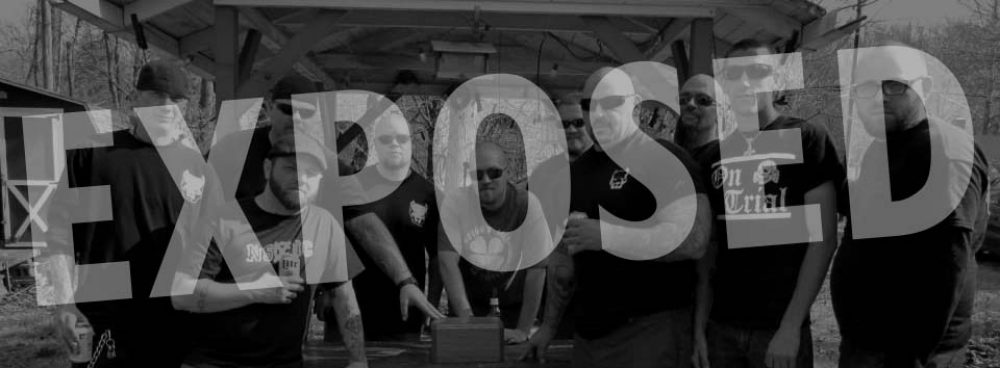
 From l to r: Unknown, Joe Phy, Scott Costa, Jason Cunningham, Ian McCorts, Unknown, Bob Gaus, Bryan Vanagaitis, AJ Olsen and Nunzio Pellegrino of Keystone State Skinheads. All except unknowns were profiled as part of KU Exposed.
 Keystone United members. From l to r: Steve Smith, Unknown, Bob Gaus, Joe Garvey, Bryan Vanagaitis, Cody Haulman, Ryan Wojtowicz, Scott Costa, Ian McCorts, Travis Cornell (rip lol), Chris Croumbley, Josh Martin and Shane Dilling. All but the one unknown were exposed during our series.
 KSS rallying along with their friends in the PA State Militia for anti-refugee “Overpasses Across America” protests From l to r: AJ Olsen, Joe Phy, Ryan Wojtowicz, Steve Smith, and Pat Rogers. All were profiled in KU exposed.
 Keystone United rallying in Harrisburg. A: Scot Costa B: Travis Cornell (rip lol) C: Shane Dilling D: Ian McCorts G: Ryan Wojtowicz H: Steve Smith I: Bob Gaus J: Bryan Vanagaitis K: Chris Croumbley L: Cody Haulman. All were profiled in KU exposed.
 Pat Rogers of KU/KSS repping support for Golden State Skinheads after word of possible charges for their members stabbing several Anti-Fascists in Sacramento in 2016.
 Several members of KU/KSS can be seen wearing Anti-Antifa t-shirts in this pic from LED 2017.
 Steve Smith and Ryan Wojtowicz of Keystone United. Both are Luzerne County GOP committeemen.
 Nazis have embedded themselves in groups like The Proud Boys and Patriot Prayer or started multi-racial pan-right groups like Vinlanders Social Club founder Brien James’ American Guard.


