MONROEVILLE, Pa. (KDKA) – The Monroeville office for Patrick Thomassey, the lawyer for former East Pittsburgh Police Officer Michael Rosfeld, was shot up overnight after Rosefeld was found not guilty in the shooting death of Antwon Rose on Friday.
Thomassey’s office is located at 1940 James Street. Police said there are at least two different bullet holes, one one the front lobby and one that went through a front window. No one was harmed in the overnight shooting.
Police have measurement markers around the bullet holes, and police are expected to be on the scene for the foreseeable future.
[Submission from Unity Division received on 02.05.19, published on 02.11.19 because we don’t check our email.]
Burner Cell Phone For District Attorney
Hello. My Name Is Burner and I am running for the District Attorney of Allegheny County. I am a disposable cell phone who has spent all of the past two years of my existence living in the city of Pittsburgh knowing that at any moment, I could be charged with a crime I did not commit: I could be used as evidence to prosecute low-income youth and people of color, either myself or someone I love could be destroyed or searched by a police officer without probable cause. Right now these are all possibilities under the current District Attorney Stephen Zappala, and that is why I am running for District Attorney of Allegheny County.
If elected I will not prosecute one drug possession case, no matter the weight. The war on drugs must be abolished.
If elected I will also prosecute to the fullest extent of the law any police officer accused of committing a violent act toward an unarmed person. It will not take public demonstration and the blocking of highways to convince me to seek justice for the least fortunate, I will do it on my own accord.
If elected I will prosecute any political official involved in political bribery, misconduct, or abuse of power. Furthermore, Allegheny County officials responsible for the crimes committed against inmates at the Allegheny County Jail will be held accountable.
Any person alleged to commit acts of animal cruelty, such as researchers at the University of Pittsburgh, will be prosecuted for their crimes against the dignity of animals.
While I intend to hold accountable any criminal that I come accross, my administration will adhere to the principles of restorative justice in order to help undue the harm done to our most vulnerable populations by mass incarceration.
People accused of violent crimes who suffer from mental illnesses will be treated with mercy and given treatment over punishment and brutality. All individuals accused of crimes will be given actual due process under the law. This means adequate council and appropriate criminal charges for the crime alleged. If these conditions are not met, the District Attorney will not take the case.
Victims of domestic abuse and other crimes will be shielded from harm by their abusers. The District Attorneys office will prioritize protecting human and animal life over case clearance and political reputation.
In closing, I will dedicate my administration to abolishing prisons as we know it and replacing them with educational and rehabilitative institutions whose goals are not to punish but to make whole the broken people who have been spit out by this system. Justice should not be about the brutalization of people who do the wrong thing, it should be about protecting the righteous from the unjust and making our community a better place.
My name is Burner, and I pledge to make Allegheny County a safe community.
On Tuesday, October 30th, thousands of people took to the streets of Pittsburgh to mourn the passing of 11 people at the hands of an Alt-Right white nationalist, who attacked the Tree of Life synagogue several days ago for their work in supporting refugees and immigrants. The gunman, 46 year old, Robert Bowers, stated his intent to attack the synagogue to not only “kill Jews,” but also to make a murderous statement about the caravan of Honduran refugees that he, along with Donald Trump, refers to as “an invasion.’
According toRaw Story, due to the size and scale of the protests, Trump’s motorcade had to be redirected as to avoid the protests. As various news outlets reported, there were two massive marches organized, and these two demonstrations came together in the streets and then marched on the Tree of Life synagogue where Trump visited for several hours after touching down in Pittsburgh. Police kept protesters away from the President, as thousands chanted against Trump and white nationalism.
The demonstrations showed both an outpouring of anger at President Trump, but also in a way that drew a direct political line between Trump’s political ideology and policies and the neo-Nazi attack on the Tree of Life synagogue. At a time when people across the US are pushing back against Trumpism, such resistance shows that we are united in resisting the regime despite the color of our skin, our religious beliefs, our sexuality, or our gender.
Protesters have taken over the streets at Forbes and Murray Avenues. Musicians leading them in singing Olam Chesed from the steps of a Presbyterian church pic.twitter.com/RrMDuJZqGk
Holding signs that say “denounce white nationalism,” a mass of protesters sings in Pittsburgh as Pres. Trump and the first family visit the Tree of Life synagogue in the wake of deadly mass shooting. https://t.co/20NWyrahhTpic.twitter.com/DZgnauUVt8
Massive protest in Squirrel Hill to greet POTUS visit. Second protest a few blocks from here. The president most unwelcome in this neighborhood. pic.twitter.com/cSIvoxDf9o
In today’s political climate one cannot predict much, but we are still going to say not to expect the neo-fascist Proud Boys running around trying to play their games over the next year or so as much as they are now. Afterthe fight at the Republican Clubrecently, they became the crew that everyone wants a piece of, and everyone will have their piece, you can bank on that. Even the right-wing New York Post – which is owned by News Corp, which also owns Fox News, who once employed Proud Boy founder Gavin McInnes – called them out as a “far-right hate group” in an articleabout right wing activists harassing Nancy Pelosi during a visit to Florida because someone in the crowd of activists beating on the windows repped the group.
Well, Philly is going to get their shot at them. AFacebook event pageis up for something called the “We the People Rally” which is being organized by two groups, Patriot Events and Sports Beer and Politics, whose own Facebook page has two Proud Boys as administrators. As of now, the page is particularly benign with a disclamer saying the following:
We at Patriot Events and Sports Beer and Politics do not condone the use of violence by any party at this event. This event is to allow the people to make their voices heard. Any violence, racism, or display of hate by any group or individual is extremely prohibited. Any group or party violating these conditions will be removed from this event immediately.
The hosts, planners, security, speakers or their affiliates, members or family will not be held liable for bodily injury or personal damages to anyone in attendance. All civil claims, attorneys costs for the aforementioned will be paid by the claimant.
There is a reason for that. Just before the Proud Boys made asses of themselves in NYC, they were boasting on this page that they were going to come to this event with the purpose of fighting people:
After NYC, these postings were scrubbed from the event page, but too late. Somebody already saw them. This is what people will be mobilizing against, despite the usual tapdancing from the organizers that they don’t condone violence and be vigilant against it. Folks are used to that tapdancing and are not buying into it. The Proud Boys also are good for the “I’m not racist” routine and their supporters point to their members of color. Well, they repped at both Unite the Right rallies in Charlottesville last year and Washington, DC this year, the DC outing featuring a Hispanic Proud Boy. So folks stopped giving them quarter, and are going to do something about them before they really cause innocents to be hurt.
Filler is an autonomous media platform & zine distro, not an organization. Click HERE to submit news, analysis, communiqués, misc. intel, your demo tape… all that good yinzurgent shit.
“For the next 30 days, every day, we will be profiling/exposing a member or supporter of Keystone United (KU) and Keystone State Skinheads (KSS). We will be largely concentrating on Pennsylvania fascists, with a few exceptions.”
Philly Antifa not only followed through, but they even threw in a few bonus boneheads. Local jags include Josh Martin, Terrence Raymond Stockey, and Shane Michael Dilling. Click HERE for the complete list of fascists, read on to check out Philly’s closing thoughts, which we’ve republished here for its insights and because spread that shit.
We hope that the info we’ve collected is helpful to comrades around Pennsylvania and elsewhere. We will be copying all the Keystone United Exposed articles to a stand-alone blog so, as time passes and new content is published here, that info remains easy to find.
Keystone United Exposed effectively identified the major players within KSS, as well as many of its foot soldiers and supporters. It provided a start in mapping out the distribution of KU/KSS around the state and region, so we can know where they are really strong and when they are swelling numbers with out-of-town support.
From l to r: Unknown, Joe Phy, Scott Costa, Jason Cunningham, Ian McCorts, Unknown, Bob Gaus, Bryan Vanagaitis, AJ Olsen and Nunzio Pellegrino of Keystone State Skinheads. All except unknowns were profiled as part of KU Exposed.
Keystone United members. From l to r: Steve Smith, Unknown, Bob Gaus, Joe Garvey, Bryan Vanagaitis, Cody Haulman, Ryan Wojtowicz, Scott Costa, Ian McCorts, Travis Cornell (rip lol), Chris Croumbley, Josh Martin and Shane Dilling. All but the one unknown were exposed during our series.
Having identified this many members and associates of KU/KSS will also lead to us identifying future associates more easily. We exposed many bones at their jobs and to people who live in their communities. However, one drawback of a project like this is such a flood of information can make it inevitable that people will begin to slip through the cracks. It’s possible that by focusing on a smaller number and really campaigning around, for example, getting Steve Smith fired from Gertrude Hawk’s Chocolates warehouse in Dunmore, we could have had a larger impact. The good news is there’s no reason why we can’t still do that.
While preparing these articles, we learned several things that had to be considered and reconciled with our subjects’ associations with a violent white supremacist gang; filled with men who glorify Hitler and Colonialism, who promise “Freedom Through Nationalism” but practice racial terror. Including the frequency that Keystone United members and associates had successfully either totally hidden or sanitized the group’s image for many people in their lives. This sort of “low-intensity,” year round outreach work (aka being fake friendly) is insidiously effective in minimizing the eventual impact once they are eventually exposed. “Oh no! Not Bob… He’s never said anything offensive to me! Well, a few jokes…” is what some will say. Nazis collect these “friends” as an insurance policy against future exposure.
KSS rallying along with their friends in the PA State Militia for anti-refugee “Overpasses Across America” protests From l to r: AJ Olsen, Joe Phy, Ryan Wojtowicz, Steve Smith, and Pat Rogers. All were profiled in KU exposed.
Keystone United has largely maintained their course during the Trump era. Unlike Heimbach and the TWP or the NSM, KU/KSS did not overreach early or open up the gates to any potential murderer they could slap a white polo on. Keystone United abandoned publicly using language about “Racial Holy War” (RaHoWa) or overthrowing the “Zionist Occupied Government” of the U.S. long before Trump. What has changed, though, is that now KU/KSS has a new PR tactic at their disposal, the label of “Trump Supporter.” KU/KSS uses that aforementioned outreach work to reinforce the notions being pushed by right wing media that a) anti-fascists are indiscriminately describing as nazis and attacking all trump supporters or anyone who disagrees with far left politics and b) all actions against trump supporters are being done by Antifa crews or organizations. Both of these claims are patently false. But now, with many major media outlets pushing similar narratives, they have a more receptive audience.
We know that we convey to everyone as to the level of threat KU/KSS represents. This is disheartening, both as Anti-Fascists and as people who, largely, have experienced direct violence from this group or groups allied to them. And ultimately, the conclusion is that white conservatives generally, (and some POC conservatives) don’t really dislike Nazis very much at all. It would seem, that for many of them, the biggest concern is being lumped in with them, and a frustration with nazis not being able to keep their racist rhetoric in the coded language that is popular among “white america.” That said, we hope that this series has made it clear that KSS has not gone away, and their influence and support network extends far beyond their membership.
Keystone United rallying in Harrisburg. A: Scot Costa B: Travis Cornell (rip lol) C: Shane Dilling D: Ian McCorts G: Ryan Wojtowicz H: Steve Smith I: Bob Gaus J: Bryan Vanagaitis K: Chris Croumbley L: Cody Haulman. All were profiled in KU exposed.
When members of the Golden State Skinheads (a crew allied with KSS), wearing TWP shirts,attacked and stabbed anti-fascists in Sacramento in 2016 before being driven off the streets, TWP spokesman Matt Parott attempted to frame it to the media as a fight between “pro and anti-trump groups.” Because of the spiteful mentality of Trump supporters in the face of ever-increasing evidence of his incompetence, narcissism, and corruption, they will defend anyone willing to still publicly identify as a pro Trump. Anti-Fascists need to be aware of this dynamic and begin formulating new strategies to wedge groups like KSS and Blood and Honour from the GOP base. The evidence of what happens if we fail is in the increasingly Fascist rhetoric and tactics being used by pro-trump sectors of government and law enforcement, not to mention all the recent dog whistles to nazism coming out of those sectors.
Pat Rogers of KU/KSS repping support for Golden State Skinheads after word of possible charges for their members stabbing several Anti-Fascists in Sacramento in 2016.
Exposing a nazi is crucial. It can largely neutralize their crossover political organizing, add a tremendous social cost, and makes them think twice about attacking someone, knowing that they will be identified immediately by Anti-Fascists. For KU/KSS, public exposure also undermines the generous amount of effort they put in to distancing their group from its more openly neo-nazi past. However, it is the follow-up that gets the goods. The people who contacted workplaces, passed out flyers around the homes of KSS members, pushed for their expulsion from social clubs and sports teams, and took other actions have done just as much as us to make this a success.
One area we did not touch on during this series as much as we’d like is KU/KSS’ involvement in the “Anti-Antifa movement.” Anti-Antifa Pennsylvania shirts are printed and sold by KSS members, and they are involved in running an Anti-Antifa blog and website that publishes information on Anti-Racists and Anti-Fascists. KU nazis are very encouraging of the Anti-Antifa label as a stand in for more openly nazi imagery and as a unifying point between white nationalists and other far right nationalists who conflict with antifa because of our left and anarchist politics. Pushing Anti-Antifa as a brand within the larger pro-trump right is likely to be a strategy for KU/KSS over the next few years, and the groundwork has already been laid by media outlets, Trump, and 4chan.
Several members of KU/KSS can be seen wearing Anti-Antifa t-shirts in this pic from LED 2017.
We have successfully identified almost all of the attendees of last year’s Leif Erikson Day event in Philly. Only those who hid their faces or stayed away from Fairmount Park have escaped detection so far. So while ultimately our goal is to stop KU from holding Leif Erikson Day at all, the information we gather from it’s continuation is a nice consolation prize. Thanks to last year’s LED, we were able to identify Joe Garvey, Chris Croumbley, Anthony Marcink, and Travis Cornell (rip lol), all previously unknown to us, as Keystone United associates. We were also able to confirm the continued involvement of several individuals who had not been sighted at public KU events for several years, including Shane Dilling andLiam Schaff.
Some of those KSS nazis wore masks because they have something to lose from being exposed by us. Help us identify the “unknowns.” If anyone has information about the any of the unidentified nazis picture in this series, please send it our way.
It is common to end on a note acknowledging that white supremacy and racism are much larger than neo-nazi bonehead crews or their more media-friendly iterations. While this is true, attempts to compartmentalize groups like Keystone United from the larger “mainstream” right seem rooted more in wishful thinking and denial than reality. KU has synthesized American libertarian conservatism with national socialist “race science” to make both more palatable to the other. TwoKeystone United leaders are Luzerne County GOP officials. In the process of this article, we exposed KU members/associates as working for city governments,in large unions, and for international software firms. Keystone United associates are/were active in biker clubs, veterans groups, roller derby leagues, music scenes and local government. Tired tropes and finger pointing about “living in mom’s basement” on both sides of this conflict are generally inaccurate, Daniel “Jack Corbin” McMahon excepted. Anti-Fascists in this state should not discount how embedded Keystone United are in their communities.
Steve Smith and Ryan Wojtowicz of Keystone United. Both are Luzerne County GOP committeemen.
When Bob Gaus and several other KU members attended Trump’s rally in Harrisburg, they did not sit in some special section. When they (likely) went out to get a drink afterwards, they did not go to a nazis-only bar. When they talk politics at the bar with people belonging to “the mainstream right,” those people are most likely left with the impression that they have more in common than difference with the KU members. If we learn nothing else from Trump’s ascension, it should be that the distance between a “non racist” republican (or democrat/independent for that matter) and a neo-nazi is much smaller than we like to believe, and the unifying of those forces is a very real threat.
Nazis have embedded themselves in groups like The Proud Boys and Patriot Prayer or started multi-racial pan-right groups like Vinlanders Social Club founder Brien James’ American Guard.
Republicans have utilized dog whistle and crypto-fascist talking points to retain supporters among the racist right, while not alienating POC and non-racist conservatives. Anti-Fascists have relied too heavily on accusations of racism as a panacea solution to the far right, and the far right has adapted. They have dozens of strategies in place to undermine those accusations before they are even made. We have to take the more difficult path of dissecting the full contents of the ideologies of the far right and conveying why they should be opposed on a plethora of grounds, including cis hetero-sexist positions, militarism and colonialism, and supporting capitalist exploitation of the working class, in addition to white supremacy and racism. Otherwise we will continue to hand groups like Proud Boys, Patriot Prayer and American Guard an easy way to insulate themselves from association with orthodox fascist groups, and an easy way to portray us as hysterical or dishonest.
We would like to thank all those who took action this month based on the articles we’ve released. As we mentioned, actions have already begun and are likely to continue for some time. As this is being written, it is unclear when or if Keystone United will hold their Leif Erikson Day event in Philly. It is possible they’ve even held it already in secret. Should they do so, we have the tools to hold them accountable long after they scurry out of Fairmount, back to their homes in Philly or elsewhere in the state. It is a point of pride for us to put a stop to this demonstration, but not only have we effectively neutralized it as a source of recruitment or propaganda for KU, we have purposed it as an intelligence trove for ourselves. So stay home or come on out, boys. Either way, we’ll use it to our advantage and to further our ultimate goal of destroying Keystone United for good.
Finally, predictably, there has been some blow back from KU/KSS/BNH regarding this series. Threats and harassment has been sent from KU members and supporters in all directions, including to non-involved persons and former members. Sometimes for something as simple as sharing an article. We send our respect and solidarity to the folks facing any sort of harassment as a result of the series. Threats against ourselves have also been levied, both of legal action and assault. For our part, we refuse to be intimidated by a group of coward liars. Two-faced scumbags who have the nerve to call others “degenerates.” Who attack brutally in swarms and talk tough behind police but who cower in our city, coming unannounced and bitterly unwelcome, staying briefly and leaving quickly. Every flash demo and rally, every threat and assault, every rape and murder, creates more of us. It reinforces our resolve. This is the city of gritty, fuckers, and we’re just getting started.
Coming a few weeks after holding a picnic in the area, Keystone United members were cited by police (but tellingly not arrested or charged) following an unprovoked attack on a regular patron of the Jackman Inn in Avalon PA on July 7th.
The Jackman Inn in Avalon, PA, where KSS attacked a black customer and a bartender on July 7th.
“An alleged neo-Nazi group is being accused of targeting an African American customer, assaulting him and using racial slurs against him at the Jackman Inn…
It happened when the victim, patron Paul Morris, walked into a backroom where a group of men were playing pool. The men allegedly used a racial epithet against the victim.
Police say the group of men may have been from Keystone United, which they describe as a racist neo-Nazi group formerly known as the Keystone State Skinheads…
when the bartender asked the group to leave, they attacked Morris…
‘Eight of them jumped Paul,’ (the bar manager) said. ‘He was hit in the face. He bent down to pick up his glasses. He was hit again’…
Morris is now California, but KDKA’s Andy Sheehan spoke with him on the phone. He says one member who called him the n-word said his group would eradicate blacks one-by-one, and then he attacked.
‘They attacked me because they had hate in their hearts. I didn’t do anything to these people,’ Morris said.
Avalon Police detained some members of the group, but did not charge them. Avalon Police Chief Thomas Kokoski said he believes they will be charged, but the incident is still under investigation….
The incident happened on July 7, and Morris’s lawyer, Fred Rabner, questions why no arrests have been made, saying they should be charged, not only with assault but with ethnic intimidation.
‘This is a hate crime, there’s no doubt about it,’ said Rabner. “
Fortunately, Morris received no serious injuries, nor did the bar employee, who was also attacked when they intervened.
It is unknown which KSS members were involved in the attack, but the event is not dissimilar from an attack on a black man by 3 KSS members in Scranton, PA back in 2003, one of whom was Luzerne County republican committeeman and co-founder of KSS Steve Smith.
[Update: six of the ten fascists responsible are Natasha Dawn Bowers, 33, of Roaring Spring; Terrence Raymon Stockey, 40, of Beaver; Jeremy L. Ingram, 35, of Hollidaysburg; Travis Lee Cornell, 43, of Marianna; Crystal Lynn Shields, 23, of Tarentum; and James Edward Kryl, 45, of Pittsburgh’s North Side.]
Steve Smith is a longtime Neo-Nazi. He is a former Klansman, co-founder of KSS and Luzerne county republican committeeman.
Smith was in attendance at the KSS picnic in the area at the end of May, but it is unknown if he was involved in the attack on the 7th.
We could go on forever about state/cop bias in favor of white supremacists (and white people in general), for example, participating in an Anti-Racist march where some windows got broken can get you arrested and looking at 70 years while attacking 2 people during a hate crime gets you cited with no charges. Or we could belabor that those who equate Antifa with Nazis, or claim we have “Anti-White Bias” would be hard pressed to find an incident where Antifa randomly attack a white man for his race when he comes into a bar to deliver a thank you note to one of the employees, but we won’t.
This was a horrific attack that could have ended in much more serious injury or even death, as attacks by KSS membershave in the past. We are glad Mr. Morris and the bar employee escaped serious injury.
Keystone United/KSS have been a blight on PA for too long. If we can hope for any silver lining to this attack, it is that people in this state will start taking the threat they represent seriously again, and that the years of PR spinKSS has employed to try and convince people that their “old days” of randomly attacking People of Color, Queers and Anti-Racists were behind them in favor of “positive white activism” have been debunked.
Anyone with information about this attack, specifically which KSS members were involved, should contact us. We plan to identify those involved and release their names, which is more than the state could be counted on. No one should be able to commit a racist assault on Saturday and go back to anonymity on Sunday.
Received on July 12, 2018. Originally published by Torchlight PGH— Anarchist News from Pittsburgh
As everyone now knows, on June 19th East Pittsburgh police officer Michael Rosfeld murdered Antwon Rose Jr. by shooting him in the back three times as he ran from a traffic stop. When a video of the shooting went viral on social media, Pittsburgh exploded in protest. Explosions are relative of course, and the riots, looting, and torched convenience stores that characterized analogous uprisings in Ferguson and Baltimore have here translated to peaceful marches to block traffic. Nonetheless the current situation is a major departure from the usual activist routine that anarchists in Pittsburgh suffer through. We offer the following points for consideration.
1. The cops are taking this very seriously.
Pittsburgh police chief Scott Schubert has showed up in person at at least two of the protests, and all of the actions inside Pittsburgh city limits have featured a gaggle of commanders and assistant chiefs, none of whom ordinarily work nights. Pittsburgh has also called in the PA state police on short notice for several protests. The cops call that “mutual aid”, but that doesn’t stop them from charging for it. Pittsburgh will be getting a bill from the state. The Pittsburgh cops have even switched to 12 hour shifts for the duration of the crisis, in order to monitor the protests and still carry out day-to-day oppression. This policy is reminiscent of the All Hands on Deck weekends in DC that the police union there fought against so bitterly, except it’s not just a weekend, it could last for weeks.
Yet despite the massive amounts of cops and money being thrown at the protests, arrests have been sparse. As of this writing there have been only five that we’ve heard of, not counting hecklers. This is not for lack of opportunity. The cops are obviously bending over backwards to avoid provoking an already furious community further and sparking a Ferguson style riot. One recent action provides a telling example.
On the evening of June 27th, a smallish crew held anoise demo at Rosfeld’s house near Penn Hills. The action was pre-planned, unannounced, short, and came off without a hitch except for one thing. Somehow word got out, and a bunch of latecomers rushed to Penn Hills, assuming reinforcements were needed. They got there after the first crew had gone home and taken most of the legal support with them. The “reinforcements” therefore arrived to a hornets nest of pissed off cops protecting one of their own, most of them from random boroughs in eastern Allegheny County that never see protests. It was the kind of situation guaranteed to send cold shivers up the spine of any experienced street demonstrator, but the bloodbath never happened. No arrests, no injuries. Even in Penn Frickin Hills the cops have now been inoculated against antagonizing protesters.
[Filler would like to add a side note here: the second home demonstration was materially supported in a variety of ways by several of the previous demo’s crews, and the action contributed to many great new relationships. This should not be overlooked.]
Anyone who thinks this forbearance indicates any good will on the part of the police should keep in mind the second prong of their strategy – shadowing every demonstration for Antwon with ridiculously obvious undercover cops (three at the morning march on the 27th had the flashers on in their unmarked cop car). Torchlight sources have spotted them at every march they have attended. People who have confronted them report that they seem very uncomfortable about being outed, so the obviousness is probably not an intimidation tactic, they’re just incompetent. They’ve still been taking tons of pictures however, presumably with the aim of identifying all the new protesters who have emerged since Antwon’s killing. This too is unprecedented here.
2. Stephen Zappala’s job is probably safe.
“THREE SHOTS IN THE BACK, HOW DO YOU JUSTIFY THAT!?” Allegheny County District Attorney Stephen Zappala worked harder than anyone else to come up with an answer to that question. After a week of valiant effort however, he finally threw in the towel and admitted that no, he couldn’t justify that. That hasn’t stopped self-appointed organizers from first announcing an electoral campaign to unseat Zappala, and then scrambling to recruit a Black former public defender named Turahn Jenkins to take him on in the Democratic primary next year. In their haste they skimped on their research, and missed Jenkins’blatant homophobia. Presumably they’re going to give it another shot however. We have said this before, but the electoral approach makes a lot more sense as a strategy to remove protesters from the streets than a serious attempt to replace Zappala. Just for fun though, let’s take it at face value for a minute.
As calculated and political as Zappala’s decision to charge Rosfeld with criminal homicide was, it’ll probably be enough to mollify white liberal voters who just need to be reassured the system still works. By next year’s Democratic primaries only the angriest of liberals will still hold it against him. Right wing voters on the other hand, are going to be pissed. Pittsburgh’s Fraternal Order of Police are unlikely to be any more enthusiastic about those 12 hour shifts than their DC counterparts, and all cops will be angry with Zappala for what they consider his spineless pandering to protesters. Reactionary douchebags and closet racists, who make a sizable voting bloc, will surely feel similarly. This leaves Zappala more vulnerable from the right than the left. If he has to run to his left to fend off a progressive candidate he will leave himself even more open to a Republican opponent in the general election.
There are other scenarios, most of them also unfavorable. A centrist law and order Democrat could win the primary if Zappala splits the liberal vote with a progressive challenger. A charismatic progressive-sounding candidate could beat Zappala and then turn out to be no less malicious a prosecutor. Or of course Zappala could capitalize on the donor network and connections he has built up over two decades in office to cruise to victory.
The liberals are taking reformist Philadelphia DALarry Krasner as a model for Allegheny County. APABof course, but Krasner’s reforms are lifting some of the weight of the prison industrial complex from the necks of Philadelphia’s impoverished communities. Liberals still need to ask themselves which is more likely, that a newly elected DA would actually carry out a facsimile of Krasner’s program upon taking office, or instead mend fences with the police, mollify the hardliners in his office, and reassure conservative voters that he’s not crazy after all by continuing business as usual with a thicker layer of progressive rhetoric.
The one ray of hope is that therejust might be a progressive rebellion emerging in the Democratic Party. It’s not impossible that after another year of Trump Allegheny County voters will be fed up enough to throw the bums out, Zappala included. Turnout is lower in odd year elections, so it wouldn’t take that many voters to elect a Krasner 2.0 if one could be found. Nonetheless an election-based strategy would mean putting an awful lot of eggs in one basket with no guarantee of success and no consolation prize.
But of course that’s the point. Pittsburgh’s liberal establishment would like nothing better than to see militant resistance burn itself out in a failed election campaign and sink back into jaded exhaustion. A successful election campaign would suit that purpose nearly as well.
3. Brandi Fisher is really good at coopting militant struggles.
A t-shirt popular during the Penguins’ back-to-back Stanley Cup runs read simply “SIDNEY CROSBY IS REALLY GOOD AT HOCKEY”. By that measure Brandi Fisher of the Alliance for Police Accountability absolutely deserves a t-shirt of her own. Her performance since Antwon’s murder has been at least as scintillating as was Crosby’s, and she doesn’t even have Matt Murray backing her up. Put another way, Brandi is near-singlehandedly replicating the work of Al Sharpton and the army of Black clergy that descended on Ferguson to pacify the uprising over Michael Brown’s murder. Pittsburgh isn’t St. Louis of course, but that’s still some impressive shit.
Brandi’s sheer versatility is amazing. Whether taking potential rivals under her wing, canceling their demonstrations unilaterally, or segueing seamlessly from one to the other, she doesn’t miss a beat. Freezing [primarily] white anarchist groups out of protest organizing, corralling angry street marches by strategic use of a bullhorn, coordinating with her friends among the police, lining white liberal groups up behind the APA banner – all part of Brandi’s extensive repertoire. It’s not just the highlight reel moves either. Brandi also displays the attention to detail that is the hallmark of the true superstar. Take the name of her group. By calling it an “alliance” she conveys the impression of being a part of a diverse group of organizations, all focused on the same goal. APA is nothing of the sort of course, it’s just Brandi and a few of her cronies. She gets away with this trick because she was clever enough not to call it a coalition.
Between the three of them, Brandi, Zappala, and the cops have had an effect. The huge pre-announced highway-blocking marches that characterized the first week of the uprising have given way to smaller and more sporadic actions organized mostly in secret. These types of actions aren’t as disruptive, but they’re harder to control. Brandi’s influence is weaker in the suburbs than within Pittsburgh, and a hard core of pissed off Black women is emerging who don’t take her every word as gospel. Medics and legal observers have been a small but consistent presence at nearly every action so far, as have white anarchists, despite Brandi’s attempts to exclude all three. It’s a little early to tell, but there are signs of something exciting coalescing that could last well beyond the current upheaval.
Better late than never. It shouldn’t have required a tragedy for Pittsburgh anarchists to start making connections with those at the sharp end of police oppression, but now that we have an opening we should take it. It’s not going to last forever. We have a natural affinity with the ones who refuse to be intimidated by riot cops, pacified by liberals, or lulled by reforms. The time to start talking to them is now.
***
Related counter-information:
*the image below should read: East Pittsburgh police officer…
The following reports cover several of the latest autonomous actions taken during the ongoing mobilization demanding justice for Antwon Rose Jr, including two demonstrations held outside the homes of killer cop michael rosfeld and judge/collaborator jeffrey manning.
All reports were submitted anonymously to Filler PGH or It’s Going Down.
Rally & Vigil Held Outside East Pittsburgh Officer michael rosfeld’s Home
June 27
Pittsburgh residents and organizers held a vigil and rally to remember Antwon Rose Jr. at the home of killer cop michael rosfeld.
Rosfeld had been released on a $250,000 unsecured bond (on a criminal homicide charge…) just a few hours prior, and so some folks coordinating as part of the steel city autonomous movement (SCAM) thought we’d welcome him home; the charging of michael rosfeld is a small victory, but justice demands that we take direct action towards the abolition of white supremacy.
We are outraged, saddened, yet unsurprised by the actions of the police. State-sponsored violence is how those in power uphold white supremacist capitalism. With this in mind, we also called attention to the history of local police brutality, commemoratingMark Daniels and Bruce Kelley Jr. among others recently murdered by the state. Successfully convicting rosfeld of homicide does not prove he is only ‘one bad apple’; there is a larger culture of police and city authorities who are complicit in state violence, and that must be accounted for.
It’s important that the community of Verona — the officer’s current neighborhood of residence — be made aware that they are living in close proximity to someone who did not hesitate to kill an unarmed black teen by shooting him three times: in the back, arm, and face.
During the demonstration, some neighbors shouted in support, while others made sure demonstrators did not go on their private property. There is a community divide, but there is necessity in confronting that divide. The demonstration served as a way to show where neighbors stand, and to elicit responses from residents. Police are public officials, and rosfeld’s address was publicly available. Rallying outside the jagoff’s residence is the necessary social consequence to murders committed by police.
After the action, dozens of folks decided to go back with more numbers and held their ground until around 11pm / midnight.
As an excerpt from a flyer that was distributed to neighbors reads,
[…] systemic racism is woven deeply into the greater Pittsburgh area. Because one of the most deeply segregated urban regions in the country is patrolled by cops that belong to a powerful right-wing union—the FOP. Because in this reality, the police are only harbingers of violence to communities of color; killing or incarcerating, creating trauma, breaking apart families. It was only 4 months ago that the Pittsburgh Police shot and killed Mark Daniels here, an unarmed 39-year-old grandfather, another black man killed by another white cop. This is the same policing system that, in 2010, jumped 18 year old Jordan Miles, beating him beyond recognition while he was walking to his grandmother’s house, drinking a soda the cops claimed was a gun.
To close, here is a quote from areport-backthat was released after another autonomous home demonstration in Pittsburgh—this one from last October, taking place outside the home of the brutally violent officer andrew jacobs.
Cops aren’t afraid of their fellow cops, of their bosses, of courts or prosecutors or legislatures. But they’re afraid of us. A little research and some word of mouth is all it takes for us to bring the fight from our neighborhoods to theirs.
Organizing against police violence challenges the separation of people from political power, the social logic of the badge made material by the physical force of the baton. Power insulates individuals from the consequences of their actions. This power must be seized through collective action and abolished, disorienting the powerful by rejecting the justification for their every misdeed.
We have a message for every cop, every ICE agent, every judge, every politician—for all the agents of white supremacy who continue to separate families through “legal” violence:
You have names and numbers, just like us. Just like us, you have homes that can be surveilled, neighbors that can be turned against you, communities that will reject you if the alternative becomes too costly. Just like us, your actions have consequences.
Activists accept targeted retaliation as a basic fact of their work. It’s time the police reckon with something similar.
“I’m very comfortable with what I did. If either side doesn’t like it they know what to do.” – Judge Jeffrey Manning.
The judge got one thing right: we know what to do.
(This quote is often erroneously attributed to rosfeld when in fact it was another white supremacist collaborator, the judge).
Pittsburgh House Demo & Suburban Intersection Shut Down for Antwon
July 4th
Demonstrations continue in Pittsburgh following the murder of seventeen year old Antwon Rose Jr., and as patriots in Judge Jeffrey Manning’s quiet suburban neighborhood were celebrating another year on stolen land, the peace was disturbed as rows of angry people chanted enroute to the judge’s house. Judge Jeffrey Manning of 535 Kingsberry Circle Mt. Lebanon PA, gave killer cop Michael Rosfeld a $250,000 unsecured bond on a criminal homicide charge. Never before in the state of PA has anyone charged with homicide been released on these terms, and released he was on the dime of the FOP the fucking day of his arrest.
This while seventeen year old Zaijuan Hester, who was charged with criminal attempted homicide, and was allegedly running from the traffic stop with Antwon, sits in jail without bond. We know the judges are not and will never be our allies, so of course shit is going down this way, but a little public shaming and intimidation to highlight just how much of a piece of shit Manning is is both empowering to those putting his shit on blast, and informative to the community he lurks in.
Everyone met up outside dude’s cul de sac in the grass listening to Jimmy Wopo and just kicking it, sharing water and perspectives about why they were there. This group was a lot smaller than the bigger street marches – about 35 people – and was made up of Antwon’s community members, medics, legal observers, anarchists and antifascists, and black liberation activists. The mood was pretty posi with undertones of grief and anger about the situation, but in general people were feeling empowered and ready to storm this ding dong’s neighborhood. Folks silently marched single file in lines of two, some masked, some not; everyone with fists raised.
The chanting didn’t begin until the group arrived at Manning’s manor, where people began to shout, “What was his name? Antwon Rose Jr! How old was he? 17! Who did this? The police did this!” Speakers talked about the murder and the judge’s role in it all, songs were sung, and then the group reformed the two lines and marched through the neighborhood saying, “Three shots in the back, how you justify that?”
The pigs showed up late to the party and everyone was pretty much on to the next thing by the time several squad cars arrived. Everyone got out just fine. The second part of the day’s actions was to shut down the intersection at Connor and Gilkeson Road, a pretty big intersection for the amount of people who came out. This was right in front of a mall and a main route to various suburbanite July 4th parties, so that was tight. The small group shut shit down successfully with the help of a down ass semi driver who saw what was up and parked his rig in front of the exit route many cars were attempting to take. The cops were frazzled, a lot of fancy cars got fucked up hopping the median, and the intersection was held successfully for a good chunk of time in the 95 degree heat and direct sun.
One woman tried to drive her car through a group of about five, but that didn’t work out and she mostly got made fun of for like a half hour. Cops tried to pull at the heart strings of protesters by pleading for the ‘scared children’ in the blocked cars, met with the response, “Antwon was a scared kid.”
When the last car was turned around and bottomed out, the crew marched down the street with fists in the air singing, “Antwon Rose was a freedom fighter and he taught us how to fight; we gonna fight all day and night until we get it right. Which side are you on, my people? Which side are you on?” The semi driver honked and threw up a fist before trucking off.
Sixteen days ago, people came out into the streets in mass to protest Antwon’s murder, many for the first time. The first intersection shut down in front of the EPGH Police Dept was chaotic, powerful, sad, and confusing. On that first night, a cop tried to drive his cruiser through the crowd, and some intense in-fighting errupted when some folks decided to put their bodies in the way of the vehicle. There were arguments about weather white people should even be there, who the fuck are these people in masks, etc. Sixteen days later, at this demonstration, crews of all identities and backgrounds were tight and working together with understanding and respect for each other. Way more people were masked up, kids were helping each other figure out the best ways to tie t-shirts over their faces, road flares were embraced by everyone there, and everyone was reminding each other to use Signal. More crews are being formed, and they’re not planning on going away any time soon. The July 4 demo was def one of the smaller groups in the scope of things, but that tightness in the small number was super powerful. Friendships and comradery are being built in a way that will strengthen as we continue on in this fight, and forward.
All Cops Are Michael Rosfeld
Fuck All Judges Forever
The slideshow below is a compilation of graffiti actions that were claimed in solidarity with the movement, including one from comrades in Philly.
Related counter-information:
*the image below should read: East Pittsburgh police officer…
Originally published by Torchlight PGH — Anarchist News from Pittsburgh
Torchlight received the following reportback from an anarchist who attended the first rally for Antwon Rose on Wednesday evening. There was also a larger rally and march Thursday night that blocked Parkway East for over five hours. The reportback has been lightly edited for spelling and grammar, but is otherwise unchanged.
I got there late, about a half hour after the 6 PM start time. There were about 300 people there, most of them young and Black, rallying at an intersection. I recognized some people I knew, but not as many as I would have hoped ordinarily. East Pittsburgh is a pretty long way from where most of the anarchists live, and the protest was called with only a few hours notice.
The rally split up into a couple of groups, one in the intersection and another further up Electric Avenue (yup, Electric Avenue). The second group seemed louder so I gravitated in their direction. A bunch of people were screaming at the cops, especially this one pig in a white shirt. There were cops there from a bunch of different towns, including a few I hadn’t even heard of. None from Pittsburgh though, and I didn’t see any state cops either. The cops who were being screamed at backed off slowly and made a line across the road, but eventually pulled back to the sidewalks.
The other group was bigger but less confrontational. At one point a white unmarked cop SUV tried to drive through the big group and people started screaming and lined up to block it in. All the cops from Electric Avenue came over and surrounded the thing while it did a slow three point turn and finally left. That was as intense as anything got while I was there. After the SUV left some people started yelling at a few kids in black bloc about violence, which seemed kind of ridiculous when you think about what we were protesting.
Pretty soon after that people mad a giant circle in the intersection of Electric and Braddock and seemed prepared to stay for a while. Then the clouds started gathering, the news helicopter dippe out, and it began to rain hard. People clustered under a railroad bridge that runs over Electric and a few people sat down in the middle of the road. It seemed ilke the rain was thinning out the crowd though, and I eventually headed out because my ride was leaving.
Nobody seemed very well prepared, including the cops, but I guess that’s not surprising. I saw a couple of green legal observer hats, but no marked medics. A few people were there in black bloc, but in my opinion that wasn’t a great place for a bloc. They stood out more than if they had just worn regular clothes. The cops were mostly hands off. The Allegheny County pigs showed up, but they didn’t bring their horses. Nobody was in riot gear. The only crowd control weapons I saw were these assault-looking rifles that I think fire rubber bullets. Some cops from Monroeville had those, but they put them away pretty early. Except for the SUV incident they didn’t seem to be doing anything to provoke people.
The rain definitely took a lot of the fight out of the crowd but even before that people seemed more about grieving and venting their anger at the cops than throwing down. There’s going to be another protest downtown tomorrow at noon at the county courthouse, so we’ll see what happens there.
***
Related counter-information:
*the image below should read East Pittsburgh police officer…
[Author’s Note: This piece is not an entirely finished/particularly refined and doesn’t reflect my conclusive thoughts regarding the theoretical framework I forward in it (although I read Wynter and Lacan together here, working out the tensions and transformative implications of the combination is not really the goal of this paper, and I mostly cite McGowan because he’s useful for this analysis). A friend involved with Filler requested that I submit it because of its relevance to the conversations in the Pitt community regarding student protest, and I have no intention of repeating the academic’s mistake of using activism for scholarly gain without attempting to give back. Although I’ve tried to make it a more readable for a non-academic audience, I am inexperienced when it comes to that kind of translation, (and it takes a bit more time than I have with finals season coming up). I would hope that you approach this admittedly imperfect piece as an opportunity to perhaps work through and frustrate the way that you might imagine the purpose of higher education, but that’s largely up to you. Side note for debate people: card this at your own risk (like c’mon, have at least some restraint).]
Student Protest as Improper Enjoyment
RC
Introduction On the night of November 17th 2016 at the University of Pittsburgh, a coalition of different student groups led by Pitt Against Debt staged a non-violent protest against student debt and then President-Elect Donald Trump. According to a letter to the editor published by the Pitt News and written by the Pittsburgh Student Solidarity Coalition (2016), the protestors began by marching through the University of Pittsburgh’s Oakland Campus until they had reached the lobby of a campus dormitory, Litchfield Towers, and had a “speak-out focusing on sharing and celebrating [their stories].” Throughout the march, the students were watched by university-affiliated police in full riot gear. After the police detained a student, a group of the protestors went back to the Litchfield Towers lobby and reportedly began chanting “let him go” (Pitt News, 2016).
The police then blocked the main entrance and began to use violent force to remove students from the area and onto the patio of the dormitory, arresting two protestors in the process. Accounts of the violent confrontation between the student protestors and the university-affiliated police sharply diverge; Bill Schackner and Andrew Goldstein (2016) of the Pittsburgh Post-Gazette write that “violence abruptly broke out after protesters entered the Litchfield Towers dormitory complex on Fifth Avenue when University of Pittsburgh police ordered them to leave,” in contrast to the account above that claims that the protestors had first left the building and then returned after the detainment of their fellow student (Pitt News, 2016).
My interest in the protest is not to hash out the veracity of a specific account of the protest, but rather stems from what the reaction to the protest can tell us. The chain of events should sound familiar—student protest has been met with police brutality for centuries, if accounts of the University of Paris student strike in 1229 are to be believed. But in stark contrast to an event like May ‘68, where images of the protest would have to wait at least a day until being circulated for mass consumption through newspapers, a video of the protest was posted to Facebook within an hour or two of the event. The post demanded immediate response, accumulating hundreds of comments not only from Pitt students and alumni, but also from many conservative commenters who had no tie to Pitt. The vast majority of comments are either questioning or disparaging the student protestors, building an image of the protestors as “crybabies”, “spoiled brats”, and the like. The tropes invoked by commenters to justify the violence were not made in isolation—in the weeks after the election, similar rhetoric regarding student protests against Trump could be found across different new media platforms, from comment sections on Breitbart to Twitter and Youtube.
It’s useful to think here of Wendy Chun’s (2016) argument that the temporality of new media is defined by crisis (p. 71). Crises, as events that demand real-time decision making, become the essential grease on the wheels of the neoliberal economy of information, providing a constant stream of data input that shapes how we experience the Internet (p. 71). Think about how you might experience catastrophe in print newspapers: sure, you’re active in how you put together the pieces, but you aren’t really in control of the narrative—you are but one of many in an imagined mass community of faceless strangers the newspaper is targeting. But with algorithmically driven social media platforms like Facebook, news isn’t just distributed in the same package to faceless masses—it’s supposedly tailor made for YOU, and demands that YOU are constantly participating in conversations about the crises that erupt onto your screen.
The interactivity of the newsfeed conditions users to constantly respond and make sense of crisis after crisis, caught in a never-ending loop of adjusting their habits and beliefs to orient themselves in the imagined network of connections that make up how they perceive the world (p. 73). Images, videos, and articles that portray student protest as crisis are then moments that force you to make a semi-public (social media is where the private/public dichotomy breaks apart in the most confusing ways possible) judgment about the place of the university in how you imagine the connections in the political field in the United States. As of now, student protest is a constant fixture in political news coverage, providing a stream of crises that often come to stand in for broader anxiety that stems from the (relatively bipartisan) narrative of a crisis in campus free speech, often connected to (at best) mis-guided political correctness and overzealous student activists or (at worst) “SJWs,” “cultural Marxists,” and the “regressive Left.”
As such, the broader questions that this project seeks to answer is this: how do people imagine the relationship between the university and the field of American political discourse? And what can this imagined position tell us about the structural constraints upon what students can demand and how they can demand it in academic environments? And finally, what are the ethical protocols, the unconscious symbolic commitments, that lead us to imagine the university as such? The police violence against student protestors featured in the FaceBook video functions as a crisis that is perceived to demand the commenters ethical judgment. Using the theoretical lens of Lacanian psychoanalysis, I argue that these FaceBook comments reveal an investment in a fantasy of the campus as an apolitical space of private enjoyment. The invocation of tropes of safety, legality, disruption, and civility depoliticize student’s radical democratic demands by framing them as an improper form of enjoyment that breaks the unconscious ethical injunction to private enjoyment that structures the role of public institutions in racialized neoliberalism.
The paper is split into two parts. First, I articulate a theoretical framework through which to understand neoliberalism and its function in relation to desire. If you are a reader who doesn’t have a whole lot of time and is tired of reading a definition of neoliberalism for the umpteenth time, you can afford to skim this section until you get to the bit about desire. The second part begins with a short literature review regarding neoliberalism in higher education and then moves to an analysis of the comments. I have chosen four long comments that I think are representative of the comments that negatively read the student protestors (if you believe that this is insufficient or that I was cherrypicking the comments to make my argument, then you can always check out the video and the comments yourself). I conclude with a brief discussion of the possibility that student debt could be useful in traversing the fantasy of the apolitical campus.
Neoliberalism and Enjoyment
Neoliberalism is defined by David Harvey (2006) as “the first instance a theory of political economic practices which proposes that human well-being can best be advanced by the maximization of entrepreneurial freedoms within an institutional framework characterized by private property rights, individual liberty, free markets and free trade” (p. 145). Generally used as a descriptive term by those who seek to critique it, the beginnings of neoliberal thought emerge from the work of Austrian and Chicago School neoclassical economists such as Friedrich Hayek, Ludvig von Mises, and Milton Friedman in the early to mid-20th century (p. 146). These economists begin their work with the presupposition of individual liberty and freedom as the defining aspects of the subject and thus the basis of Western civilization; they hold those two values as what must be protected at all costs from the forces of historical contingency set in motion through the tumult of the first half of the 20th century (p.151).
Not only are individual liberty and freedom the defining aspects of subject as market actor, but these economists also claimed that the only mechanism by which they could be properly protected from the likes of both the fascists and communists would be through the expansion of the market and the shrinking of the state. Within this paradigm the state becomes a force that perverts one’s subjectivity through domination, with the only solution being the subordination of the state by the market that allows the intrepid entrepreneur an equal shot at maximizing their potential through a range of choices freely made as per the direction of their life. The primary role of the state is then as the institution that facilitates, rather than intervenes in, the mechanism of the market as guide to human action (Dean, 2009, p.11). The market is defined in opposition to the state in terms of choice; within the neoliberal framework, the market maximizes one’s freedom because of the incredible range of choices that one is presented with and the flexibility to choose whichever one aligns with one’s self-interest rather than the state’s imposition of choice by force of law (p.34).
Following Sylvia Wynter’s (2014) archival and rhetorical scholarship on the origins of our present struggles, I think neoliberalism should be thought of as the currently hegemonic iteration of a much older structure of desire: coloniality, or the logic of racial difference that undergirds the world produced by capitalist, colonial modernity. For Wynter, coloniality is stitched together by the overrepresentation of an idealized figure of White Western Bourgeois Man as the primary metaphor for what it means to be human, defining the anti-Black and settler colonial contours of being, truth, power, and freedom that render the world coherent ( p. 21). And for non-academics, that line probably sounds like the kind of ridiculous sophistry that unnecessarily complicates and obscures what I mean. But think of it more like this: Wynter’s argument is that whenever people (especially those in the global middle class) invoke a universal idea of what it means to be human, they rely on the definitions and conceptions of the human that could be provincialized to Western modernity in its encounter with the Americas. Western political thought needed a way to work around the pesky ethical issue posed by slavery and native genocide, two necessary conditions for the existence of modern America, and its solution was to pretend as if black people and indigenous folks were less than human by nature, trapped by their own flesh. Wynter indicates that it is dangerous to act like saying “we” or “everybody” is something neutral and grounded in common-sense, when in fact the patterns of belief that they commit to are a product of the contingency of historical violence rather than transhistorical truth.
Wynter furthers that in global racialized neoliberalism, the subject (or the concept of the universal agent) that stands in for Man is homo oeconomicus, the rational market actor biologically determined by evolution to freely pursue their self-interest. And here is where I will resist the oft-touted charge of “post modern relativism” (whatever people mean by that): Wynter is not claiming that biology doesn’t matter, nor that it’s all just words—but rather, drawin on neuroscientific research on the co-evolution of language with the human brain, that the grounds for a new humanism, a non-modern universalism, lies in the recognition that the human is a resonance between bios and mythos, story and flesh. Neoliberal multiculturalism, with its respectable celebrations of all ethnic difference, represses the racialization of homo oeconomicus, although it becomes obvious when measured in terms of racial disparities in the market distribution of formerly public goods such as housing, healthcare, or education (Goldberg, 2009). The global middle-class is thus an ethnoclass, where class status helps determine one’s proximity to whiteness and distance from blackness. Racism shifts from a formal code of the state to the informal code of private preferences of the market, muting claims to structural racism by directing the focus of anti-racist efforts towards individual bad actors expressing misinformed private beliefs.
Homo oeconomicus is then based on the fantasy that the self-interested market actor can rationally derive its own desire, and the world of social relations created as a result are a pre-destined product of natural market equilibrium. I turn to Lacanian psychoanalysis here as a theoretical lens that might allows us to better understand the structure of desire that results from this fantasy in the symbolic structure of coloniality. Jacques Lacan is often seen to turns Freudian psychoanalysis on its head—rather than having biologically determined “true” desires that people repress to be allowed into the community, Lacan claims that our entrance into language produces desire. Language translates our needs, like hunger and thirst, into articulated demands that express what we want so that others can recognize our desire. But something is lost in that translation as the symbolic order of language constantly gets in the way of you articulating exactly what it is that you want. Think about how people stop in the middle of a conversation to “search” for the words that could enable them to express themselves; in that moment, there is an obvious disjunction between the words we must use and the things we want. Your desires, and the demands that erupt from them, are always partially pre-figured—you are thrown into a language that pre-existed you, and as it must be shared, it can never be your own. It is at the same time both alien and familiar, and the price for entrance into communal shared reality is a fundamental disconnect from the world.
Desire is structured around the lack, his term for the cut between subject and object that is inaugurated in our entrance into language. Lacan articulates three different registers of subject’s experience: the Imaginary, or the realm of fantasy in which the subject imagines their relation to the object; the Symbolic, or the linguistic economy of signifiers that determine the position of the subject and the object in discourse through the movement of meaning through tropes like metaphor and metonymy; and the Real, or the unsymbolizable contingency of mind-independent reality that intercedes to break apart the other two registers. These three registers are caught in messy entanglements, and each one is at play in the production of the subject’s desire. The subject is constituted around a drive to enjoy repetition of its failure, a painful enjoyment that Lacan terms jouissance, because without habitual misrecognition of the object of our desire in fantasies that breakdown because of the Real’s introduction of gaps in the symbolic, we could not sustain the fantasy that we have agency.
If the assumption that “self-interest” and “rationality” are co-terminous is wrongheaded, then what are the grounds for homo oeconomicus? If the subject is to maximize their self-interest through freely made choices, it must know its own desires—from whence does it find its bearings? Todd McGowan (2004) claims that the advent of capitalism, read through Sylvia Wynter as coloniality, begins to change the hegemonic structure of desire in Western civilization (p. 1). Feudal structures of desire were generally based on prohibitions and taboos derived from tradition. But the advent of capitalist, colonial modernity in the form of the Enlightenment changes that structure, shifting the ethical imperative of prohibition (“do not enjoy!”) to the ethical injunction to enjoy by pursuing your rational self-interest (p. 5).
Following Alenka Zupancic’s (2000) claim that the Enlightenment’s ethical imperatives are the manifestation of the Freudian superego that subjects identify with to enter into society, the ethical imperative of Man as homo oeconomicus is to pursue proper modes of private, individuated enjoyment. Not enjoying ones’ newfound freedom where nothing is prohibited (only regulated) entails not that something is wrong with the world, but rather with the subject themselves—being unhappy is your fault for not learning to properly enjoy (McGowan, p. 22). Enjoyment becomes a private enterprise, where the market’s influence on desire through the symbolic pre-figuration of consumer goods and lifestyle choices is repressed through the fantasy of endless enjoyment (p. 65). The imperative to enjoy then becomes the basis for social activity in a neoliberal society where the subject’s constant misrecognition of desire is buried under the command to demonstrate one’s humanity through enjoyment. This ethical injunction of is the condition for rendering punishment upon those whose enjoyment is rendered improper or criminalized in coloniality’s sorting of the selected and the dysselected in terms of proximity to Man. For further discussion of the differentiation of enjoyment, I would suggest engagement with scholars who interrogate how modernity constitutes the ethics of desire and freedom in terms of slavery, settler colonialism, and imperialism, such as Sadiya Hartman, Hortense Spillers, Lisa Lowe, and Shannon Winnubst.
Enjoyment in the Protest
My argument here is that the ethical imperative of neoliberal pedagogy is oriented around proper and improper modes of enjoyment. Already a central institution for the production and reproduction of coloniality as a regime of truth and founded with profits from slavery on stolen land, the antagonisms within the pedagogical practices of higher education further shift with the emergence of neoliberalism. Henry Giroux (2010) writes that the economic neo-Darwinism of neoliberal pedagogy “places an emphasis on winning at all costs, a ruthless competitiveness, hedonism, the cult of individualism, and a subject largely constructed within a market-driven rationality…[it] strips education of its public values, critical contents, and civic responsibilities.” (p. 185). Higher education faces both a crisis of legitimacy with ever more students taking on massive student debt in the desperate hope for a job in a market of shrinking opportunity; the curriculum now must meet the needs of the market (Bousquet, 2008). The ‘college experience’ is marketed as a consumer choice, with students produced as compliant individualized subjects who are taught to manage the brutal effects of neoliberal precarity and anxiety through depoliticized therapeutic education (Firth, 2014; Amsler, 2010). Critical pedagogical practices are chastised as causing discomfort and confirming the stereotype of the university as hotbed of liberal indoctrination (Wilson, 2015). Struggles against anti-Blackness/white supremacy are met with lipservice in the form of diversity discourse that substitutes the superficial reforms of liberal multiculturalism for structural changes in both the faculty and student bodies, downplaying the deep cut of social inequalities (Kymlicka, 2013).
I think that the common thread in this literature indicates the veracity of McGowan’s argument—if higher education is figured as a consumer choices to prohibit the politicization of the student body, then learning becomes a practice of private enjoyment. Students isolate themselves in the imaginary register, fantasizing about the potential their jobs might bring in new modes of enjoyment (McGowan, 2004, p. 148). Political questions are a disturbance to one’s inner private life of enjoyment; the only political issues that are worth taking up are those in which personal private enjoyment is at stake such as with the 3000-strong student protest against an alcohol prohibition Michigan State University (p. 150). Student protest then makes more sense in the 60s university campus that is characterized as one of prohibition, with students rights under threat (Altbach and Cohen, 1990). Prohibition as demand makes apparent the experience of dissatisfaction the sacrifice of enjoyment, leading the inadvertent side effect of politicization through a desire for a change in the structure of a repressive social order (McGowan, 2004, p. 138).
In the neoliberal university, the valorization of free speech norms and student choice allows students to feel political as long as they don’t step out of bounds. Note the ever multiplying number of politically oriented student groups, each centered on a specific set of goals that are not meant to overlap and instead provide a safe outlet for the desire to be political. These organizations can be housed in student government organizations, and you can be as radical as you as want as long as you don’t act in such a way that would significantly disturb the status quo, which is a strange shift when put in contrast with previous student agitation centered on questions of radical political change in the university structure. Student and faculty resistance that politicize the space of the university through anti-racist class struggle are met with vociferous backlash from the American public that university administrations are loath to participate in, as evidenced by the lack of administration defense of professors like Dr. Keeanga-Yahmatta Taylor, Dr. George Ciccariello-Maher, and Dr. Dana Cloud. And I will admit that any criticism of this piece that points out the lack of a productive and nuanced discussion of campus political groups I support is well-warranted; I am bracketing that discussion to put a focus on how administrations and the American public, especially right-wing new media users, approach enjoyment in the university. Desire for change is instead channeled through politics as private enjoyment, figured as an interesting side effect of campus culture, a quirky consumer choice to modify the ‘college experience’ to one’s own tastes.
This structure of desire is not one that is pre-given by biological necessity, but requires constant maintenance through the reinforcement of the socio-symbolic coordinates that shape subjects conscious perception of the world. Crises on new media force subjects to draw upon the unconscious to make ethical judgments moment to moment. In these moments, the symbolic order works as a reserve of argumentative fragments for when the subject must speak of what they think of what’s happening in the moment; and this is not to say that there is no agency in these moments of judgments, but rather that any choice is a kind of recombination of previous argumentative fragments. The video of the violence and brutality where the police push and shove students is made sense of through the structured invocation of a series of tropes regarding legality, civility, and the meaning of pedagogy. And so, what is the construction of enjoyment in academic space that is used as argumentative resource in the online conversations about the protest?
Let’s begin with how student protestors are figured as subjects who do not know how to properly enjoy academic space. The political demands of the student protestor are constructed as indicating excess enjoyments, where the motive for protesting is entitlement to space. One comment reads:
Keep crying and feeling entitled young America. The law is the law. During all of my encounters with a police officer they have never been rough with me. I wonder why. Oh yeah that’s right, I do what they say when they say it! Duh! How dumb of me to forget! Fucking kids now a days throw a big hissy fit if something doesn’t go their way or they don’t get what they want. The Rolling Stones said it best, you can’t always get what you want. About time these kids realize that or they will live an angry unhappy life. (Pittsburgh Student Solidarity Coalition, 2016).
Violence is justified against student protestors because they improperly enjoy; political demands here stem from the desires for private enjoyment and an excess of enjoyment in the form of entitlement. It is fine to have private desires for change, but to mobilize that in protest becomes grounds for punishment. Dissatisfaction with the status quo is not political but rather is the product subject’s own inability to properly access private enjoyment. One does not deserve violence as long as one does not feel ‘entitled’ or if one does not ‘throw a big hissy fit’ if they don’t get what they want. The law becomes the limit to enjoyment; rather than prohibition of enjoyment, it is facilitator that is meant to maximize proper private enjoyment. ‘Young America’ stands in for the student protestor, who protests because of a sense of ‘entitlement’ to excess enjoyment in academic space in the form of politics. This reappears in the tie between the private enjoyment of other students in relation to the enjoyment of the protestors.
Looks to me like they were occupying a residence hall. You mean to tell me every protester there was assigned to that hall? Also really inconsiderate; I get that y’all need to hate Trump, and the only way to justify it for y’all is to protest and cry, but some responsible students were probably studying and relaxing, and you were ruining that environment for them…or do you not care about safe spaces? (PSSC, 2016)
The protest is not read as a demand to end the injustice of student debt, a central focus of the protest, but rather as ‘crying’ because the protestors do not enjoy Trump. The student protestor as ‘crybaby’ is frequently invoked in the conversation, tying the expression of political demands to the expression of one’s preferences. Crying is then a infantilization of the protestors in an effort to figure them as accessing an excessive enjoyment that disrupts the enjoyment of other students—they metaphorized as children who demand too much. Responsible enjoyers use the space to ‘study’ and ‘relax’, not to use the implications of what is learned to ‘ruin’ the academic environment political demands. To be apolitical is to be civil; the rough ground of politics is outside of the bounds of proper enjoyment. Studying is not to serve political ends. This becomes a common thread in several of the comments; violence is justified because disruption of other student’s enjoyment.
This isn’t “your” campus. You were a fraction of 100 of thousands of students who also pay to be there for and education. Other students may have felt threatened by your actions. Stay in the streets and say what you want, sit where you want that is your right. Disruption of this kind, inside a building is putting the safety of others in harms way. Since the election, students have been barricaded in halls by other students against their will as well as physical disruption to other students by your aggressive behavior. You are threatening your own peers by fear mongering. There have been protests and marches done peacefully, yours wasn’t one of them. And went stating an opinion that you disagree with your answer is “fuck you”. Shaming other people that voted for the same candidate you did. And comparing your behavior to MLK and Vietnam protests…really? (PSSC, 2016)
Disruption of private enjoyment is here found in aggression and physical location of political demands; the political demand is again figured as an expression of one’s right to private enjoyment, but the threat posed by that private enjoyment to other students who ‘also pay’ to be there for ‘education’ ensures that this is excess enjoyment. The highest sin in the society of enjoyment is to disrupt the social bond crafted through the imperative to enjoy; protest is only valid if it is based in the individual’s personal expression, not in democratic contestation with other students that might be against their will. Disruption of the status quo is the limit of private enjoyment.
1. Yes, it is your right to protest.
2. But really, in Towers Lobby? That’s just a disturbance to the 99.9% of students that need to walk through that area that aren’t protesting with you.
3. The police are required to ensure safety of the majority. Y’all were not the majority.
4. Sure, the way some of them acted were brutal. BUT, if you would have OBEYED their requests, they wouldn’t of removed you from the lobby (mind you so the MAJORITY OF US could continue on with our lives as normal) with force. They were yelling so you could hear them. They pushed and pulled because you weren’t evacuating like they asked.
5. Peaceful protests happen all over the world every minute, and you don’t hear about them. Why? BECAUSE THEY WERE PEACEFUL.
6. They managed the protest that walked down fifth and Forbes very well, so you can’t tell me they do they aren’t fair and just and doing their job for your protection. (PSSC, 2016)
Here we find the completion of neoliberal logic in the understanding of what the role of the police in the university system. The police are here to facilitate learning in safety rather than to prohibit speech. Peaceful protests are good because they are not heard; the subject can find enjoyment in political demands as long as the work of democracy can be avoided. The actions of the police are instantly rationalized as justified in the face of threatened private enjoyment; pushing, pulling, and yelling are all benevolent when done through the work of a superego who does not demand anything of his subjects but that they enjoy themselves properly.
The hysterics of the small majority are never to be read as something to engage, but rather is understood as talk with no expectation of response. Disobeying the police is a sign that the student protestor has misunderstood the actual purpose of the academic space. The student protestor does not understand that the university is in fact meant for the comfortable and safe process of learning so that one can enter into the market a whole and emotionally stable worker who does not express dissatisfaction with the status quo but rather learns to relieve any anxiety through private enjoyment that does not encroach on the enjoyment of others. As McGowan writes, “the only political issue worth taking up is one in which my private enjoyment is at stake.” (148)
Conclusion
To draw my argument to a conclusion, the ethical justifications for the crisis of police brutality directed against student protestors is a product of neoliberal society’s imperative to enjoy, wherein private enjoyment is the ethical injunction by which the student body must live, or otherwise expect punishment. The university is crafted as an apolitical space, where political engagement is only an option as long as it is figured as a consumer choice that does not disrupt or antagonize other student’s private enjoyment. But I do not think that this means there are no grounds for student resistance. Racialized neoliberalism is fueled by contradictions, with one of the most apparent being student loan debt. As put simply by one of my fellow students who has since graduated, ‘you go to school to be able to afford to go to school.’ Student loan debt is an incredible achievement in the instantiation of market logic in higher education; as Chris Masaino (2012) writes “education, among other things, is conceived as a form of “human capital” rather than a social good, an investment security for one’s personal economic portfolio rather than the foundation of democratic citizenship. Student debt — the price one must pay in order to gain access to the possibility of upward mobility — is now one of the most risky investments in that portfolio.” Mobilizing these kinds of contradictions, these gaps and tensions in the symbolic structure of coloniality, is no panacea—I would not be surprised by the incorporation of such a struggle into the redemptive arc of progress upon which the University reproduces itself. But to use it as a topoi, as a commonplace that could begin a conversation that moves towards radicalization, could perhaps be a way forward. Such encounters could start with student debt as a metonym for the more general use of debt as part of a politics of disposability that finds its bearings in turning points in coloniality like the Zong massacre, where 133 slaves were sacrificed to cash out on the insurance on the “cargo.” But as I am quite inept at praxis, and would rather not pretend like I’m some kind of organizer that knows what they’re doing, I will strategically end this paper here before I write something that puts me in a bind.
Bibliography Altbach, P. G., & Cohen, R. (1990). American student activism: The post-sixties transformation. The Journal of Higher Education, 32-49.
Amsler, S. S. (2011). From ‘therapeutic’to political education: The centrality of affective sensibility in critical pedagogy. Critical Studies in Education, 52(1), 47-63.
Bousquet, M. (2008). How the university works: Higher education and the low-wage nation. NYU Press.
Firth, R. (2014). Somatic pedagogies: Critiquing and resisting the affective discourse of the neoliberal state from an embodied anarchist perspective. ephemera: theory & politics in organization, 16(4), 121-142.
Foucault, M. (2008). The birth of biopolitics: lectures at the Collège de France, 1978-1979. Springer.
Giroux, H. A. (2010, June). Bare pedagogy and the scourge of neoliberalism: Rethinking higher education as a democratic public sphere. In The Educational Forum (Vol. 74, No. 3, pp. 184-196). Taylor & Francis Group.Goldstein, A. & Schackner. B. (2016).
“Pitt Protest Ends With Arrests At Dorm”. Pittsburgh Post-Gazette. Retrieved December 3 2016. http://www.post-gazette.com/local/city/2016/11/17/Another-protest-under-way-in-Pittsburgh-as-faculty-at-Pitt-Point-Park- call/stories/201611170240.
Harvey, D. (2006). Neo‐Liberalism as creative destruction. Geografiska Annaler: Series B, Human Geography, 88(2), 145-158.
Kymlicka, W. (2013). Neoliberal multiculturalism. Social resilience in the neoliberal era, 99-125.
“Letter To The Editor – The Pitt News”. (2016). The Pitt News. Accessed December 3 2016. http://pittnews.com/article/114107/opinions/letters- to- editor/letter-to-the-editor-121/.
Maisano, C. (2012). “The Soul of Student Debt.” Jacobin. Jacobinmag.com. Retrieved 10 December 2016, from https://www.jacobinmag.com/2012/12/the-soul-of-student-debt/
Police brutalized and arrested several… – Pittsburgh Student Solidarity Coalition – PSSC | Facebook. (2016). Facebook.com. Retrieved 27 November 2016, from https://www.facebook.com/pittsburghsolidarity/videos/10862704014859 01/?pnref=story


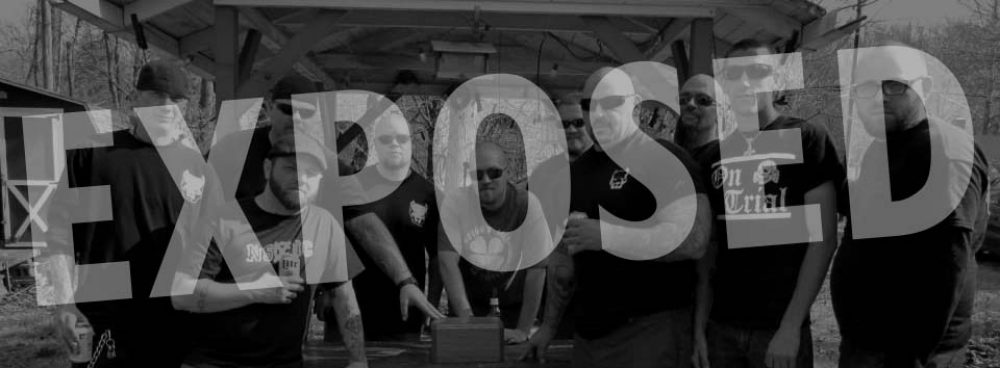
 From l to r: Unknown, Joe Phy, Scott Costa, Jason Cunningham, Ian McCorts, Unknown, Bob Gaus, Bryan Vanagaitis, AJ Olsen and Nunzio Pellegrino of Keystone State Skinheads. All except unknowns were profiled as part of KU Exposed.
 Keystone United members. From l to r: Steve Smith, Unknown, Bob Gaus, Joe Garvey, Bryan Vanagaitis, Cody Haulman, Ryan Wojtowicz, Scott Costa, Ian McCorts, Travis Cornell (rip lol), Chris Croumbley, Josh Martin and Shane Dilling. All but the one unknown were exposed during our series.
 KSS rallying along with their friends in the PA State Militia for anti-refugee “Overpasses Across America” protests From l to r: AJ Olsen, Joe Phy, Ryan Wojtowicz, Steve Smith, and Pat Rogers. All were profiled in KU exposed.
 Keystone United rallying in Harrisburg. A: Scot Costa B: Travis Cornell (rip lol) C: Shane Dilling D: Ian McCorts G: Ryan Wojtowicz H: Steve Smith I: Bob Gaus J: Bryan Vanagaitis K: Chris Croumbley L: Cody Haulman. All were profiled in KU exposed.
 Pat Rogers of KU/KSS repping support for Golden State Skinheads after word of possible charges for their members stabbing several Anti-Fascists in Sacramento in 2016.
 Several members of KU/KSS can be seen wearing Anti-Antifa t-shirts in this pic from LED 2017.
 Steve Smith and Ryan Wojtowicz of Keystone United. Both are Luzerne County GOP committeemen.
 Nazis have embedded themselves in groups like The Proud Boys and Patriot Prayer or started multi-racial pan-right groups like Vinlanders Social Club founder Brien James’ American Guard.


