Posts Tagged ‘filler pgh’

What To Do About Your Slumlord Scum – New Zine from PGH DSA

Thursday, October 17th, 2019

Zine submission from PGH DSA, received on 10.17.19


This publication was created by members of the Housing Committee of the Pittsburgh chapter of the Democratic Socialists of America (DSA), with contributions from housing experts and organizations from around the Greater City of Pittsburgh. We are a group of people trying to arm ourselves with the knowledge to control our housing in our communities. As such, we would like to clarify that while this publication was researched and fact-checked to the best of the writers’ abilities, we are not lawyers.

This publication, or any publication that follows it, does not constitute or substitute for legal counsel. We do hope that this zine serves as an educational resource to all who need or read it.


2019 10 08 slumlord zine - online

CLICK HERE for a pdf of the zine


[an excerpt from the introduction to the zine]

To our community, comrades, and the people of Pittsburgh:

Shelter from the elements allows humans to carry out our lives. These sheltering structures facilitate our social relationships
and build our communities. Housing 
is among the most immediate human needs and is the foundational element
to free, healthy communities and people. It is universal to humans, and therefore housing must be a human right for all those in our global community.

We believe it is morally corrupt and grossly exploitative that humans must toil just to hold 
on to their living space. Americans have little
control of their housing as renters, while landlords control and profit from housing for so many. As a result of this unilateral desire for profit, speculation and gentrification continue to ravage and displace marginalized communities and communities of color. We see and reject this immoral, even violent, process.

We know it is possible to have beautiful, quality, affordable housing that is controlled by the people who live in it. We not only believe that housing is a human right, but  that we all have the right to quality housing. Too often, people are too financially or logistically strained to find safe, secure, affordable, and quality housing – and all too often end up with a slumlord. Slum property is not legal, and city law says it may be dealt with by repair, rehabilitation, demolition, or removal. We want to provide resources to renters with exploitative landlords – as well as making others aware of slumlords who take advantage of renters, so that all renters understand their rights, as well as the actions they can take. We hope this zine gives voice to this knowledge and adds the Pittsburgh DSA Housing committee’s voice to those in the Pittsburgh community demanding and fighting for affordable, just housing.


For more about the Pittsburgh chapter of the Democratic Socialists of America (DSA), check out:

https://pghdsa.org/

For more zines written by radicals in Pittsburgh, check out the Filler pdf archive.


fillah

PITTSBURGH: Noise Demonstrations Fight Corporation Behind Mountain Valley Pipeline

Sunday, July 14th, 2019

The following report-back is from Unity Division, a Pittsburgh-based anarchist collective dedicated to street theater and direct action to promote systemic change.

It was initially published by It’s Going Down on July 12, 2019, and details noise demonstrations that took place outside the home of a former CEO connected to the building of the Mountain Valley Pipeline (MVP) and at a shareholder meeting in downtown Pittsburgh.


eqt-Night


In the early morning hours of July 10th, a protest was held outside the home of the now former EQT Corporation CEO Robert McNally in the town of Wexford, PA. EQT Corporation is the largest fracking company in the United States and is responsible for the construction of the Mountain Valley Pipeline that communities in the Mid-Atlantic region have been resisting since it was announced.

At the action, McNally hid in his two million dollar home while the protesters banged on drums, blared cars horns, and shouted chants and obscenities at him. Police didn’t arrive until a half hour later to tell the protestors they were being “too loud for this hour of the night.”

About 8 officers arrived on the scene and also attracted the attention of a local news team that covered the protest. No arrests were made although the protesters did have fun taunting the police who were basically powerless to do anything since no real criminal activity had taken place (at least not by the protestors).


EQT-Morning-Demo-2


Later in the morning a second noise demo was held along with a banner drop in downtown Pittsburgh to protest the annual shareholder meeting of EQT. Members of EQT’s board and other shareholders were forced to go around the demo while protestors chanted “1-2-3, Fuck EQT” as they banged on buckets and scrap metal to make as much of a disturbance as possible. After the meeting it was announced that McNally would be removed as CEO due to a successful proxy fight by shareholders who wanted to gain control of the company. Rest assured we will be at their homes soon enough.


EQT-Morning-Demo


***


fillertorch


Filler is a DIY media platform, free-to-comrades recording studio & anarchist zine distro affiliated with the Steel City Autonomous Movement (SCAM) and Pittsburgh’s autonomous student network.


Revisiting “The Relevance of Max Stirner to Anarcho-Communists” Two Years On

Thursday, June 6th, 2019

the-relevance-of-max-stirner-to-anarchocom-imposed(1)

click here for a print-ready PDF of the zine


Matty T


It’s been two years since my comrades at Filler published my essay The Relevance of Max Stirner to Anarcho-Communists as a pamphlet. As such, I thought it would be worthwhile and a little fun to look back and offer a few observations.

I deliberately wrote of the relevance of Stirner to anarchist communists, as opposed to choosing a title like “The Necessity of Egoism” or “Everybody Loves Stirner”. Like it or not (I like it), Stirner is relevant to anyone interested in or involved with contemporary anarchism. I think even the most diehard orthodox Leftists could gain something from being familiar with egoist ideas, and not just the reductive caricature of them put forth by both champions and detractors. The goal of my essay was exactly that – to provide a primer on Stirner’s ideas, a general introduction targeted especially toward mainstream Leftists and anarchists. I think it’s succeeded in its humble way. If I had been writing for the post-left milieu or for people who were already egoists or egoist-adjacent, I would’ve written something very different.

Of course, since the pamphlet was written, Wolfi Landstreicher’s new Stirner translation has finally appeared. I would replace all the quotations from Byington’s translation with Landstreicher’s if given the time and opportunity. Anyone interested in reading Stirner should refer to the new translation, which is an improvement on Byington’s from the title page onward, accurately translating the German as The Unique and its Property and hopefully removing a major stumbling block by excising the word ego and all its implications of some absolute, conceptual, apotheosized I. This is not to disparage the late Stephen Byington, who offered an admirable service by making the text available in English at all, but Landstreicher’s rendering should become the new standard.

Throughout the essay, I used she as the generic pronoun. This was an attempt to challenge the still prevalent use of the generic he, but in retrospect I should have simply used they. As Jason McQuinn points out elsewhere, Stirner’s unique is not gendered; its gender is constructed, not given.

Stirner’s ideas concerning interpersonal relationships are sketched in the pamphlet, but perhaps should have been more thoroughly laid out. Intercourse, as Stirner called it, is the subject of more than half of his book. I consider this extremely important to understanding the union (or association) of egoists as both an alternative to the relationships of bond or property and as a tool for insurrection. I would have stressed the nature of union as an activity. I refer interested parties to Massimo Passimani’s excellent essay “Mutual Utilization: Relationship and Revolt in Max Stirner.”

I hope this essay continues to enjoy the circulation it’s seen so far, and continues to help clarify conscious egoism, which I consider more than ever to be an extremely valuable monkey-wrench in the toolbox of revolt. The calls for discipline, sacrifice, and all the other spooky rhetoric will continue flowing unabated from the mouths of authoritarians, whether they camouflage themselves in red, black, green, or any other color. But there are still plenty who are tired of “Serving the People,” which too many of us do already, 7 hours a day, 6 days a week, with or without french fries, and are ready to serve ourselves. It turns out that that’s the best way to serve the people, as long as the P stays uncapitalized. Egoism remains not only relevant but eminently practical to anyone interested in critically confronting the archist and capitalist world. Happy reading.

With egoistic love,

Matty T


Introduction
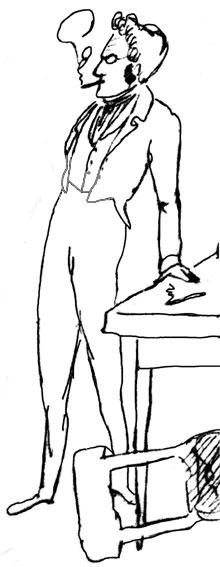
stirner02Since the publication of Max Stirner’s book Der Einzige und Sein Eigenthum (translated into English as The Ego and its Own; more accurately, The Unique and its Property) in 1844, reaction has ranged from complete repudiation to total, uncritical acceptance. Many strange and contradictory things have been said about Stirner. The respected anarcho-syndicalist academic Noam Chomsky has labeled him an influence on the devotees of extreme laissez-faire capitalism erroneously known in the United States as libertarians. However, there are those who have made Stirner’s ideas the very basis of their anarcho-syndicalist organizing. Perhaps such varied interpretations are inevitable when faced with a book that at times seems almost deliberately intended to disturb and disconcert.

The goal of this pamphlet is to explore the ideas of the great German thinker and their value to anarcho-communists. Some readers familiar with Stirner’s work will bristle at this immediately, pointing out that Stirner was an outspoken critic of communism. He was indeed. But the communism that Stirner critiqued was the same variety of communism that anarchists critique – authoritarian communism. Anarcho-communism, as a developed political theory, did not really exist in Stirner’s day, and the communism that Stirner had in mind was the communism of the monastery or of the barracks, a communism of self-sacrifice and general leveling. Those who would instead prefer a communism that guarantees the freedom of each individual to develop themselves as unique can find much that is of value in Stirner.

Stirner’s Ideas

Stirner begins his book by asking, “What is not supposed to be my concern?” He answers that an individual is supposed to be concerned first with God’s cause, then humanity’s cause, the cause of the country, of truth, of justice, and 1,000 other causes. The only cause that is not supposed to concern the individual is her own cause, the cause of self. My cause is not supposed to be my concern. The person who makes their own cause their concern is a selfish person. Instead, the individual is always told to put another cause before their own. We are to work tirelessly in the service of an other or others, never for ourselves. To think of doing otherwise would make one an immoral egoist. We are moral only when we are unselfish, when we take up a cause alien to us and serve it.

Stirner will have none of this. He asks, Does God serve a cause other than His own? No, reply the faithful. God is all in all, no cause can ever not be His. Does Humanity serve a cause that is not its own? asks Stirner, and the humanists reply, No, Humanity serves only the interests of Humanity. No cause can ever not be the human cause.

The causes of God and Humanity both turn out, in the end, to be purely egoistic. God concerns Himself only with Himself, Man likewise.  So Stirner encourages his readers to follow the example of these great egoists and make themselves the main thing altogether. In other words, to become conscious egoists. For Stirner, all individuals are absolutely unique, and once the individual has become conscious of her egoism, she will reject any attempt to fetter her personal uniqueness or to restrict her individual autonomy. This of course includes calls to act only in the service of something higher than one’s self. Those who sacrifice themselves to serve some higher being or cause are duped or unconscious egoists, seeking their own pleasure and satisfaction in the name of whatever cause they’ve subordinated themselves to, but refusing to admit it. They are egoists who would like to not be egoists:

“All your doings are unconfessed , secret, covert, and concealed egoism. But because they are egoism that you are unwilling to confess to yourselves, that you keep secret from yourselves, hence not manifest and public egoism, consequently unconscious egoism — therefore they are not egoism, but thraldom, service, self-renunciation; you are egoists, and you are not, since you renounce egoism.”

Stirner begins and ends his book by crying, “I have set my cause upon nothing!” This quotation from Goethe would have been familiar to Stirner’s contemporary German audience. The unstated next line of the poem is, “And all the world is mine.” The self, for Stirner, is something impossible to fully comprehend, because each one of us is constantly consuming and recreating his or her self. Stirner refers to this process of self-consumption and self-creation as the creative nothing: “Not nothing in the sense of emptiness, but nothing in the sense that I as creator create everything.” The external causes that are always asking the individual to put herself last, that treat her as if she were nothing, are now subject to being actively appropriated and used by the egoist as she sees fit.

The Ego and its Own is organized around a three-part dialectical structure. Stirner begins by giving us the example of a human life, and then compares the three stages of human development to the three stages of historical development. We begin life as realistic children. During this phase, the child is subject to physical, external forces such as his parents. However, the child begins to break free of these constraints through what Stirner calls the discovery of mind. The child, by using his wits and determination, begins to evade the purely physical forces which previously kept him in check. In this way, we move from realistic childhood to idealistic youth. The external constraints of the physical no longer hold any terrors for the youth, yet now he is subject to the internal constraints of reason, of conscience, of the ideal. The child is infatuated with the earthly side of life, the youth the heavenly. Only when one reaches egoistic adulthood is one free from both external, earthly constraints and internal, heavenly constraints. Stirner summarizes it thus:

“As I find myself back of things, and that as mind, so I must later find myself also back of thoughts — to wit, as their creator and owner. In the time of spirits thoughts grew till they overtopped my head, whose offspring they yet were; they hovered about me and convulsed me like fever-phantasies — an awful power. The thoughts had become corporeal on their own account, were ghosts, e.g. God, Emperor, Pope, Fatherland, etc. If I destroy their corporeity, then I take them back into mine, and say: ‘I alone am corporeal.’ And now I take the world as what it is to me, as mine, as my property; I refer all to myself. “

Stirner then shows these same three phases in the context of historical development: the realistic world of antiquity, the idealistic world of modernity, and the egoistic future that has not yet dawned. He compares the ancient, pre-Christian world to realistic childhood and the modern, Christian world to idealistic youth. With the rise of secularism, modern society claims to have escaped the domination of religious modes of thought over life. Not so, says Stirner. Modernity has only served to increase the domination of religion – the domination of higher essences set over the individual. One example is the Protestant Reformation. While the Reformation is and was widely regarded as a liberatory event which opened the door for “the religion of freedom of conscience” and freed life from the authority of the church, Stirner viewed it as an expansion and strengthening of religious domination. Religion was, through the Reformation, able to intrude into areas of life where it had previously been unknown. The Catholic church prevented priests from marrying; Protestantism made marriage religious. In a similar fashion, the Catholic church with its institutionalized, formal priesthood, placed religious authority outside of the individual. Protestantism, however, abolished the institutional clergy in favor of a “priesthood of all believers” and so placed religious authority within the believer – an authority that she could never escape. The result left individuals at war within themselves, torn between fulfilling their desires and being tormented by the fixed idea of internalized religious authority. Stirner compares it to the struggle between citizens and the state’s secret police.

This pattern, argues Stirner, has continued throughout modernity. Although there has been much talk of progress and achieving a freer society, of transcending the worn-out values and dead traditions of the past, modernity only transforms authority – enlarging and strengthening it by virtue of making it more invisible. The rise of humanism, for example, dethroned the crucified God and in His place exalted Humanity. But since Humanity is also an ideal placed above the individual for her to subordinate herself to, Stirner considers humanism just as much a religion as the Christianity it claims to have outgrown. “Our atheists are pious people.” Humanism, says Stirner, is actually more tyrannical than theism because the phantom Humanity is able to terrify non-believers along with the faithful. For Stirner, modernity has only increased the number of abstractions (which he called “spooks”) to which people subordinate themselves.

Stirner accuses those who fancy themselves “the free” (we might call them “progressives” in today’s jargon) of posturing as iconoclasts when in reality they are only “the most modern of the moderns.” He was highly critical of the left-Hegelians dominating German philosophy at the time and the liberalism that was rising as the prevailing force in political and social thought. Stirner grouped liberalism into three types: political liberalism (what would today be called classical liberalism), social liberalism (socialism), and humane liberalism (humanism). Political liberalism dealt with individuals as free citizens within a state, social liberalism with individuals as workers, and humane liberalism with individuals as human beings – but all of the varieties of liberalism essentialize some aspect of the individual and set it above her as something that they should subordinate themselves to. For Stirner, all individuals are more than citizens, workers, or even human beings. Human nature or the human essence can not be separated from the individual and set above her, because then it becomes nothing but another spook. For Stirner there is no universal human essence to be set above people, only individuals as they exist in the here and now as flesh and blood.

From his searing critique of modernity, Stirner moves to anticipation of the egoistic future. He urges individuals to demolish all sacred ideas and free themselves from the chains of authority. This liberation is not something the individual can let someone else do for her. Stirner makes his position clear in one of the most eloquent anarchist arguments for self-liberation ever penned:

“Here lies the difference between self-liberation and emancipation (manumission, setting free). Those who today ‘stand in the opposition’ are thirsting and screaming to be ‘set free.’ The princes are to ‘declare their peoples of age,’ i. e., emancipate them! Behave as if you were of age, and you are so without any declaration of majority; if you do not behave accordingly, you are not worthy of it, and would never be of age even by a declaration of majority. When the Greeks were of age, they drove out their tyrants, and, when the son is of age, he makes himself independent of his father. If the Greeks had waited till their tyrants graciously allowed them their majority, they might have waited long. A sensible father throws out a son who will not come of age, and keeps the house to himself; it serves the noodle right…. The man who is set free is nothing but a freed man, a libertinus, a dog dragging a piece of chain with him: he is an unfree man in the garment of freedom, like the ass in the lion’s skin.”

As more and more people become conscious egoists, they will deny restrictions to their individuality, whether these restrictions are physical or spiritual. It should be pointed out that Stirner’s idea of egoism differs significantly from other philosophies sometimes called egoism. Stirner was an advocate of self-interest, even selfishness, but he did not use these terms in the typical narrow way. Stirner was not an apostle of the never-ending pursuit of profit, nor did he preach isolation or use selfishness as an excuse to never give a damn about anyone else. For Stirner, self-interest consisted of the individual egoist actively seizing the world around her as her property. Stirner’s use of the word property has caused many readers to misinterpret him, but he was not referring to property in a limited, economic sense. Rather, he used the word to refer to anything that was not alienated from the egoist. Thus, when I take a personal interest in an idea, I reach out and make that idea my own, my property. To the conscious egoist, the only determining factor toward gaining something as one’s property is the willingness to reach out and take it. The aim of this active seizure of egoistic property is self-enjoyment. Even other people are, for Stirner, a means for (mutual) self-enjoyment:

“For me you are nothing but my food, even as I am fed upon and turned to use by you. We have only one relation to each other, that of usableness, of utility, of use.”

Those who see Stirner as an advocate of exploiting others fail to read what is written. Stirner used the example of lovers, friends going to a cafe, and children at play as examples of this kind of mutual self-enjoyment or consumption, relationships that he termed unions of egoists. The union of egoists is a relationship in which all who participate in it do so freely and voluntarily out of egoism. The egoist uses the union, the union does not use her. All participants in the union constantly renew the relationship through an act of will; if any participant is coming up short or losing out, then the union has degenerated into something else. The union was Stirner’s proposed alternative method of organizing society, a means by which egoists could “scuttle the ship of the state” and give rise to a state of affairs in which individual autonomy would flourish.

This has necessarily been only an extremely brief summation of Stirner’s ideas, intended to arouse interest and provide context for the second half of this essay. The broadness and scope of Stirner’s thought make him difficult to summarise, and this section could have easily been twice as long. Those hungry for more should refer to the recommended reading list at the end of the pamphlet. Everyone will have to decide how much of Stirner they want to take and what to do with it, but as Stirner himself said regarding interpretations of his work, “that is your affair and does not trouble me.”

“I have set my cause upon nothing!”

Stirner’s Relevance to Anarcho-Communists

It is a fact that until relatively recently, most of the anarchists inspired by Stirner were not communists. In the United States, the most well-known exponents of egoism were Benjamin Tucker and his comrades, centered around the individualist anarchist journal Liberty. Indeed, Tucker was the driving force behind the publication of the first English edition of Stirner’s book. However, he has also been a significant influence on thinkers more in the mainstream anarchist tradition. In the 1940s, the anarcho-syndicalists of the Glasgow Anarchist Group made Stirner’s ideas the basis of their organizing. They took Stirner’s idea of the union of egoists literally as a way of freely organizing within industry and thus explained syndicalism as “applied egoism.” The anarcho-communist activist and cartoonist Donald Rooum was introduced to Stirner by members of this group and has adhered to conscious egoism ever since. Emma Goldman’s anarchism was profoundly influenced by thinkers such as Stirner and Nietzsche. In the introduction to her book Anarchism and Other Essays, Goldman defends Stirner against shallow and erroneous interpretations, commenting that his philosophy contains “the greatest social possibilities.” Even the younger Murray Bookchin, whose attitude toward the German egoist later soured considerably, wrote:

“Stirner created a utopistic vision of individuality that marked a new point of departure for the affirmation of personality in an increasingly impersonal world.”

Clearly, socially oriented anarchists have been interested in Stirner’s ideas. They continue to be interested today, and for good reason. In a world where even revolutionaries too often find themselves lost among enemies of the individual and calls for self-sacrifice, the uncompromising egoism of Stirner is a breath of fresh air. So many communists, while rejecting God the Father, God the State, and God the Corporation, set up instead God the Community, a fearsome deity that Kropotkin called “more terrible than any of the preceding.” For Stirner, as for the egoistic communist, these are all spooks.

The communist egoist does not serve the People, the Masses, or any other spook. She serves herself, because she is part of the people, part of the masses. How can Humanity be happy when you and I are sad? As the self-described Marxist-Stirnerists of the Bay Area group For Ourselves observed, “Any revolutionary who is to be counted on can only be in it for himself; unselfish people can always switch loyalty from one projection to another. Furthermore, only the most greedy people can be relied on to follow through on their revolutionary project.”

Anarchists who wish to demolish the authority of the state and of capital but want to leave the authority of fixed ideas like morality, humanity, rights, or altruism intact only go halfway. For the egoist, these spooks can be even more vicious than the more visible forms of authority. Altruism, living to serve others, is one of the most pernicious superstitions extant in our civilization today. Workers engage in a terrible altruistic action every day when they labor to enrich the capitalist, who receives much simply by virtue of the fact that he has so much already. Women are victims of altruism when they waste away “living to serve” a man who is nothing but a tiny tyrant over the home. The other crimes that come from altruism are endless, and it’s clear to conscious egoists that altruistic socialism is a farce, capable only of transforming authority but not abolishing it. Egoism encourages individuals to no longer die slowly giving presents to those who give nothing in return, and from this idea flows the egoist communist desire for insurrection and expropriation.

When one applies Stirner’s notion of the spook to one of Society’s most sacred idols, private property, the implications are almost necessarily communist. How many individuals have had their ownness sacrificed and lives ruined by this horrible Moloch? Stirner ridiculed the idea of any right to property (as he ridiculed rights generally), pointing out that property is based on might, or one’s power to get it and keep it. Private property – alien property – is just another spook, because the entire world is the egoist’s property, waiting to be taken. In other words, the communist egoist has for the object of her appropriation the totality of life. Stirner hinted at this with his memorable quotation, “I do not step back shyly from your property, but look at it always as my property, in which I ‘respect’ nothing. Pray do the like with what you call my property!”

Stirner likewise attacked such fundamental aspects of capitalist life as the division of labor and even work itself:

“When everyone is to cultivate himself into man, condemning a man to machine-like labor amounts to the same thing as slavery . . . Every labor is to have the intent that the man be satisfied. Therefore he must become a master in it too, be able to perform it as a totality. He who in a pin-factory only puts on heads, only draws the wire, works, as it were mechanically, like a machine; he remains half-trained, does not become a master: his labor cannot satisfy him, it can only fatigue him. His labor is nothing by itself, has no object in itself, is nothing complete in itself; he labors only into another’s hands, and is used (exploited) by this other.”

In contrast to enforced, degrading, regimented capitalist work, Stirner juxtaposed egoistic labor,  which people would take part in purely from egoism and would provide opportunities for self-realization and self-enjoyment. Such egoistic labor might be done alone or in a union of egoists with others, but each participant would remain consciously egoistic. Indeed, Stirner recognized that cooperation was often more satisfying than competition:

“Restless acquisition does not let us take breath, take a calm enjoyment. We do not get the comfort of our possessions…. Hence it is at any rate helpful that we come to an agreement about human labours that they may not, as under competition, claim all our time and toil.”

Stirner’s principle critique of socialism and communism as they existed in his day was that they ignored the individual; they aimed to hand ownership over to the abstraction society, which meant that no existing person actually owned anything. Authoritarian socialism cures the ills of free competition (which Stirner correctly noted was not free) by alienating everything from everyone. This sort of communism was based on Community, on Society with a capital S, not on the union that Stirner desired. A communism that places possessions into the hands of a phantom while leaving nothing for the individual can not really be much more than a new tyranny. Anarcho-communism can benefit from these egoistic insights since they serve as a reminder that communism isn’t sought for its own sake, but as a means to guarantee each unique individual self-enjoyment and self-actualization.

Understanding Stirner’s union of egoists is crucial to understanding his ideas concerning insurrection and how they can be reconciled with more mainstream anarchist views of revolution. Stirner rejected revolution in favor of insurrection, in the etymological sense of “rising above.” “The revolution aimed at new arrangements. Insurrection calls upon us to no longer let ourselves be arranged, but to arrange ourselves, and set no glittering hopes on institutions.” However, Stirner recognized the liberatory potential of group action and the interweaving of each egoist’s personal insurrection, even commenting on the value of strike action:

“The laborers have the most enormous power in their hands, and, if they once became thoroughly conscious of it and used it, nothing would withstand them; they would only have to stop labor, regard the product of labor as theirs, and enjoy it. This is the sense of the labor disturbances which show themselves here and there.

The State rests on the — slavery of labor. If labor becomes free, the State is lost.”

Stirner urged egoists to unite, not out of any maudlin sentimentality or misplaced moralism, but out of a desire to see egoism become generalized in order for each egoist to know the pleasure that can be found in other fully realized individuals. The genuinely egoistic individual will never be satisfied with anything less than a universalized egoism. The egoist unites with those who share her interest, and all the exploited and oppressed certainly have a personal interest in putting an end to their oppression. What other anarchists have called the social revolution is, to the conscious egoist, a massive interweaving of each individual’s personal insurrection, a coming together in a union of egoist to perpetuate what Stirner referred to as “an immense, reckless, shameless, conscienceless, proud crime.” The crime of insurrection, of expropriation, of revolution!

“….doesn’t it rumble in the distant thunder, and don’t you see how the sky grows ominously silent and gloomy?”

Recommended Reading

The Ego and Its Own by Max Stirner. Stirner’s only book and magnum opus. Unfortunately, there is still only one English translation available, Stephen T. Byington’s. Wolfi Landstreicher is currently working on a new one, slated to appear in the near future.

Stirner’s Critics by Max Stirner. In this essay, Stirner (speaking in the third person throughout) clarifies some misinterpretations of his philosophy.

The False Principle of Our Education by Max Stirner. In this article, which predates the publication of The Ego and its Own, Stirner critiques both the humanism of the aristocratic style of education, which aimed to produce disinterested scholars, and the realism of the democratic school of thought, which aimed to produce useful citizens. Stirner, while tending to favor the latter, argues that the goal of education should instead be the cultivation of free, self-creating individuals.

“The Individual, Society, and the State” by Emma Goldman. Goldman’s most “Stirnerian” essay.

“Victims of Morality” by Emma Goldman. In this essay Goldman attacks the spook of morality as a lie “detrimental to growth, so enervating and paralyzing to the minds and hearts of the people.”

The Right to be Greedy: Theses on the Practical Necessity of Demanding Absolutely Everything by For Ourselves. An inspired fusion of Stirner and Marx by this short-lived Situationist-influenced group. For Ourselves argue that “greed in its fullest sense is the only possible basis of communist society. The present forms of greed lose out, in the end, because they turn out to be not greedy enough.”

The Minimum Definition of Intelligence by For Ourselves. A critique of ideology and fixed thought coupled with theses concerning the construction of one’s own critical self-theory.

The Soul of Man [sic] Under Socialism by Oscar Wilde. This beautiful essay is one of the most eloquent egoist defenses of libertarian communism ever penned. It is not known for certain whether Wilde actually read Stirner; however, he could read German and similarities in style between this text and The Ego make it seem likely that he did. In any case, this anarcho-dandy’s writing is invaluable to the serious student of egoism.

Max Stirner’s Dialectical Egoism: A New Interpretation by John F. Welsh. The most thorough and coherent exploration of Stirner’s thought available in English. An exploration of Stirner’s philosophy, his influence on the thinkers Benjamin Tucker, James L. Walker, and Dora Marsden, and an investigation of the relationship between Stirner and Nietzsche.

Pittsburgh: No One is Surprised

Saturday, March 23rd, 2019

Anonymous submission, received on 03.23.19
Photos ripped from twitter, @notthreefifths & @jacobcbpaul


Please send funds to the Rose family through CashApp:

$AntwonsMother


D2R0R88WsAIH-fZ.jpg large


No one is surprised.

Michelle Kenney, Antwon’s mother, told the Pittsburgh Post-Gazette, “It isn’t what I hoped for, but it’s what I expected.”

A white cop can shoot a black kid three times in the back and get away with it. Of course the “justice” system would never incarcerate officer Michael Rosfeld of 1519 Hudson Street, Verona PA 15147.*
[*house recently went up for sale]

“I hope that man never sleeps at night,” Michelle Kenney said of Mr. Rosfeld. “I hope he gets as much sleep as I do, which is none.”


The following is a short list of what I saw in the streets of Pittsburgh last night, which only includes the later action in East Liberty. I did not include powerful moments of collective mourning and outrage—if you wanted to read about those, just show up next time and live it instead.

1. On the way there, I encountered several groups of people who seemed liked they were looking for the action but couldn’t find it (looking confused, scrolling furiously through social media, etc). My friends and I just told them to follow the helicopters or the police caravans speeding by—a reminder that this isn’t as obvious to others as it may be to “us.”

2. The action began by shutting down intersections near the Target on Penn. This allowed time for the protest to grow in size before beginning to march and getting harder to people to track down.

3. Many crews, medics, and organizers brought free food, drinks, handwarmers, etc, but I noticed two separate street corners where a few boxes of supplies were left behind. Shopping carts or bike carts are probably a good look for next time.

4. People stormed yuppie restaurants, which was cool… except most of the yuppies used it as a selfie opportunity and even pretended to join the protest for a few minutes before returning to their meals.

5. Out of several hundred people, I noticed maybe 20-30 masked-up folks dispersed throughout the crowd. However, there was never an actual “black bloc” to speak of—for whatever reason, we were unable to stay tight and form a visible presence. Without a bloc, there’s no focal point in the march for potential accomplices to cohere around. Instead, militants remained isolated and easy to police. We should make every effort to find each other and roll together. Side note: I usually remember to bring extra masks but forgot this time, which sucked ‘cos several folks actually asked me for some.  Don’t forget to bring goodie bags.

7. In my experience, a trashcan only gets knocked over once somebody realizes that the bloc has formed and they want to start hyping shit up. Wasn’t the case this time, but shout out to that kid anyway.

8. A lot of people seemed to get really pissed as soon it became clear that nothing was going to pop off. How many more kids are we going to let the pigs murder before we actually shut this shit down? This is not the time to be another jaded critic commenting from the sidelines. It’s better to at least show up, even if you’re pessimistic about what can be achieved.

It should go without saying that I don’t speak for anyone but myself. I hope other people write better report-backs than this.

some kid


How to Do it Postera-face-you-can-trust_front_black_and_whiteDgnt2GqWsAQUQL4.jpg largefillertorch

PITTSBURGH: Burner Cell Phone Running for District Attorney

Monday, February 11th, 2019

[Submission from Unity Division received on 02.05.19, published on 02.11.19 because we don’t check our email.]


IMG_0544

Burner Cell Phone For District Attorney

Hello. My Name Is Burner and I am running for the District Attorney of Allegheny County. I am a disposable cell phone who has spent all of the past two years of my existence living in the city of Pittsburgh knowing that at any moment, I could be charged with a crime I did not commit: I could be used as evidence to prosecute low-income youth and people of color, either myself or someone I love could be destroyed or searched by a police officer without probable cause. Right now these are all possibilities under the current District Attorney Stephen Zappala, and that is why I am running for District Attorney of Allegheny County.

  • If elected I will not prosecute one drug possession case, no matter the weight. The war on drugs must be abolished.
  • If elected I will also prosecute to the fullest extent of the law any police officer accused of committing a violent act toward an unarmed person. It will not take public demonstration and the blocking of highways to convince me to seek justice for the least fortunate, I will do it on my own accord.
  • If elected I will prosecute any political official involved in political bribery, misconduct, or abuse of power. Furthermore, Allegheny County officials responsible for the crimes committed against inmates at the Allegheny County Jail will be held accountable.
  • Any person alleged to commit acts of animal cruelty, such as researchers at the University of Pittsburgh, will be prosecuted for their crimes against the dignity of animals.

While I intend to hold accountable any criminal that I come accross, my administration will adhere to the principles of restorative justice in order to help undue the harm done to our most vulnerable populations by mass incarceration.

People accused of violent crimes who suffer from mental illnesses will be treated with mercy and given treatment over punishment and brutality. All individuals accused of crimes will be given actual due process under the law. This means adequate council and appropriate criminal charges for the crime alleged. If these conditions are not met, the District Attorney will not take the case.

Victims of domestic abuse and other crimes will be shielded from harm by their abusers. The District Attorneys office will prioritize protecting human and animal life over case clearance and political reputation.

In closing, I will dedicate my administration to abolishing prisons as we know it and replacing them with educational and rehabilitative institutions whose goals are not to punish but to make whole the broken people who have been spit out by this system. Justice should not be about the brutalization of people who do the wrong thing, it should be about protecting the righteous from the unjust and making our community a better place.

My name is Burner, and I pledge to make Allegheny County a safe community.

WILL YOU ANSWER THE CALL?

VOTE BURNER


Every Cook Can Abolish Governance, Part 3: Sobriety and Sabotage

Wednesday, November 7th, 2018

Lena Kafka
Filler Collective
So-called Pittsburgh, PA


cover


For the print-ready pdf of this zine, click HERE
Every Cook Can Abolish Governance (Part 1) can be read online here
Every Cook Can Abolish Governance (Part 2) can be read online here


Two years have passed since I left the empty world of open kitchens for closed kitchens. The struggle against the clock, the technocrats, the middle manager cops, and all the other bastards has changed dramatically but continues as it will until the end of Time. No matter where you work, power and hierarchy exists albeit in varying forms and orders.

This is less of a story and more a list of reflections on my errors/failures in organizing efforts, I hope it is of use to anyone else struggling against Capital from behind the (enemy’s) line.


At Santoku Knives Drawn

Today is no different from any other day at the new kitchen.  I walk in through the front door and look around the dining room to see what I’m walking in to. Every day starts by checking the prep list to see what still needs to be done.  Now, the prep list isn’t the Law of the kitchen as it used to be in my previous experiences. It still demands completion and submission, but contains more leeway in how that is accomplished. Errors in the list are to be expected, and so long as there is enough product to last through dinner rush and until closing then the list is considered complete.

Before the managers unlock the doors, the prep list is written up according to the projected sales calculated by their higher-ups. The prep list is far more organized than it was at my previous kitchen jobs. This list features actual whole numbers, as well as leeway for incompletion at the cooks’ discretion. *1

While the managers are responsible for the list’s completion, they are primarily responsible for enforcing it. They coordinate their own daily submission. They’re on the same sinking ship as the rest of us, but are salaried and enjoy better health care options.
Corporate is far more concerned with inventory counts than the prep list. They don’t get hurt if we run out of something during rush, we do. We don’t get hurt by missing inventory, they do.

I work my way through the prep list, cutting cabbages, rolling taquitos, portioning and bottling the same shit I portioned and bottled and yesterday. Once things are somewhat slow, I sneak out for a short walk around the back alley. Sometimes cops on bicycles come around and try to catch us smoking, drinking, or selling, but I’m not worried about that anymore.

I haven’t gotten high in over thirteen months, I drink casually only after work, and I’ve finally kicked cigarettes after eight years. Since then, I’ve found that getting fucked-up less actually helps me fuck more shit up.

In my last few cooking jobs, organizing and camaraderie revolved around collective intoxication. The first few months in this kitchen, I got to be friends with many of the other cooks by packing bowls for each other or passing the bottle back and forth. I was drunk daily during my first year in this kitchen. A bottle of whiskey almost every single day. I lost track of days. Some of us would go out for a drink after dinner rush, and then come back in wondering how soon rush was going to start. But friendship among workers isn’t a threat to Capital by itself. Friendliness is a casual thing, conspiracy is another.

The sorts of relationships most likely to spring from such a situation are those that reflect the humiliation and social impoverishment inherent in it. Based on the necessity to escape the isolation of a crowded, but atomized society, a generalized “friendliness” that is slightly more than mere politeness (since it permits harmless, light mockery and safe, substanceless flirtation) develops. On the basis of this generalized “friendliness”, it is possible to meet some individuals with whom to commiserate more closely — people with whom to share a beer at the pub, go to football games or rock shows or rent a movie… And these are one’s friends.

It really is no wonder then that what is called friendship today so often seems to be nothing more than the camaraderie of mutual humiliation and disrespectful toleration. When all we really have in common is our shared exploitation and enslavement to commodity consumption and our differences mainly lie in our social identities, themselves largely defined by our jobs, the commodities we buy and our uses to those who rule us, there is really very little to spark pride, joy, wonder and passion in our so-called friendships.

Wolfi Landstreicher, Against the Logic of Submission


A Confederacy of Drunks

Cooks getting fucked up at work only amounts to a higher tolerance for their sad social/economic/whatever-positioning. It gives us something to look forward to at the end of the shift, something which makes all the bullshit “worth it”. This hope is counter-insurrectionary.  

It is easy to forget and forgive the shit you go through daily when you can’t even remember what you did that day, or how much money you made for your bosses compared to how little you made, or how you just went almost eight hours without eating because the rush never let up. To quote an old coworker of mine, “why would I eat if I’m trying to catch a buzz.”

The only organizing “success” I had at this job was when the kitchen flooded with sewage up to our ankles. The fry cook and I both refused to keep working under these conditions and got sent home early. The kitchen ended up shutting down a half hour later after more servers and cooks refused to tolerate it. We never got reimbursed for our ruined shoes and coats stored downstairs under the broken pipes.

Besides that, organizing in this kitchen has been a lost cause.  Few cooks have any desire for better conditions (let alone control over the Means of Production!).  Almost everyone has a side hustle to make ends meet. Some cooks drive uber after work, some cooks just jump ship to the next gig they can get after getting a paycheck or two. A cook who sells cocaine only cooks as a cover for his P.O., and more than likely isn’t concerned with work conditions so long as the cops are off their asses.

We have no aspirations to self-manage our own misery. What dishwasher wants to be responsible for the dishmachine?  They’d rather smash it to hell and forget they were ever covered in other peoples’ half eaten food, detergent, and bleach.

We aren’t just fighting for representation in or control over the production process. Our fight isn’t against the act of chopping vegetables or washing dishes or pouring beer or even serving food to other people. It is with the way all these acts are brought together in a restaurant, separated from other acts, become part of the economy, and are used to expand capital. The starting and ending point of this process is a society of capitalists and people forced to work for them. We want an end to this. We want to destroy the production process, as something outside and against us. We’re fighting for a world where our productive activity fulfills a need and is an expression of our lives, not forced on us in exchange for a wage–a world where we produce for each other directly and not in order to sell to each other. The struggle of restaurant workers is ultimately for a world without restaurants or workers.

Abolish Restaurants


From Reflections to Retaliations

Sobriety has helped my own awareness around the kitchen, not simply spatial awareness but awareness of the logistics of the kitchen. Understanding the logistics of production, the flow of production, the divisions of labor, the (in)formal hierarchies among the kitchen provides a more acute ability to attack the production process. Accurate assessment and understanding of tactical capability is a threat to management, far more than the faux-friendliness between coworkers sharing a bottle. A union of cooks can take over a restaurant, but a single cook can halt production.

The prep cook left alone has some autonomy at work, whatever that’s worth under Capital.  This cook being unsupervised can waste resources or improperly use them up. Say this cook has only enough of one ingredient to make one recipe, when there’s two recipes that call for the ingredient.  The cook can use the ingredient on the recipe that isn’t at risk of being 86’d, or on whichever produces the least profit for their bosses. Say you need buttermilk to make a batch of buttermilk battered chicken or a bucket of ranch, and you know that night you’ll have enough chicken but not enough ranch.  Make that extra batch of chicken so whenever dinner rush comes, there’s customers who wish they could just fucking drink ranch unable to get what they came for.

A line cook (or hell, a dishwasher if they ever took the notion) can ‘accidentally’ cause a back up in the dishroom.  Quality checking plates or running the same rack of plates claiming “they’re too dirty” until there’s no plates to serve food on. No backup in production is permanent, but all backups in production open up space for coworkers to talk about the absurdity of their situation as workers. Almost every (un)intentional production halt I’ve been involved in has led to a conversation along the lines of “how to we make this last longer?,” “thank god we have some time to ourselves again,” or “finally a break!”

This sabotage isn’t going to stop the exploitation of cooks, or bring the service industry to a halt. Conflictuality with a steady flow of production will start slow, and can build up with the development of confidence in our capabilities and potentials, and eventually lead to an industry wide culture of rebellion and sabotage. Developing a culture of rebellion through sabotage is sustainable so long as the sabotage leads to the sustainability of sabotage—giving out free meals to fellow co-conspirators, “forgetting” to charge our friends when they eat at our restaurant, and stealing food for free groceries for fellow co-conspirators outside of the industry resisting in their own ways. If you work in a kitchen, no one in your crew should ever have to buy paper towels again.

These sabotages in addition to other acts of resistance, such as shoplifting (or larger expropriation actions), dumpster diving, and communal meals, can liberate time from work and build our culture of rebellion and other projects and infrastructure we’re working on. Money saved from groceries can go back into your local infoshop to help the collective make rent, or filling up repurposed newspaper boxes with your favorite zines and agitprop, or donating to the riseup collective, or materials to start making your own zines and books. Whatever you can’t steal can sometimes be bought.

The emotional and affective intensity of our relationships must be manifested into a material consistency. A failure to do so will inevitably result in our being pulled part. Every life decision – where we live and whom we live with, where we get food and how we share it, how we get money and what we do with it – is a question that can be answered differently. What appears initially as an individual duty or responsibility can be understood as an opportunity to increase our collective strength.

How to Start a Fire


Beyond Unionizing, Beyond Utopias

Unionizing a kitchen has been a goal of mine for some years now and I’ve found it to be a waste of time, outside of the few stoppages and successful sabotages (not to mention how I haven’t had to pay for most cooking tools I have in my possession, and how I get two free meals a day).  To quote Monsieur Dupont at length,

Most workers are now employed in sectors that are peripheral to the economy’s well-being, if they take industrial action it causes inconvenience only to the immediate employer and perhaps a few companies up and down the supply chain. In contrast the essential proletariat is that group of workers who can halt vast areas of the economy by stopping their work.

These workers are employed in the economy’s core industries, industries that can only operate with a relatively high level of labour input into their processes, which gives to those workers an already existing control over process; core workers’ latent power can be demonstrated immediately in industrial action which spreads its knock-on effect to all businesses in the locality and beyond, producing spiralling repercussions in society. Core-workers include factory workers, dustmen, power workers, distribution workers (post, rail, road haulage, ferries, dockers, etc); in all of these examples the cessation of work causes immediate and widespread problems for the economy, and this is why it is precisely in these industries that wildcat action is most frequent, quite simply, industrial action in these industries has a history of success.

Monsieur Dupont, Nihilist Communism

I’d rather not get into my critique of this text in this piece as a whole, but here I find Monsieur Dupont to be spot on.  Workers not involved in essential industries who go on strike, who sabotage and disrupt production at their workplaces, are not going to bring the capitalist economy to a stand-still.  If a kitchen becomes unionized, or has its production halted, all that happens is customers in a certain area have to go to another shithole to get whatever style of food their looking for.  If a single Chipotle halted its production and the local store went down, customers would just go down the road to Moe’s or some other cali/tex-mex shithole. Some capitalists would lose profits, but not their power as a class.  Where the previously shutdown restaurant was, another restaurant will pop-up, after some construction on its aesthetics and equipment installation. The e-coli break/freakout caused more economic damage to the company than any sabotage or unionizing effort I’ve known about during my time at three different Chipotle restaurants.

This is not simply to say that all unionizing and organizing efforts in kitchens (and really all non-core industries) are worthless, but when the main goal is to shutdown the economy, to destroy hierarchy, to liberate yourself and set free your capabilities and autonomy, then unionizing and sabotage does not go far enough to achieving those ends on their own.  For short term goals, such as minimum wage struggles and bettering working conditions, the (informal/solidarity) union is one way to go as long as there is a cross-restaurant struggle that can outlast the turnover rate of each individual restaurant. For our longer term struggles, the seizing/building of infrastructure and developing of a culture of rebellion outside of the radical milieu is beyond absolutely crucial. Restaurant sabotage is one of the many forms of attack that could be added to our arsenal in achieving these goals.

[S]abotage is a fascinating game, but it cannot be the only game one wants to play. We must have a multitude of games at our disposal, games that are varied and often in contrast with each other, aimed at avoiding the monotony of the rules becoming just another boring, repetitive job.

Alfredo Bonanno, Let’s Destroy Work, Let’s Destroy the Economy


Toward an Army of Cooks

The struggle against domination and hierarchy is in and beyond the workplace. From my own experience, I’ve already seen that the control over the major decisions of the workplace have been outsourced to technocrats and bureaucrats, with the locus of power being those who dictate production not being onsite.  Maybe the focal point of our attack should be outside of our workplaces, to what causes the most damage to the flows of production.

Kitchens can’t operate if the overstock is repurposed for our ends.  Kitchens can’t operate if the trucks carrying food and other supplies don’t arrive.  Same goes for almost every industry. No product, no production. Attack the flows of production, there are points of weakness everywhere.  All we have to do is find them and strike tactically.

Until the roads are torn up, the tires are slashed, the phone lines are toppled and cables dug up, the struggle against work/production/Capital/living hell continues. It’s almost last call, what do you want?


Endnotes:

1: At my last few jobs, prep lists often demanded we prepare 0.75 units of an item. The fuck is 0.75 of a chimichanga?

2: Our kitchen has run on a core group of three or four cooks, with another six to eight who are either half way into the job and being trained, or half way out of the job and already looking to bounce. I don’t bother to really get to know people until they’ve been there over a month. The last three months we’ve had six people come and go under two weeks.


EC4.2.2

Pittsburgh: Thousands Confront Trump & Fascism — It’s Going Down

Wednesday, October 31st, 2018

Originally published by It’s Going Down


On Tuesday, October 30th, thousands of people took to the streets of Pittsburgh to mourn the passing of 11 people at the hands of an Alt-Right white nationalist, who attacked the Tree of Life synagogue several days ago for their work in supporting refugees and immigrants. The gunman, 46 year old, Robert Bowers, stated his intent to attack the synagogue to not only “kill Jews,” but also to make a murderous statement about the caravan of Honduran refugees that he, along with Donald Trump, refers to as “an invasion.’

According to Raw Story, due to the size and scale of the protests, Trump’s motorcade had to be redirected as to avoid the protests. As various news outlets reported, there were two massive marches organized, and these two demonstrations came together in the streets and then marched on the Tree of Life synagogue where Trump visited for several hours after touching down in Pittsburgh. Police kept protesters away from the President, as thousands chanted against Trump and white nationalism.

The demonstrations showed both an outpouring of anger at President Trump, but also in a way that drew a direct political line between Trump’s political ideology and policies and the neo-Nazi attack on the Tree of Life synagogue. At a time when people across the US are pushing back against Trumpism, such resistance shows that we are united in resisting the regime despite the color of our skin, our religious beliefs, our sexuality, or our gender.

DSC0447-copy-1-1-1-1-2-2-1-2-1

https://www.instagram.com/p/BplCoKdgy7p/embed/captioned/?cr=1&v=12&wp=1316&rd=https%3A%2F%2Fitsgoingdown.org&rp=%2Figd-pittsburgh-thousands-confront-trump-fascism%2F#%7B%22ci%22%3A0%2C%22os%22%3A1071%7D

https://www.instagram.com/p/BpkMfbbliIg/embed/captioned/?cr=1&v=12&wp=1316&rd=https%3A%2F%2Fitsgoingdown.org&rp=%2Figd-pittsburgh-thousands-confront-trump-fascism%2F#%7B%22ci%22%3A1%2C%22os%22%3A1083%7D

PITTSBURGH: Night March in Solidarity with the National Prison Strike

Saturday, August 25th, 2018

Anonymous submission received on 08.22.18


Sometime after midnight on Saturday, August 18th, a dozen or so anarchists rolled up on a Skull Fest (it’s a punk fest) show with a sound system, flags, banners, and goodie bags full of road flares, black masks, and pamphlets about the National Prison Strike.

From August 21st (the anniversary of Nat Turner’s revolt and of the assassination of Black Guerrilla George Jackson) through September 9th (the anniversary of the Attica prison uprising), prisoners from all across the so-called united states are rising against the modern plantation system.

As It’s Going Down writes,

“Already, the strike has spread into Canada, and numerous facilities around the US are already seeing hunger strikes pop off as prisoners issue demands. Prison officials are also cracking down on various facilities, shutting them down, and locking up prison rebel leaders as deep in the hole as they can.”

Since we figured Skull Fest punx probably know shit is fucked and might be down (?), we took the opportunity to incite our friends on the outside to act in solidarity with our friends who are locked down on the inside. Even small gestures like ours can subvert the isolation of prison, inviting the unrest that’s too often locked and hidden behind walls into our streets.


IMG_2626


Out of the large crowd, a few punx showed interest in joining the march, and some actually did for a bit, which was tight. But tbh most remained indifferent and just kinda stared at us. One jag yelled, “Burn out already!!” If only he knew how many times we have (: …but pamphlets about the strike were distributed to the fest goers, and a few fists were raised. Punk is dead, blah blah. ANYWAYS, the march made its way up on to fucking Butler Street. What’s good, hipsters?

After leaving the show, we marched a short ways through Lawrenceville, distributing literature to some (surprisingly receptive?) folks at a few hipster bars. We dispersed shortly after the cops arrived, but not before getting a few laughs in first—this one pig’s tough-guy “who’s in charge?” routine devolved into him jogging from person to person straight-up pleading for someone, anyone, to talk to him. He had this sorta desperate look on his face, clearly just couldn’t process it. Dude was shook as fuck. The authors of this report would also like to add that we hope he winds up like those two screws who got shanked at Allegheny County Jail the other day.

It’s been a hot summer in Pittsburgh, but as the homies at Torchlight write,

“[Pittsburgh’s new protest restrictions] make it obvious that the cops are gaining confidence and worrying less about Pittsburgh going up like Ferguson.”

Spontaneous, unpredictable actions do more than show solidarity and “raise awareness” — they disrupt the state’s ability to use threats of repression to siphon unrest into the professional Left’s array of dead-end “community” dialogues and electoral campaigns. The new protest guidelines threaten to criminalize radical individuals, crews, and organizations who continue to organize beyond the self-appointed leaders and managers of the various movements. So let’s continue catching the pigs off guard, challenging their newfound confidence, and opening up space for further decentralized, autonomous action — by any means necessary.

Solidarity with everyone that’s still pushing the envelope in Pittsburgh. Solidarity with all prisoners. 


Behind Enemy Lines probably said it better than us:

Immersed in political strategies
Government policies create endless catastrophes
and we all pay the price
when our movement becomes stagnant, anchored by apathy
We can’t just give up, we can’t just give in
There are no wasted attempts when it comes to action
The smallest act could cause a chain reaction
that could bring this entire system down
Light it up
Ignite a spark
Every single action could be the start
It will take all of our efforts to get out of the dark
You could be the one
that offers hope and inspiration
to everyone who feels defeated
and moves the depleted towards motivation
and helps the flame continue to burn
The most important thing that we still need to learn
is that we’re in this together, don’t shut out one another
Don’t ever forget that we depend on each other


 – some anarchists


For more on the prison strike, check out prisonstrike.comIt’s Going Down, , follow #PrisonStrike & plenty of other stuff.

For background information, strike demands, as well as a list of solidarity events, please go here.

Avalon, PA: John Brown Gun Club and BLAQK OPS Hold Picnic and March In Wake of Nazi Attack

Thursday, August 23rd, 2018

Originally published by It’s Going Down


Report from Steel City John Brown Gun Club, who along with other community organizations, organized in the wake of a racist neo-Nazi attack.

Paul Morris, a long time resident of Avalon PA, was attacked on July 7th at the Jackman Inn, a local bar. He was trying to deliver a thank-you note to a friend who worked in the kitchen who had recently catered his son’s birthday. Within minutes of entering the establishment, Paul was attacked by a mob of white power skinheads, all members of Keystone United. KU is a PA wide hate group, originally known as the Keystone State Skinheads. They have been involved in numerous beatings, criminal investigations and murders since their inception, and have ties to the hyper-violent Hammerskin Nation, one of the country’s most blood drenched white hate organizations.

Paul and his friend were able to partially fight off the attack despite being overwhelmingly outnumbered, sustaining only minor physical injuries. The Nazis fled when police arrived on scene. They needn’t have bothered, as the KU members were released and not charged until days later and only after considerable public outrage. When Paul initially asked to file charges, he was told by the responding officer that he wouldn’t be allowed because he “didn’t try hard enough to get away”, underlining better than we ever could the default coalition that exists between police and organized white power.

In recent weeks since the attack on Paul, the Steel City JBGC has been working in coordination with BLAQK OPS and Avalon community members to raise awareness within the greater Pittsburgh area that fascists have been flying their colors, committing violence, and recruiting in our communities. We have been distributing flyers and posters publicizing the names and faces of Keystone United members as well as fascist symbols and insignia.
Realizing that spreading information alone was an insufficient solution in and of itself, we began planning a more concrete response.

Alongside BLAQK OPS (Black Liberated Army of Queens and Kings) and local residents, we made plans to throw a community picnic in Avalon, as a display of unity and cross-racial solidarity in the middle of territory Keystone United is attempting to claim. The event was aggressively publicized in Avalon as well as over social media, making no attempt to hide our collective contempt for KU or their cowardly tactics.

August 12th, the one year anniversary of the Unite the Right rally in Charlottesville VA, was selected as the date of the action. Our intent in this was two fold. First, to connect the struggle against white supremacy across terrain, explicitly tying together the crimes of KU to those of Alex James Fields and the whole of the fascist movement since it’s inception, lest people forget or underestimate the seriousness of the threat we face. And secondly, to honor Heather Heyer and all martyrs for liberty in the truest way available to us: not with ceremony, but in active struggle against tyranny and racial terrorism.

On A12 we met in Avalon Park and spent the first several hours in fellowship with one another, enjoying good food, a bright day with mild weather and the company of neighbors and allies. The picnic was heavily attended by local residents and families, as well as representatives from several political and racial justice organizations. Children ran and played under signs proclaiming “United Against Fascism” and “Keystone United are a bunch of Jaggofs.”

1-4-2-10

A JBGC fireteam created a perimeter, securing the location in case any KU got up the nerve to make an attempt on the event. None showed up.

Later on, members of BLAQK OPS announced that those who were able and willing would now commence a march through Avalon, in defiance of the fascist threat attempting to gain a foothold in the town.

We gathered ourselves and a group of about 30, bearing a 20 foot banner reading, MOURN THE DEAD. FIGHT LIKE HELL FOR THE LIVING, and set out, marching the length of California Avenue while chanting “Charlottesville to Avalon! Nazi trash get off our lawn!”

The JBGC fireteam flanked the march, armored and open carrying as a defensive formation. Again, no fascists appeared, and the police, though on site, did not approach the march. Towards the end of the demonstration, a moment of silence was held out of respect to the memory of Heather Heyer, killed a year ago that day. As we marched, her name was sung out along side that of Tubman, Shakur, Brown and other heroes who risked or lost their lives in the fight against white supremacy.

We extend our sincere thanks to Paul, BlaQK OPS and the residents of Avalon who came out to live bravely together and made the event a success.

A Brief Look at Pittsburgh’s New Protest Guidelines — TORCHLIGHT

Thursday, August 23rd, 2018

Originally published by Torchlight


The latest guidelines for unpermitted street protests issued by the Pittsburgh cops have generated a lot of outrage, but not much in the way of tactical or strategic analysis. We gave the document a quick glance to see what it might reveal about the cops’ plans and thoughts. In no particular order:

  • It’s tempting to laugh at the list of intersections and colored coded zones for revealing exactly where protesters should set up blockades for maximum disruption, but let’s face it, that wasn’t exactly classified information anyway. More interesting are the locations that were left out. Butler Street in Lawrenceville? Allegheny Center in Northside? Both are perfectly acceptable protest spots under the new rules, and both are virtual parking lots during rush hour even under ideal conditions. Pittsburgh’s, um, idiosyncratic street layout offers many more such choke points. Maybe it’s time to branch out geographically, if only for the hilarity of watching a police liaison wave a copy of the guidelines under the nose of a frustrated cop, screaming “We’re nowhere NEAR the red zone, what are you even complaining about???”

    They do give themselves some wiggle room toward the end with “Officers may use their discretion to make other roadways or intersections off limits to protests if judged necessary to ensure public safety”, but still…
  • This sentence is highly interesting: “Whenever possible, warnings should be given with a bullhorn, a squad car PA system or LRAD.” For those unfamiliar with the term, “LRAD” stands for Long Range Acoustic Device, a crowd dispersal weapon that emits a piercing noise loud enough to cause pain and hearing damage. It can also be used as a loudspeaker. The LRAD made its US debut right here in Pittsburgh during the 2009 G20 protests, where it permanently damaged the hearing of a woman who wasn’t even protesting. She sued the city, won a $72,000 settlement, and Pittsburgh’s LRAD has been in mothballs ever since. The guidelines only mention the LRAD’s loudspeaker function, but the fact that the cops are bringing it up at all is intriguing. However, given their past experience with the thing, and their general hands-off approach to the protests for Antwon Rose II, they’re probably bluffing. Even if they bring it out, chances are they won’t use the crowd dispersal function. Protesters are advised to pack earplugs just in case though.
  • The guidelines say absolutely nothing about requiring permits. This should be a standing rebuke to all the liberal nonprofit organizations in Pittsburgh that refuse to set foot in the street without getting permission from the people they’re protesting against.
  • Zooming out a little, the guidelines as a whole make it obvious that the cops are gaining confidence and worrying less about Pittsburgh going up like Ferguson. At the most recent march for Antwon they shadowed the march with the usual phalanx of city cops, but they didn’t feel it necessary to call in the state police, and no more than one undercover was spotted in the crowd. Even after marchers got right up in the face of Chief Schubert and Public Safety Director Wendell Hissrich, no further reinforcements were called in. If the cops feel like they’re getting away with the current set of restrictions, more will surely follow.