
click here for a print-ready PDF of the zine
Matty T
It’s been two years since my comrades at Filler published my essay The Relevance of Max Stirner to Anarcho-Communists as a pamphlet. As such, I thought it would be worthwhile and a little fun to look back and offer a few observations.
I deliberately wrote of the relevance of Stirner to anarchist communists, as opposed to choosing a title like “The Necessity of Egoism” or “Everybody Loves Stirner”. Like it or not (I like it), Stirner is relevant to anyone interested in or involved with contemporary anarchism. I think even the most diehard orthodox Leftists could gain something from being familiar with egoist ideas, and not just the reductive caricature of them put forth by both champions and detractors. The goal of my essay was exactly that – to provide a primer on Stirner’s ideas, a general introduction targeted especially toward mainstream Leftists and anarchists. I think it’s succeeded in its humble way. If I had been writing for the post-left milieu or for people who were already egoists or egoist-adjacent, I would’ve written something very different.
Of course, since the pamphlet was written, Wolfi Landstreicher’s new Stirner translation has finally appeared. I would replace all the quotations from Byington’s translation with Landstreicher’s if given the time and opportunity. Anyone interested in reading Stirner should refer to the new translation, which is an improvement on Byington’s from the title page onward, accurately translating the German as The Unique and its Property and hopefully removing a major stumbling block by excising the word ego and all its implications of some absolute, conceptual, apotheosized I. This is not to disparage the late Stephen Byington, who offered an admirable service by making the text available in English at all, but Landstreicher’s rendering should become the new standard.
Throughout the essay, I used she as the generic pronoun. This was an attempt to challenge the still prevalent use of the generic he, but in retrospect I should have simply used they. As Jason McQuinn points out elsewhere, Stirner’s unique is not gendered; its gender is constructed, not given.
Stirner’s ideas concerning interpersonal relationships are sketched in the pamphlet, but perhaps should have been more thoroughly laid out. Intercourse, as Stirner called it, is the subject of more than half of his book. I consider this extremely important to understanding the union (or association) of egoists as both an alternative to the relationships of bond or property and as a tool for insurrection. I would have stressed the nature of union as an activity. I refer interested parties to Massimo Passimani’s excellent essay “Mutual Utilization: Relationship and Revolt in Max Stirner.”
I hope this essay continues to enjoy the circulation it’s seen so far, and continues to help clarify conscious egoism, which I consider more than ever to be an extremely valuable monkey-wrench in the toolbox of revolt. The calls for discipline, sacrifice, and all the other spooky rhetoric will continue flowing unabated from the mouths of authoritarians, whether they camouflage themselves in red, black, green, or any other color. But there are still plenty who are tired of “Serving the People,” which too many of us do already, 7 hours a day, 6 days a week, with or without french fries, and are ready to serve ourselves. It turns out that that’s the best way to serve the people, as long as the P stays uncapitalized. Egoism remains not only relevant but eminently practical to anyone interested in critically confronting the archist and capitalist world. Happy reading.
With egoistic love,
Matty T
Introduction
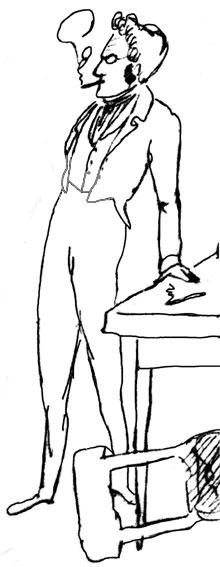 Since the publication of Max Stirner’s book Der Einzige und Sein Eigenthum (translated into English as The Ego and its Own; more accurately, The Unique and its Property) in 1844, reaction has ranged from complete repudiation to total, uncritical acceptance. Many strange and contradictory things have been said about Stirner. The respected anarcho-syndicalist academic Noam Chomsky has labeled him an influence on the devotees of extreme laissez-faire capitalism erroneously known in the United States as libertarians. However, there are those who have made Stirner’s ideas the very basis of their anarcho-syndicalist organizing. Perhaps such varied interpretations are inevitable when faced with a book that at times seems almost deliberately intended to disturb and disconcert.
The goal of this pamphlet is to explore the ideas of the great German thinker and their value to anarcho-communists. Some readers familiar with Stirner’s work will bristle at this immediately, pointing out that Stirner was an outspoken critic of communism. He was indeed. But the communism that Stirner critiqued was the same variety of communism that anarchists critique – authoritarian communism. Anarcho-communism, as a developed political theory, did not really exist in Stirner’s day, and the communism that Stirner had in mind was the communism of the monastery or of the barracks, a communism of self-sacrifice and general leveling. Those who would instead prefer a communism that guarantees the freedom of each individual to develop themselves as unique can find much that is of value in Stirner.
Stirner’s Ideas
Stirner begins his book by asking, “What is not supposed to be my concern?” He answers that an individual is supposed to be concerned first with God’s cause, then humanity’s cause, the cause of the country, of truth, of justice, and 1,000 other causes. The only cause that is not supposed to concern the individual is her own cause, the cause of self. My cause is not supposed to be my concern. The person who makes their own cause their concern is a selfish person. Instead, the individual is always told to put another cause before their own. We are to work tirelessly in the service of an other or others, never for ourselves. To think of doing otherwise would make one an immoral egoist. We are moral only when we are unselfish, when we take up a cause alien to us and serve it.
Stirner will have none of this. He asks, Does God serve a cause other than His own? No, reply the faithful. God is all in all, no cause can ever not be His. Does Humanity serve a cause that is not its own? asks Stirner, and the humanists reply, No, Humanity serves only the interests of Humanity. No cause can ever not be the human cause.
The causes of God and Humanity both turn out, in the end, to be purely egoistic. God concerns Himself only with Himself, Man likewise. So Stirner encourages his readers to follow the example of these great egoists and make themselves the main thing altogether. In other words, to become conscious egoists. For Stirner, all individuals are absolutely unique, and once the individual has become conscious of her egoism, she will reject any attempt to fetter her personal uniqueness or to restrict her individual autonomy. This of course includes calls to act only in the service of something higher than one’s self. Those who sacrifice themselves to serve some higher being or cause are duped or unconscious egoists, seeking their own pleasure and satisfaction in the name of whatever cause they’ve subordinated themselves to, but refusing to admit it. They are egoists who would like to not be egoists:
“All your doings are unconfessed , secret, covert, and concealed egoism. But because they are egoism that you are unwilling to confess to yourselves, that you keep secret from yourselves, hence not manifest and public egoism, consequently unconscious egoism — therefore they are not egoism, but thraldom, service, self-renunciation; you are egoists, and you are not, since you renounce egoism.”
Stirner begins and ends his book by crying, “I have set my cause upon nothing!” This quotation from Goethe would have been familiar to Stirner’s contemporary German audience. The unstated next line of the poem is, “And all the world is mine.” The self, for Stirner, is something impossible to fully comprehend, because each one of us is constantly consuming and recreating his or her self. Stirner refers to this process of self-consumption and self-creation as the creative nothing: “Not nothing in the sense of emptiness, but nothing in the sense that I as creator create everything.” The external causes that are always asking the individual to put herself last, that treat her as if she were nothing, are now subject to being actively appropriated and used by the egoist as she sees fit.
The Ego and its Own is organized around a three-part dialectical structure. Stirner begins by giving us the example of a human life, and then compares the three stages of human development to the three stages of historical development. We begin life as realistic children. During this phase, the child is subject to physical, external forces such as his parents. However, the child begins to break free of these constraints through what Stirner calls the discovery of mind. The child, by using his wits and determination, begins to evade the purely physical forces which previously kept him in check. In this way, we move from realistic childhood to idealistic youth. The external constraints of the physical no longer hold any terrors for the youth, yet now he is subject to the internal constraints of reason, of conscience, of the ideal. The child is infatuated with the earthly side of life, the youth the heavenly. Only when one reaches egoistic adulthood is one free from both external, earthly constraints and internal, heavenly constraints. Stirner summarizes it thus:
“As I find myself back of things, and that as mind, so I must later find myself also back of thoughts — to wit, as their creator and owner. In the time of spirits thoughts grew till they overtopped my head, whose offspring they yet were; they hovered about me and convulsed me like fever-phantasies — an awful power. The thoughts had become corporeal on their own account, were ghosts, e.g. God, Emperor, Pope, Fatherland, etc. If I destroy their corporeity, then I take them back into mine, and say: ‘I alone am corporeal.’ And now I take the world as what it is to me, as mine, as my property; I refer all to myself. “
Stirner then shows these same three phases in the context of historical development: the realistic world of antiquity, the idealistic world of modernity, and the egoistic future that has not yet dawned. He compares the ancient, pre-Christian world to realistic childhood and the modern, Christian world to idealistic youth. With the rise of secularism, modern society claims to have escaped the domination of religious modes of thought over life. Not so, says Stirner. Modernity has only served to increase the domination of religion – the domination of higher essences set over the individual. One example is the Protestant Reformation. While the Reformation is and was widely regarded as a liberatory event which opened the door for “the religion of freedom of conscience” and freed life from the authority of the church, Stirner viewed it as an expansion and strengthening of religious domination. Religion was, through the Reformation, able to intrude into areas of life where it had previously been unknown. The Catholic church prevented priests from marrying; Protestantism made marriage religious. In a similar fashion, the Catholic church with its institutionalized, formal priesthood, placed religious authority outside of the individual. Protestantism, however, abolished the institutional clergy in favor of a “priesthood of all believers” and so placed religious authority within the believer – an authority that she could never escape. The result left individuals at war within themselves, torn between fulfilling their desires and being tormented by the fixed idea of internalized religious authority. Stirner compares it to the struggle between citizens and the state’s secret police.
This pattern, argues Stirner, has continued throughout modernity. Although there has been much talk of progress and achieving a freer society, of transcending the worn-out values and dead traditions of the past, modernity only transforms authority – enlarging and strengthening it by virtue of making it more invisible. The rise of humanism, for example, dethroned the crucified God and in His place exalted Humanity. But since Humanity is also an ideal placed above the individual for her to subordinate herself to, Stirner considers humanism just as much a religion as the Christianity it claims to have outgrown. “Our atheists are pious people.” Humanism, says Stirner, is actually more tyrannical than theism because the phantom Humanity is able to terrify non-believers along with the faithful. For Stirner, modernity has only increased the number of abstractions (which he called “spooks”) to which people subordinate themselves.
Stirner accuses those who fancy themselves “the free” (we might call them “progressives” in today’s jargon) of posturing as iconoclasts when in reality they are only “the most modern of the moderns.” He was highly critical of the left-Hegelians dominating German philosophy at the time and the liberalism that was rising as the prevailing force in political and social thought. Stirner grouped liberalism into three types: political liberalism (what would today be called classical liberalism), social liberalism (socialism), and humane liberalism (humanism). Political liberalism dealt with individuals as free citizens within a state, social liberalism with individuals as workers, and humane liberalism with individuals as human beings – but all of the varieties of liberalism essentialize some aspect of the individual and set it above her as something that they should subordinate themselves to. For Stirner, all individuals are more than citizens, workers, or even human beings. Human nature or the human essence can not be separated from the individual and set above her, because then it becomes nothing but another spook. For Stirner there is no universal human essence to be set above people, only individuals as they exist in the here and now as flesh and blood.
From his searing critique of modernity, Stirner moves to anticipation of the egoistic future. He urges individuals to demolish all sacred ideas and free themselves from the chains of authority. This liberation is not something the individual can let someone else do for her. Stirner makes his position clear in one of the most eloquent anarchist arguments for self-liberation ever penned:
“Here lies the difference between self-liberation and emancipation (manumission, setting free). Those who today ‘stand in the opposition’ are thirsting and screaming to be ‘set free.’ The princes are to ‘declare their peoples of age,’ i. e., emancipate them! Behave as if you were of age, and you are so without any declaration of majority; if you do not behave accordingly, you are not worthy of it, and would never be of age even by a declaration of majority. When the Greeks were of age, they drove out their tyrants, and, when the son is of age, he makes himself independent of his father. If the Greeks had waited till their tyrants graciously allowed them their majority, they might have waited long. A sensible father throws out a son who will not come of age, and keeps the house to himself; it serves the noodle right…. The man who is set free is nothing but a freed man, a libertinus, a dog dragging a piece of chain with him: he is an unfree man in the garment of freedom, like the ass in the lion’s skin.”
As more and more people become conscious egoists, they will deny restrictions to their individuality, whether these restrictions are physical or spiritual. It should be pointed out that Stirner’s idea of egoism differs significantly from other philosophies sometimes called egoism. Stirner was an advocate of self-interest, even selfishness, but he did not use these terms in the typical narrow way. Stirner was not an apostle of the never-ending pursuit of profit, nor did he preach isolation or use selfishness as an excuse to never give a damn about anyone else. For Stirner, self-interest consisted of the individual egoist actively seizing the world around her as her property. Stirner’s use of the word property has caused many readers to misinterpret him, but he was not referring to property in a limited, economic sense. Rather, he used the word to refer to anything that was not alienated from the egoist. Thus, when I take a personal interest in an idea, I reach out and make that idea my own, my property. To the conscious egoist, the only determining factor toward gaining something as one’s property is the willingness to reach out and take it. The aim of this active seizure of egoistic property is self-enjoyment. Even other people are, for Stirner, a means for (mutual) self-enjoyment:
“For me you are nothing but my food, even as I am fed upon and turned to use by you. We have only one relation to each other, that of usableness, of utility, of use.”
Those who see Stirner as an advocate of exploiting others fail to read what is written. Stirner used the example of lovers, friends going to a cafe, and children at play as examples of this kind of mutual self-enjoyment or consumption, relationships that he termed unions of egoists. The union of egoists is a relationship in which all who participate in it do so freely and voluntarily out of egoism. The egoist uses the union, the union does not use her. All participants in the union constantly renew the relationship through an act of will; if any participant is coming up short or losing out, then the union has degenerated into something else. The union was Stirner’s proposed alternative method of organizing society, a means by which egoists could “scuttle the ship of the state” and give rise to a state of affairs in which individual autonomy would flourish.
This has necessarily been only an extremely brief summation of Stirner’s ideas, intended to arouse interest and provide context for the second half of this essay. The broadness and scope of Stirner’s thought make him difficult to summarise, and this section could have easily been twice as long. Those hungry for more should refer to the recommended reading list at the end of the pamphlet. Everyone will have to decide how much of Stirner they want to take and what to do with it, but as Stirner himself said regarding interpretations of his work, “that is your affair and does not trouble me.”
“I have set my cause upon nothing!”
Stirner’s Relevance to Anarcho-Communists
It is a fact that until relatively recently, most of the anarchists inspired by Stirner were not communists. In the United States, the most well-known exponents of egoism were Benjamin Tucker and his comrades, centered around the individualist anarchist journal Liberty. Indeed, Tucker was the driving force behind the publication of the first English edition of Stirner’s book. However, he has also been a significant influence on thinkers more in the mainstream anarchist tradition. In the 1940s, the anarcho-syndicalists of the Glasgow Anarchist Group made Stirner’s ideas the basis of their organizing. They took Stirner’s idea of the union of egoists literally as a way of freely organizing within industry and thus explained syndicalism as “applied egoism.” The anarcho-communist activist and cartoonist Donald Rooum was introduced to Stirner by members of this group and has adhered to conscious egoism ever since. Emma Goldman’s anarchism was profoundly influenced by thinkers such as Stirner and Nietzsche. In the introduction to her book Anarchism and Other Essays, Goldman defends Stirner against shallow and erroneous interpretations, commenting that his philosophy contains “the greatest social possibilities.” Even the younger Murray Bookchin, whose attitude toward the German egoist later soured considerably, wrote:
“Stirner created a utopistic vision of individuality that marked a new point of departure for the affirmation of personality in an increasingly impersonal world.”
Clearly, socially oriented anarchists have been interested in Stirner’s ideas. They continue to be interested today, and for good reason. In a world where even revolutionaries too often find themselves lost among enemies of the individual and calls for self-sacrifice, the uncompromising egoism of Stirner is a breath of fresh air. So many communists, while rejecting God the Father, God the State, and God the Corporation, set up instead God the Community, a fearsome deity that Kropotkin called “more terrible than any of the preceding.” For Stirner, as for the egoistic communist, these are all spooks.
The communist egoist does not serve the People, the Masses, or any other spook. She serves herself, because she is part of the people, part of the masses. How can Humanity be happy when you and I are sad? As the self-described Marxist-Stirnerists of the Bay Area group For Ourselves observed, “Any revolutionary who is to be counted on can only be in it for himself; unselfish people can always switch loyalty from one projection to another. Furthermore, only the most greedy people can be relied on to follow through on their revolutionary project.”
Anarchists who wish to demolish the authority of the state and of capital but want to leave the authority of fixed ideas like morality, humanity, rights, or altruism intact only go halfway. For the egoist, these spooks can be even more vicious than the more visible forms of authority. Altruism, living to serve others, is one of the most pernicious superstitions extant in our civilization today. Workers engage in a terrible altruistic action every day when they labor to enrich the capitalist, who receives much simply by virtue of the fact that he has so much already. Women are victims of altruism when they waste away “living to serve” a man who is nothing but a tiny tyrant over the home. The other crimes that come from altruism are endless, and it’s clear to conscious egoists that altruistic socialism is a farce, capable only of transforming authority but not abolishing it. Egoism encourages individuals to no longer die slowly giving presents to those who give nothing in return, and from this idea flows the egoist communist desire for insurrection and expropriation.
When one applies Stirner’s notion of the spook to one of Society’s most sacred idols, private property, the implications are almost necessarily communist. How many individuals have had their ownness sacrificed and lives ruined by this horrible Moloch? Stirner ridiculed the idea of any right to property (as he ridiculed rights generally), pointing out that property is based on might, or one’s power to get it and keep it. Private property – alien property – is just another spook, because the entire world is the egoist’s property, waiting to be taken. In other words, the communist egoist has for the object of her appropriation the totality of life. Stirner hinted at this with his memorable quotation, “I do not step back shyly from your property, but look at it always as my property, in which I ‘respect’ nothing. Pray do the like with what you call my property!”
Stirner likewise attacked such fundamental aspects of capitalist life as the division of labor and even work itself:
“When everyone is to cultivate himself into man, condemning a man to machine-like labor amounts to the same thing as slavery . . . Every labor is to have the intent that the man be satisfied. Therefore he must become a master in it too, be able to perform it as a totality. He who in a pin-factory only puts on heads, only draws the wire, works, as it were mechanically, like a machine; he remains half-trained, does not become a master: his labor cannot satisfy him, it can only fatigue him. His labor is nothing by itself, has no object in itself, is nothing complete in itself; he labors only into another’s hands, and is used (exploited) by this other.”
In contrast to enforced, degrading, regimented capitalist work, Stirner juxtaposed egoistic labor, which people would take part in purely from egoism and would provide opportunities for self-realization and self-enjoyment. Such egoistic labor might be done alone or in a union of egoists with others, but each participant would remain consciously egoistic. Indeed, Stirner recognized that cooperation was often more satisfying than competition:
“Restless acquisition does not let us take breath, take a calm enjoyment. We do not get the comfort of our possessions…. Hence it is at any rate helpful that we come to an agreement about human labours that they may not, as under competition, claim all our time and toil.”
Stirner’s principle critique of socialism and communism as they existed in his day was that they ignored the individual; they aimed to hand ownership over to the abstraction society, which meant that no existing person actually owned anything. Authoritarian socialism cures the ills of free competition (which Stirner correctly noted was not free) by alienating everything from everyone. This sort of communism was based on Community, on Society with a capital S, not on the union that Stirner desired. A communism that places possessions into the hands of a phantom while leaving nothing for the individual can not really be much more than a new tyranny. Anarcho-communism can benefit from these egoistic insights since they serve as a reminder that communism isn’t sought for its own sake, but as a means to guarantee each unique individual self-enjoyment and self-actualization.
Understanding Stirner’s union of egoists is crucial to understanding his ideas concerning insurrection and how they can be reconciled with more mainstream anarchist views of revolution. Stirner rejected revolution in favor of insurrection, in the etymological sense of “rising above.” “The revolution aimed at new arrangements. Insurrection calls upon us to no longer let ourselves be arranged, but to arrange ourselves, and set no glittering hopes on institutions.” However, Stirner recognized the liberatory potential of group action and the interweaving of each egoist’s personal insurrection, even commenting on the value of strike action:
“The laborers have the most enormous power in their hands, and, if they once became thoroughly conscious of it and used it, nothing would withstand them; they would only have to stop labor, regard the product of labor as theirs, and enjoy it. This is the sense of the labor disturbances which show themselves here and there.
The State rests on the — slavery of labor. If labor becomes free, the State is lost.”
Stirner urged egoists to unite, not out of any maudlin sentimentality or misplaced moralism, but out of a desire to see egoism become generalized in order for each egoist to know the pleasure that can be found in other fully realized individuals. The genuinely egoistic individual will never be satisfied with anything less than a universalized egoism. The egoist unites with those who share her interest, and all the exploited and oppressed certainly have a personal interest in putting an end to their oppression. What other anarchists have called the social revolution is, to the conscious egoist, a massive interweaving of each individual’s personal insurrection, a coming together in a union of egoist to perpetuate what Stirner referred to as “an immense, reckless, shameless, conscienceless, proud crime.” The crime of insurrection, of expropriation, of revolution!
“….doesn’t it rumble in the distant thunder, and don’t you see how the sky grows ominously silent and gloomy?”
Recommended Reading
The Ego and Its Own by Max Stirner. Stirner’s only book and magnum opus. Unfortunately, there is still only one English translation available, Stephen T. Byington’s. Wolfi Landstreicher is currently working on a new one, slated to appear in the near future.
Stirner’s Critics by Max Stirner. In this essay, Stirner (speaking in the third person throughout) clarifies some misinterpretations of his philosophy.
The False Principle of Our Education by Max Stirner. In this article, which predates the publication of The Ego and its Own, Stirner critiques both the humanism of the aristocratic style of education, which aimed to produce disinterested scholars, and the realism of the democratic school of thought, which aimed to produce useful citizens. Stirner, while tending to favor the latter, argues that the goal of education should instead be the cultivation of free, self-creating individuals.
“The Individual, Society, and the State” by Emma Goldman. Goldman’s most “Stirnerian” essay.
“Victims of Morality” by Emma Goldman. In this essay Goldman attacks the spook of morality as a lie “detrimental to growth, so enervating and paralyzing to the minds and hearts of the people.”
The Right to be Greedy: Theses on the Practical Necessity of Demanding Absolutely Everything by For Ourselves. An inspired fusion of Stirner and Marx by this short-lived Situationist-influenced group. For Ourselves argue that “greed in its fullest sense is the only possible basis of communist society. The present forms of greed lose out, in the end, because they turn out to be not greedy enough.”
The Minimum Definition of Intelligence by For Ourselves. A critique of ideology and fixed thought coupled with theses concerning the construction of one’s own critical self-theory.
The Soul of Man [sic] Under Socialism by Oscar Wilde. This beautiful essay is one of the most eloquent egoist defenses of libertarian communism ever penned. It is not known for certain whether Wilde actually read Stirner; however, he could read German and similarities in style between this text and The Ego make it seem likely that he did. In any case, this anarcho-dandy’s writing is invaluable to the serious student of egoism.
Max Stirner’s Dialectical Egoism: A New Interpretation by John F. Welsh. The most thorough and coherent exploration of Stirner’s thought available in English. An exploration of Stirner’s philosophy, his influence on the thinkers Benjamin Tucker, James L. Walker, and Dora Marsden, and an investigation of the relationship between Stirner and Nietzsche.


